We saw an interesting animal at the refuge that we had never seen before. From a distance, it looked like a muskrat or beaver, but a local landowner told us that it was a Nutria. He said that he sees them in the wintertime out walking on the ice.
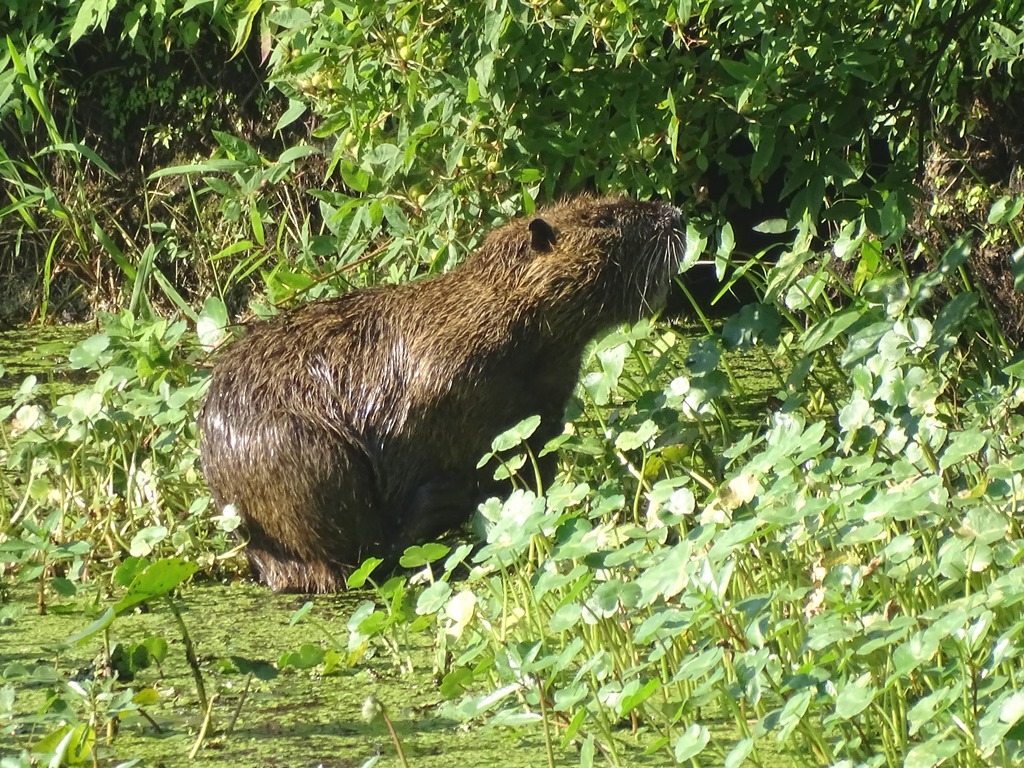
Larger than a muskrat but smaller than a beaver, Nutria have brown shaggy fur and whiskers, and can be found both on land and in the water. They also have orange front teeth, long, round, hairless tails, five-toed front feet and webbed hind feet.
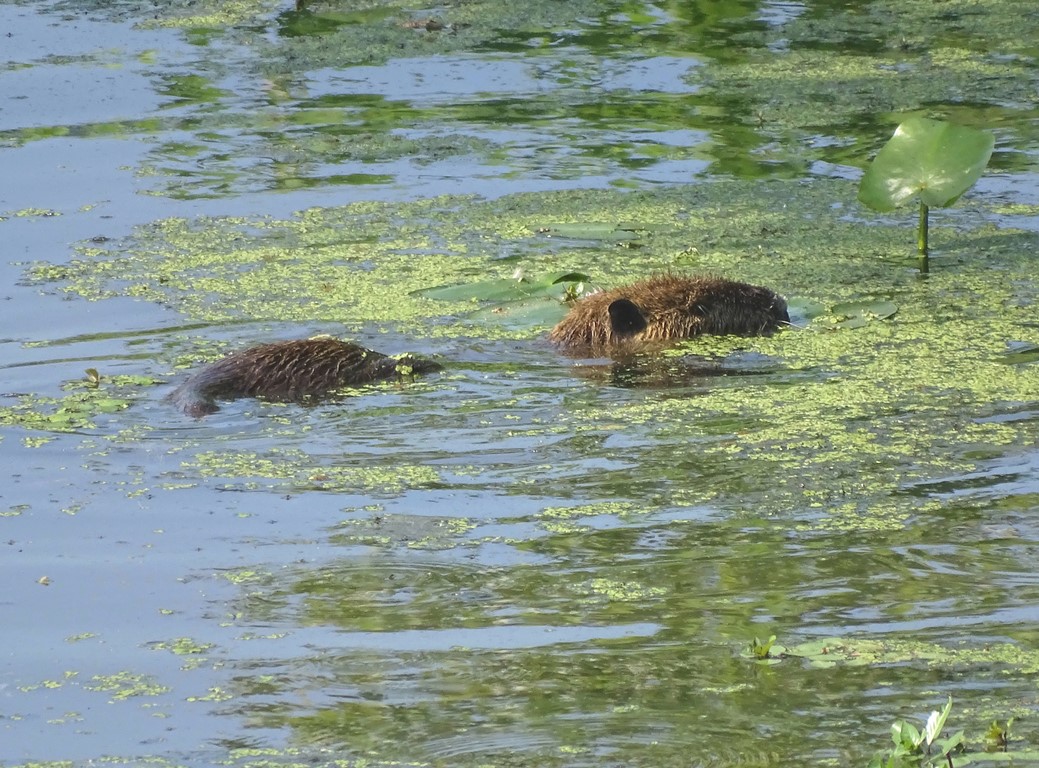
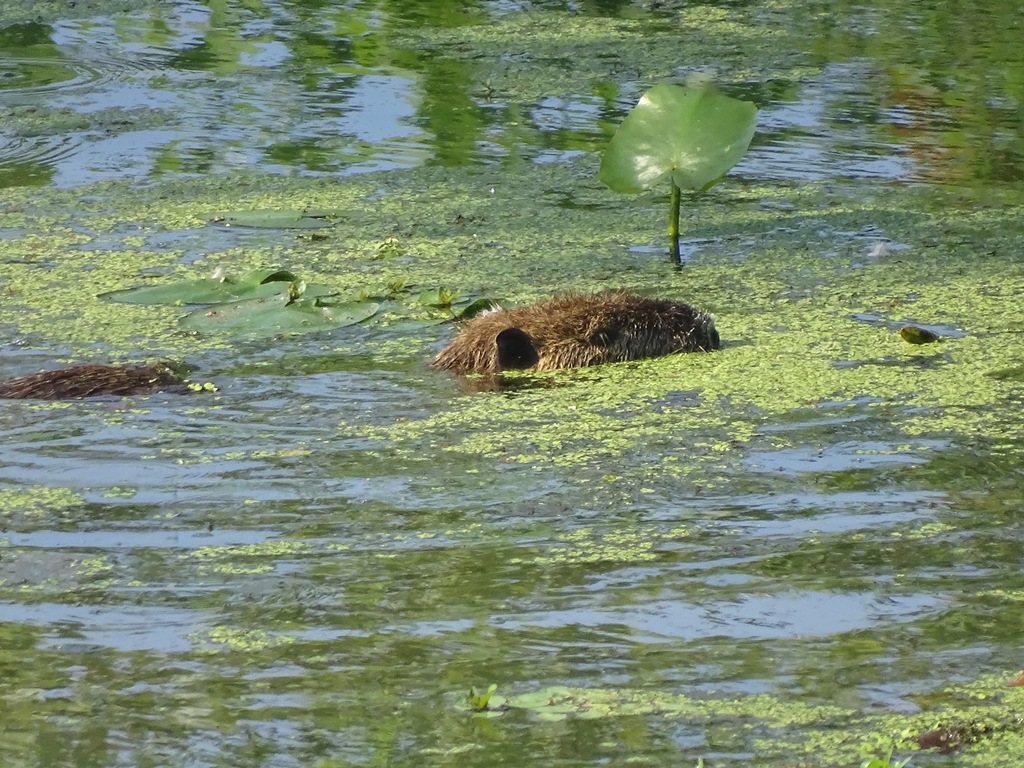
When we first saw this one, it was swimming in the water, stopping to nibble on vegetation.
Notice that it appears to have lost part of its long, rat-like tail.


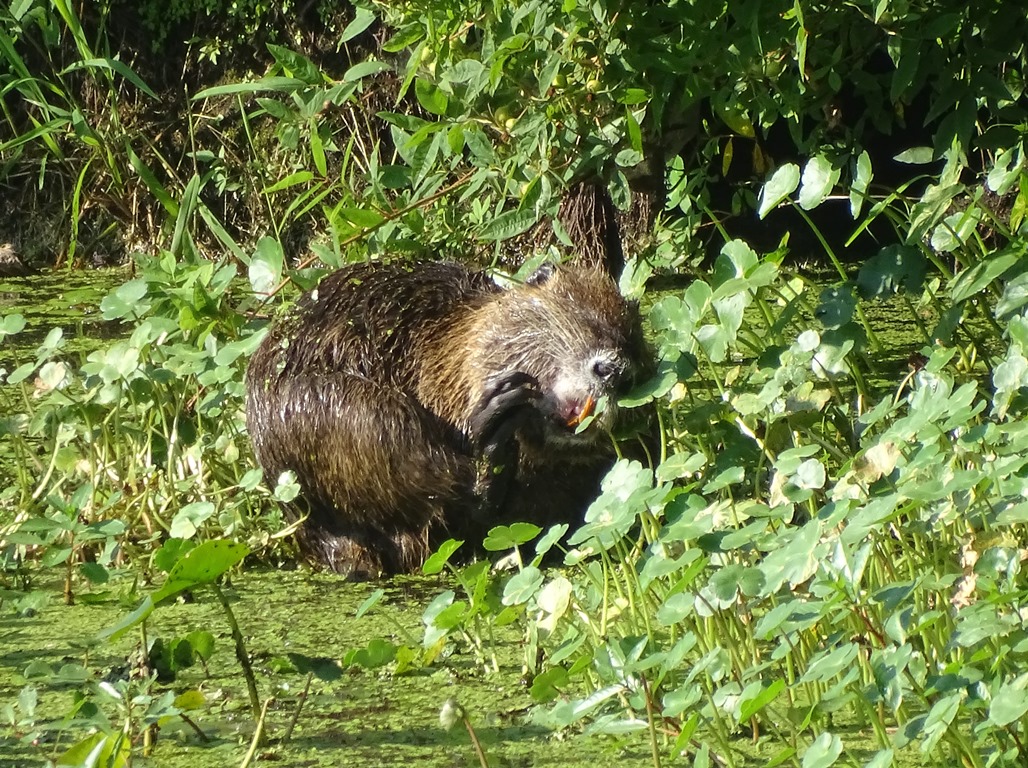
Eventually, it climbed up on the shore and proceeded to scratch or groom its fur. Oil, produced by glands near its mouth, is used in grooming and waterproofing the fur.
You can see an orange tooth in the fourth photo.




Although Nutria resemble the muskrat and beaver, they are an invasive wildlife species that was brought in from South America by fur traders hoping to profit off of their undercoats. When the fur industry was unsuccessful, many of these animals were released into the wild or escaped. Now the population has expanded, and they are considered a nuisance. They eat all parts of aquatic plants, including the roots, making the plants less likely to grow back. This makes the soil unstable and destroys food and habitat needed by native animals.
“Visitors should behave in such a way that the host and hostess feel at home.” ~J. S. Farynski










 walking on a country road