While reviewing my photography from a recent trip to the lake, I noticed a consistent theme that captured my interest. It was the various movements of animals portrayed in the images. I decided to share my observations and then provide my own personal takeaway regarding their behaviors.
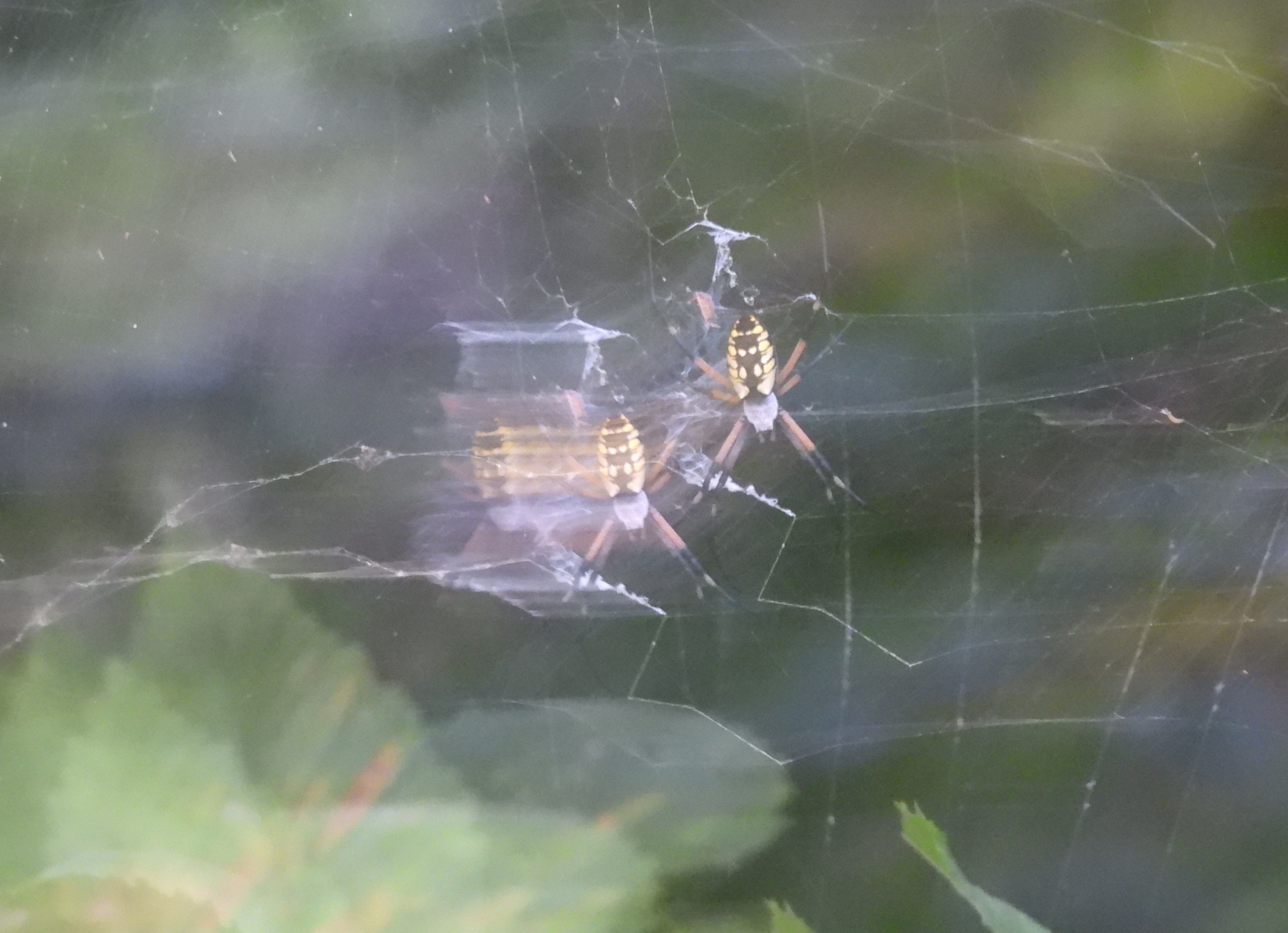
When threatened, the Black and Yellow Garden Spider has an interesting way of protecting itself through intentional and vigorous bouncing of its web. This rapid motion makes it appear larger and startles and confuses its predators, including curious humans. The shaking also serves to entangle any prey caught in the web.
My take-away: “Yes, there really is a special kind of crazy in this world.”
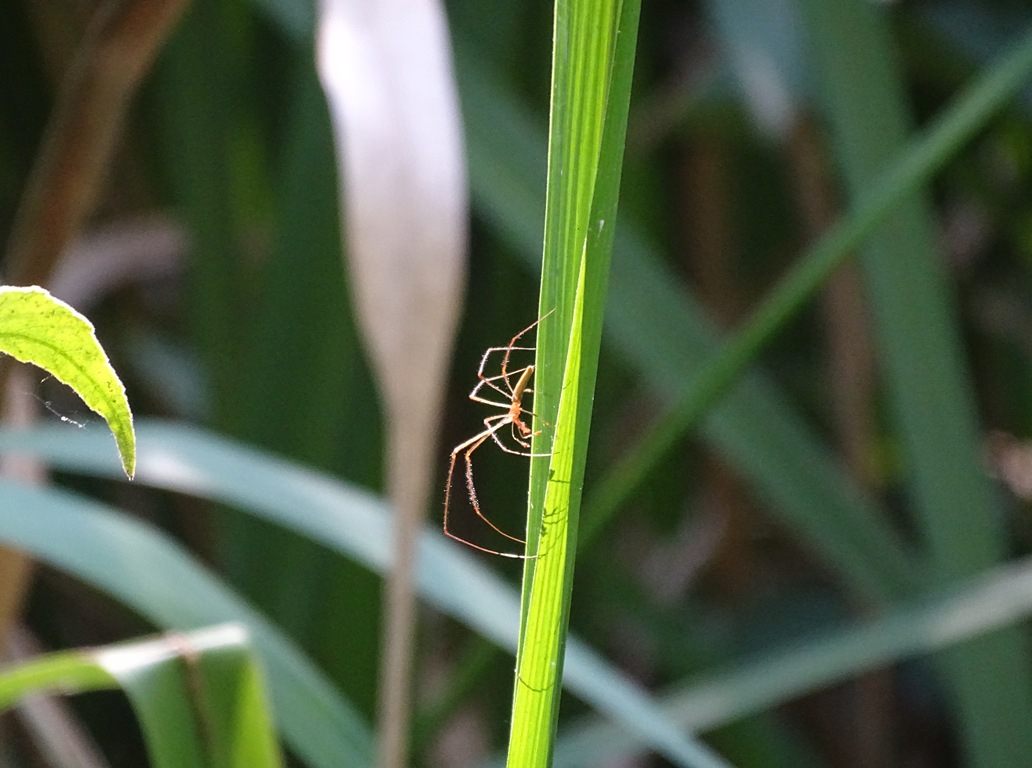
From a distance, when I first saw this delicate web suspended on a swaying reed, my initial impression was that numerous gnats had become trapped in the silk. However, I soon realized that they were freely moving about, prompting me to take a closer look. Instead of gnats, I discovered a group of spiderlings navigating their mother’s web. Being too immature to hunt for their own food, spiderlings sustain themselves by feeding on pollen that sticks to the threads of the web. The web serves as both a nursery and a source of nourishment for the young.
My take-away: “Provide for them while they are young, and then gently nudge them out into the great big world.”
It was delightful to see these Southern Painted Turtles basking on a log with their back legs extended behind them and wiggling back and forth. This stretched position, referred to as “splooting”, allows them to flatten their bodies and enhance sun exposure while they enjoy the warmth. The rhythmic movement of their legs promotes blood circulation and is believed to help remove parasites and bits of aquatic plants that cling to their skin and shell.
My take-away: “The back legs, apparently, can also be used to nudge others out of their personal space.”
As I scanned the lovely landscape, a wren unexpectedly came darting in and perched on a nearby branch. It belted out a loud, raspy tune. Then, just as quickly as it had arrived, it was off to explore new places.
My take-away is summarized by the following quote: “Let us step into the night and pursue that flighty temptress, adventure.” ~J. K. Rowlings
Finally, the Osprey pair, mentioned in a previous post, also appear to be on the move. They have selected a new tree located a short distance from their former nest, which recently collapsed, and are presently engaged in the gradual construction of a new home. The old nest can be seen on the right side in the first photo below. The new nest is on the far left.

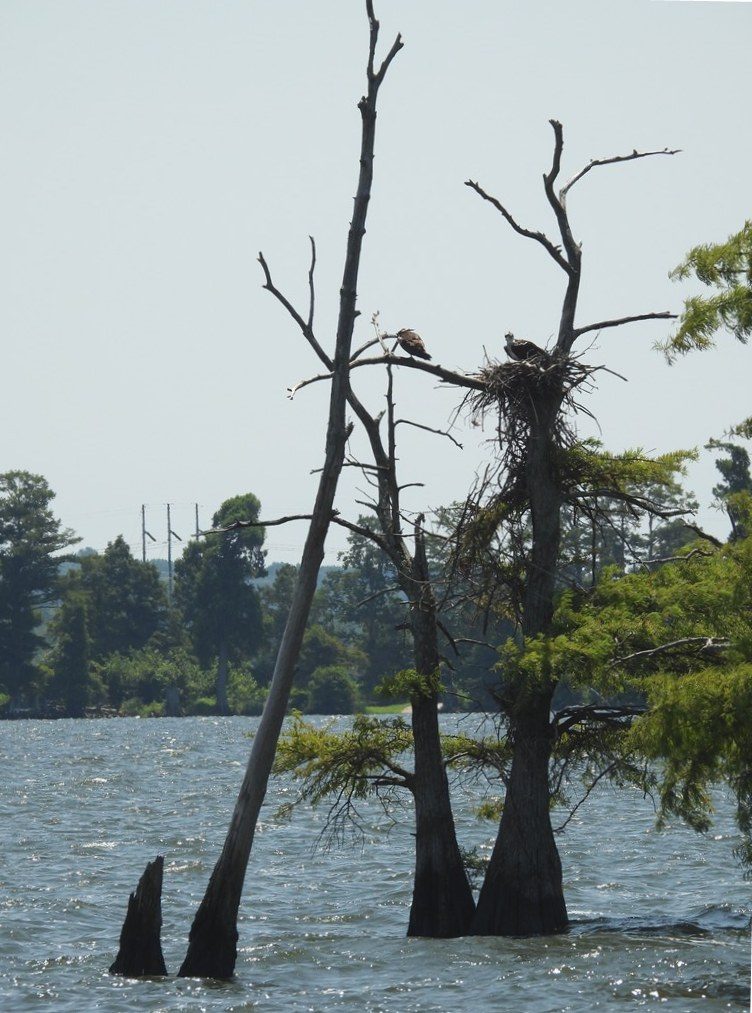
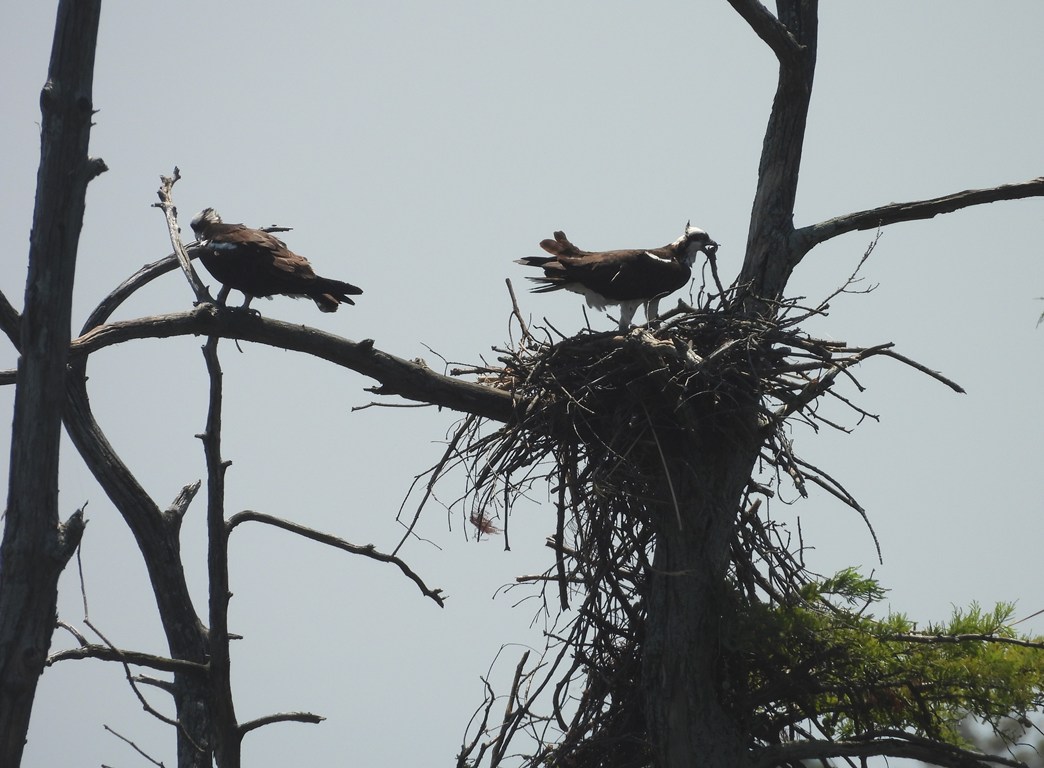
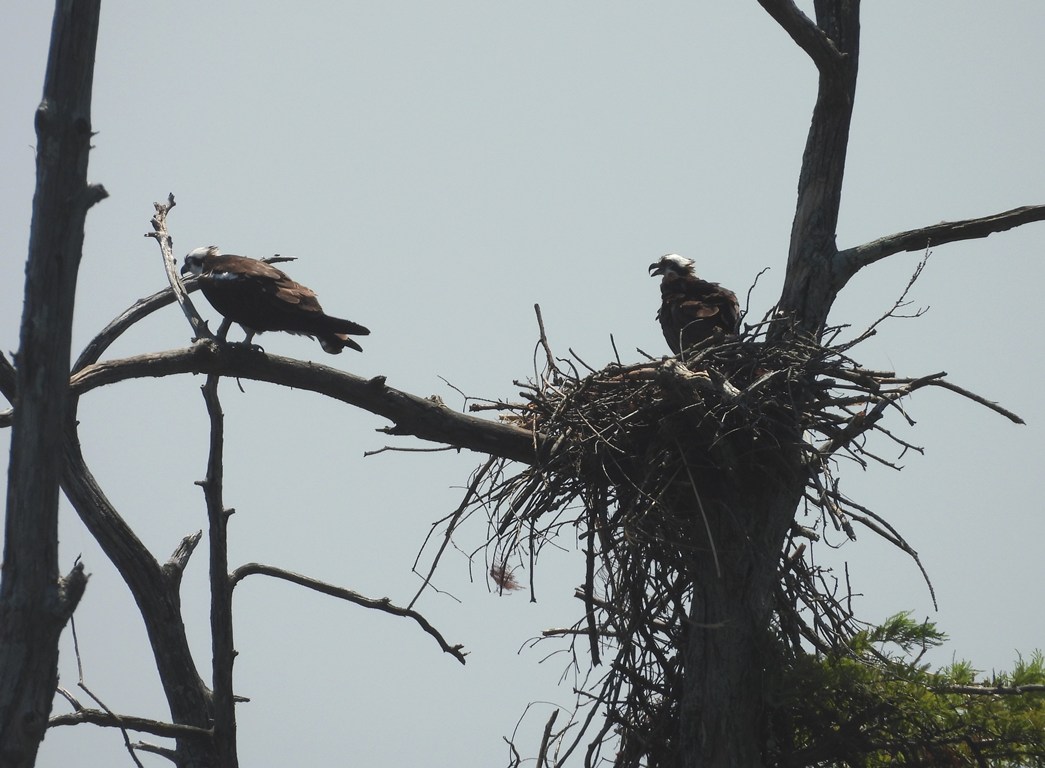
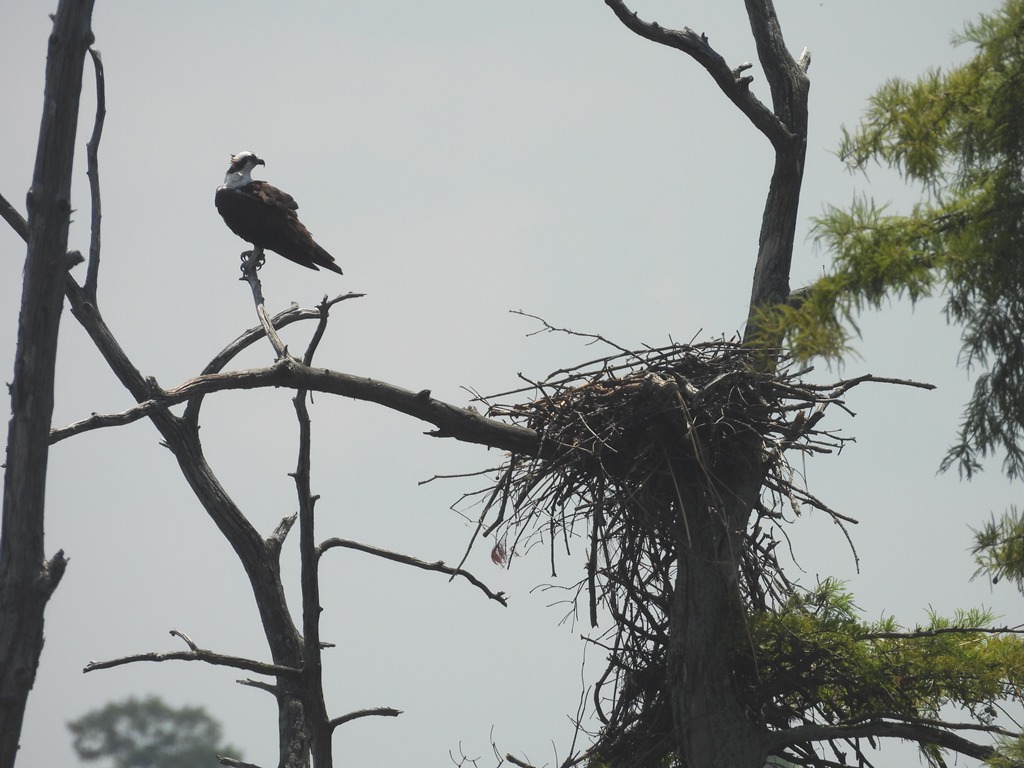

My take-away: “And so, begins a new chapter in this book of life.”
It was interesting to witness the lively activity of these creatures as they went about their busy lives. It was a reminder that nature is always in motion. It is a continuously evolving tapestry in which work, vitality and change are integral parts.
“It’s only through labor and painful effort, by grim energy and resolute courage that we move on to better things.” ~Theodore Roosevelt
“Doing nothing accomplishes nothing, gains nothing, changes nothing, and wins nothing. You have to make a move.” ~Richelle E. Goodrich
“God is constantly on the move. I cannot stay where I am and follow God at the same time; responding requires movement.” ~Margaret Feinberg