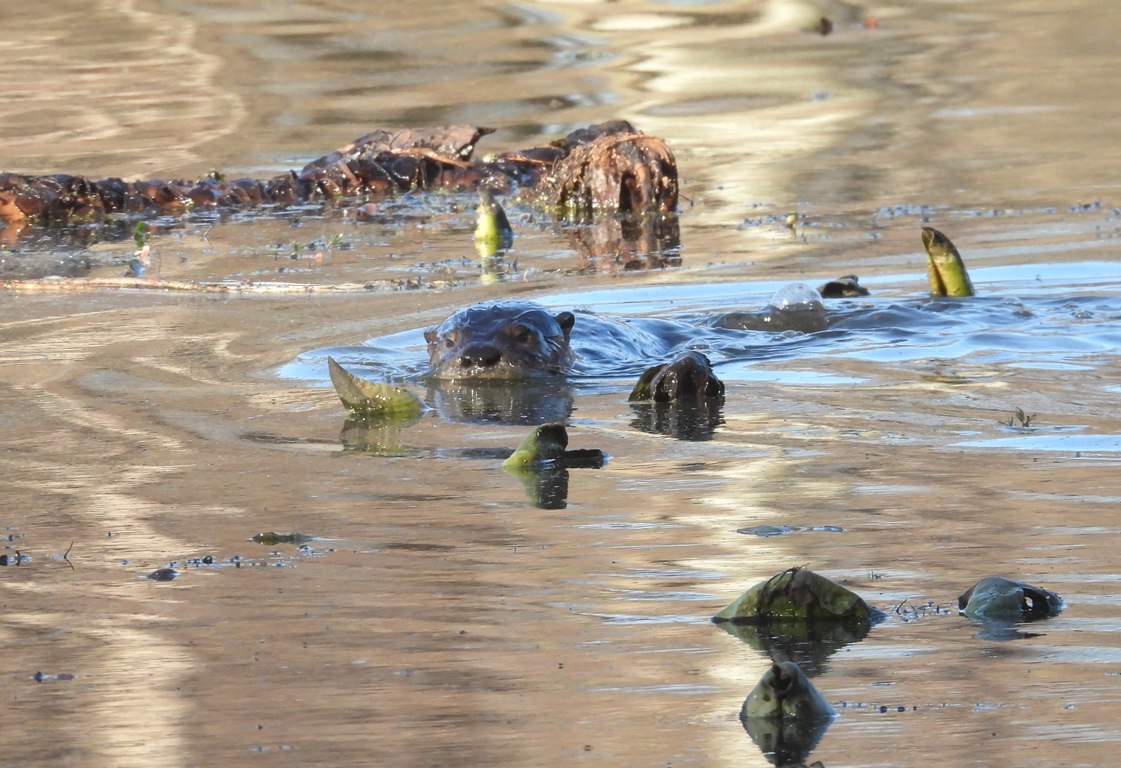
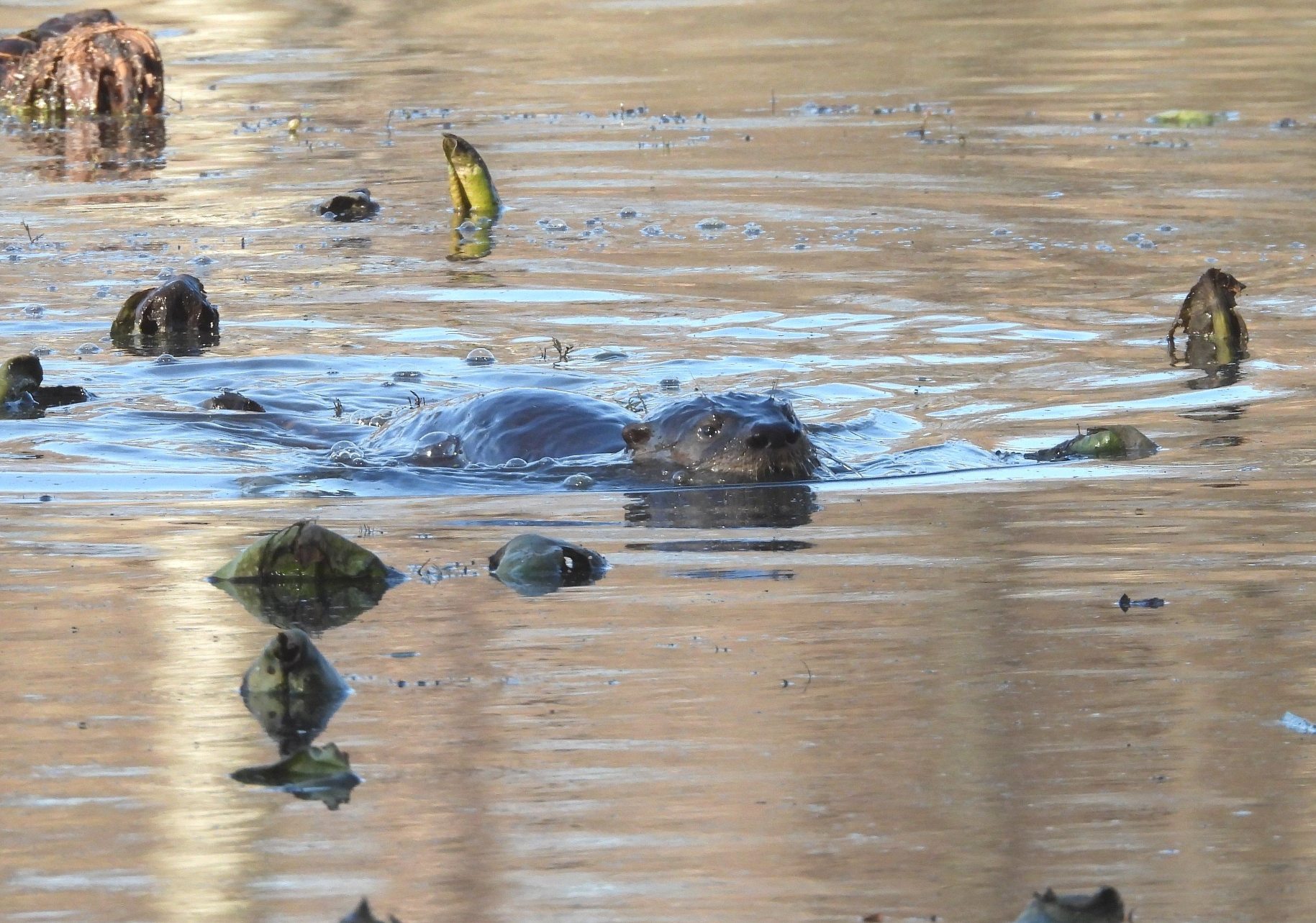
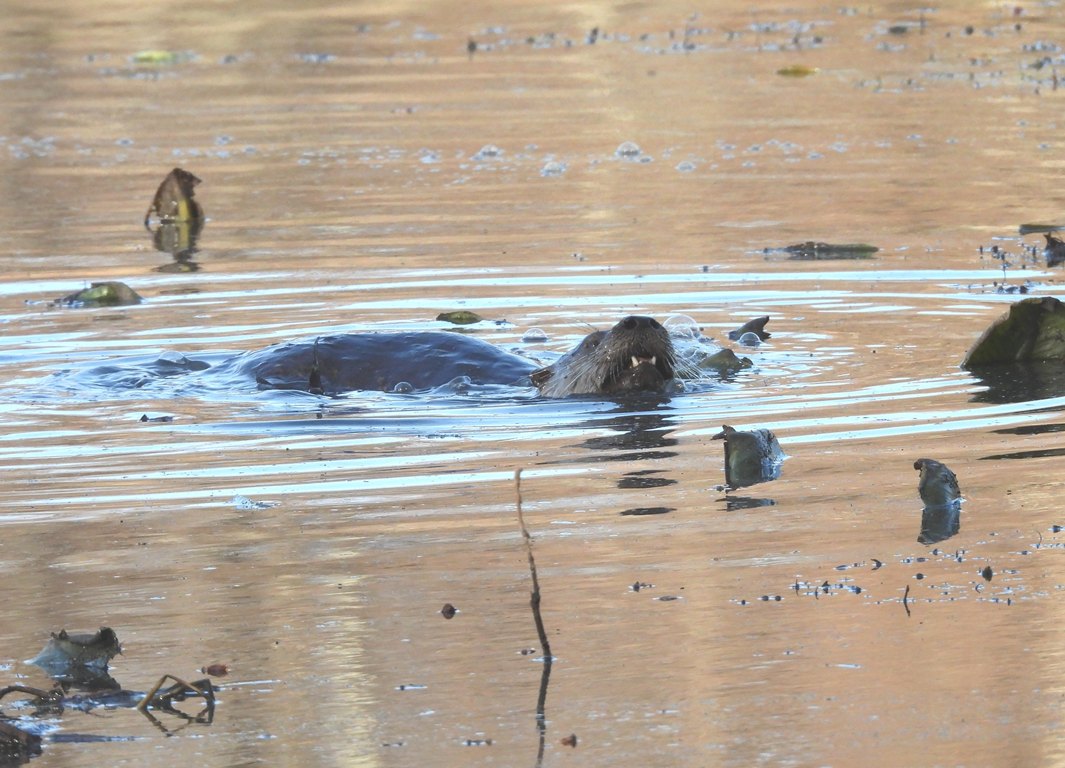
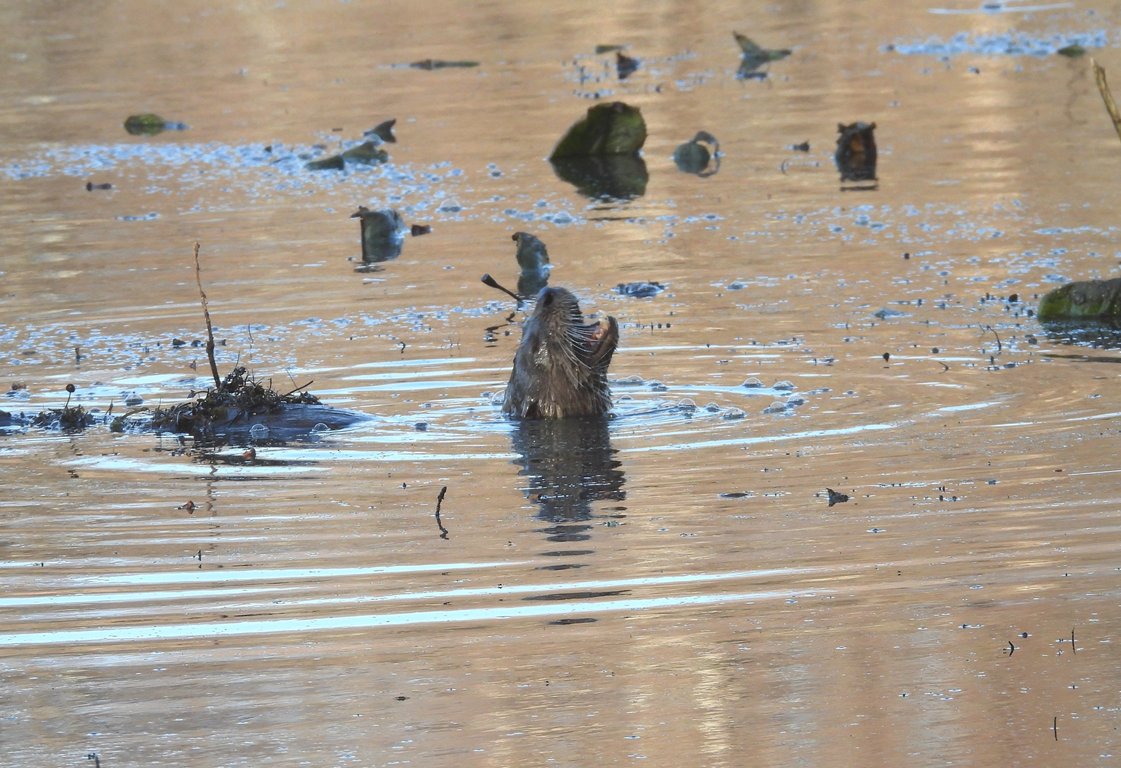
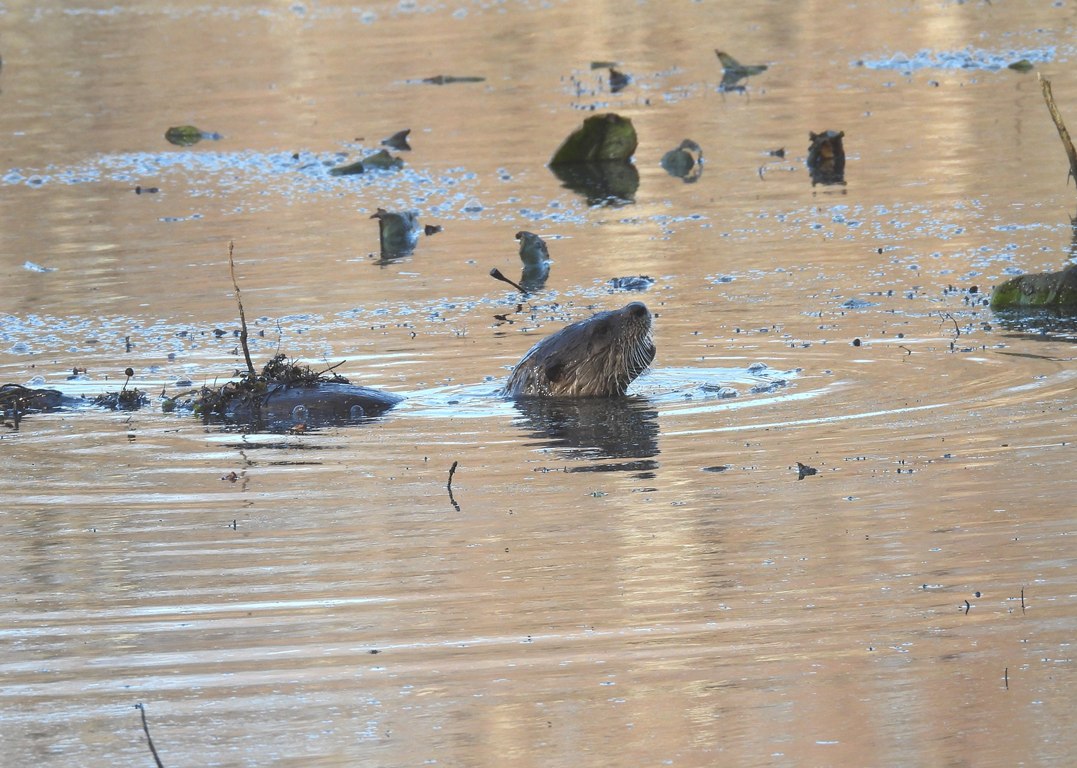
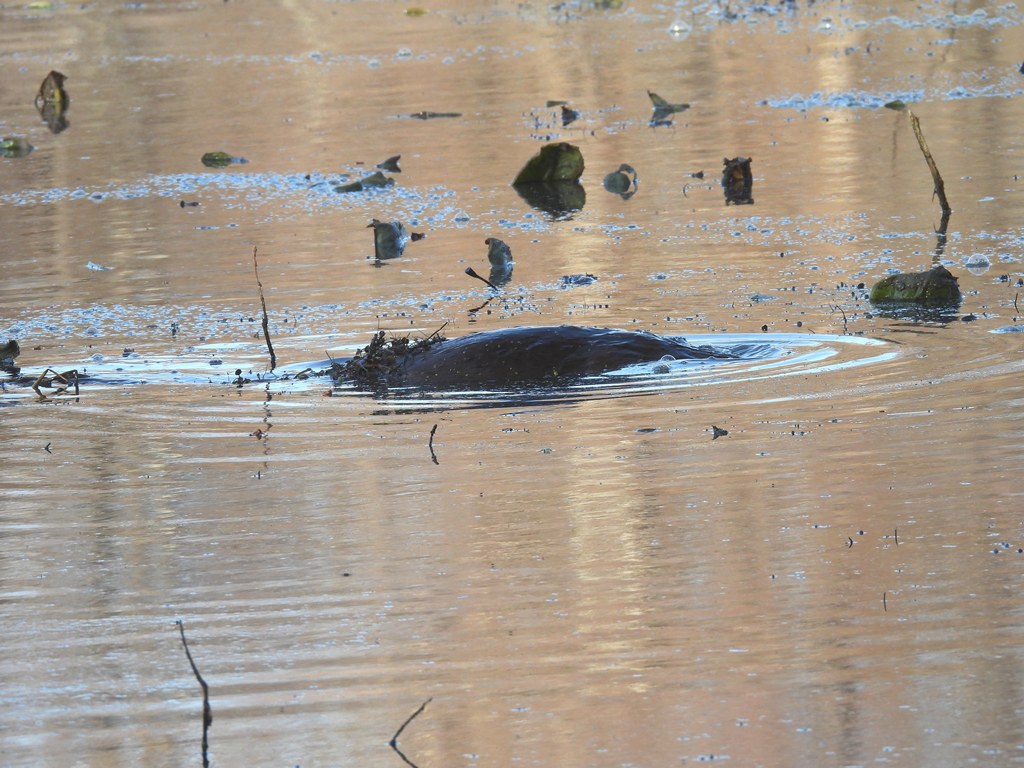
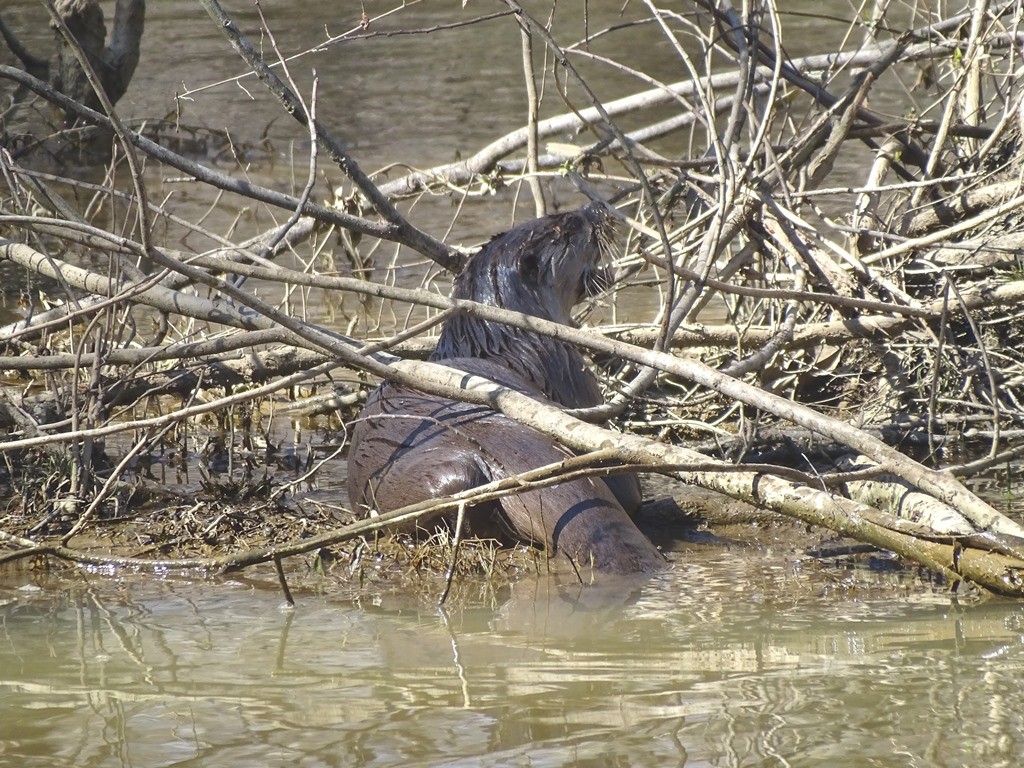
I walked down a wooded path to a shady spot along the lake’s edge where I occasionally observe ducks and different species of birds. This time, much to my surprise, a river otter surfaced and I was able to watch for a brief time as it hunted and munched on prey that it pulled from the shallow lakebed.
It seemed to be aware of my presence, pausing several times to glance in my direction before resuming its hunt.
There was something special about this quiet little connection with nature. For me, getting outdoors and spending time with the created and the Creator offers a peaceful escape from the chaos and unpredictability of the world around us.
“When the news of the day upsets me, I pause and worship the eternal God who is never surprised or caught unprepared. This keeps me from fretting and getting discouraged, and it helps to keep life in balance. ~Warren Wiersbe
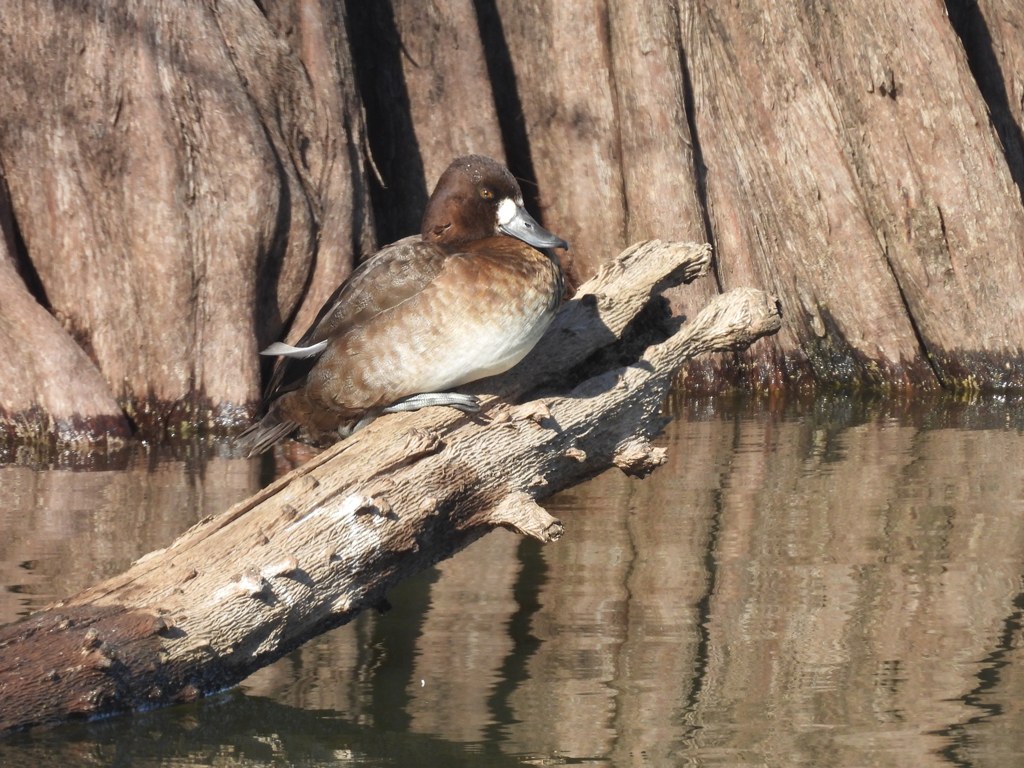
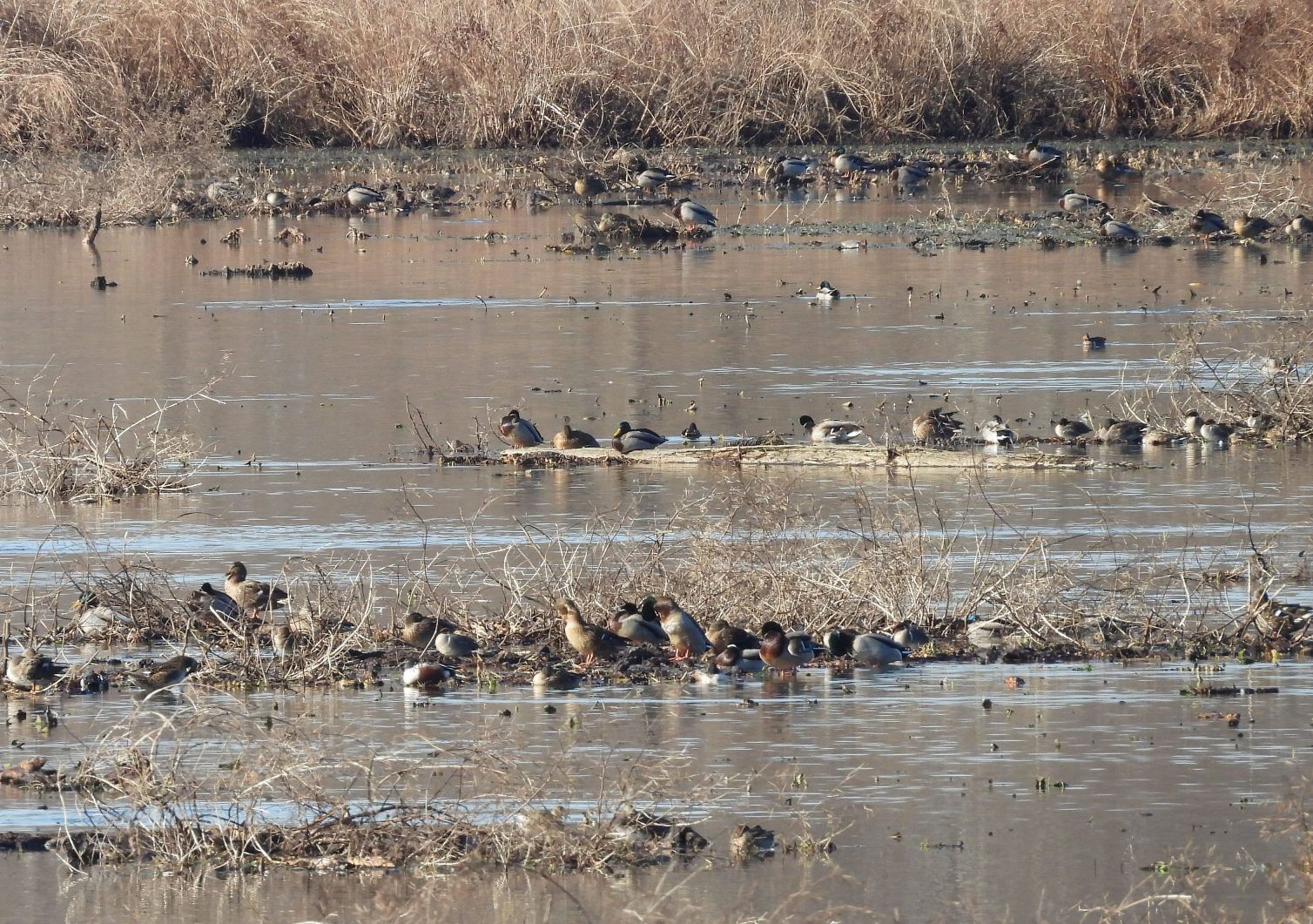
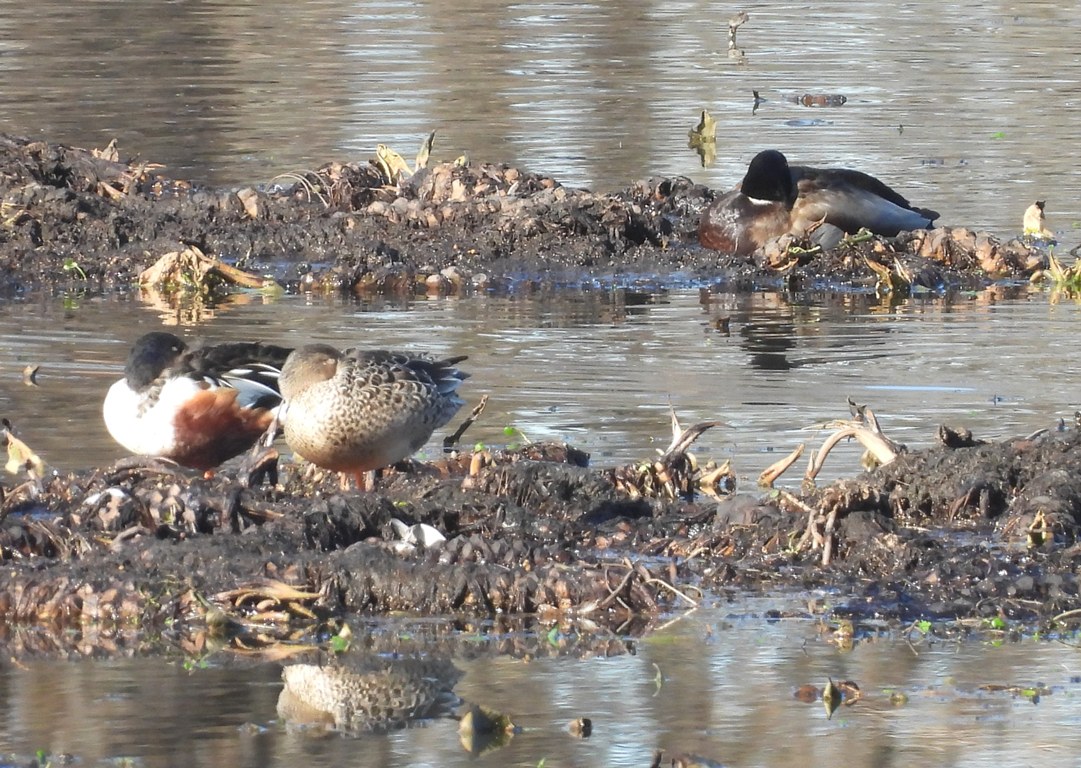
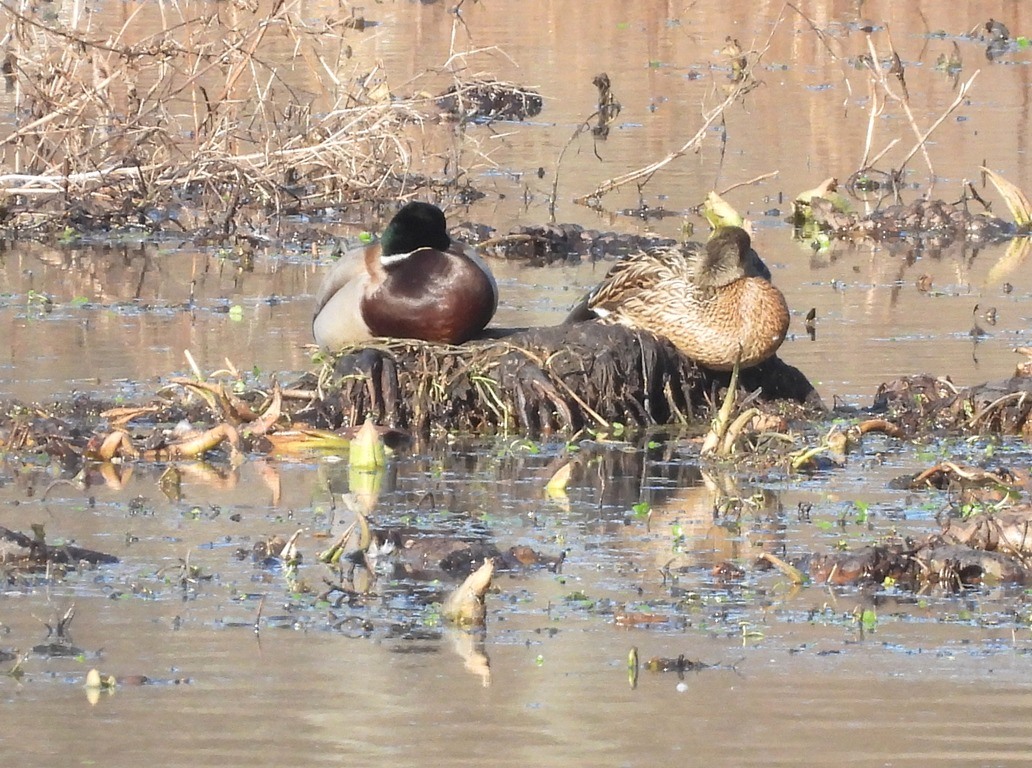
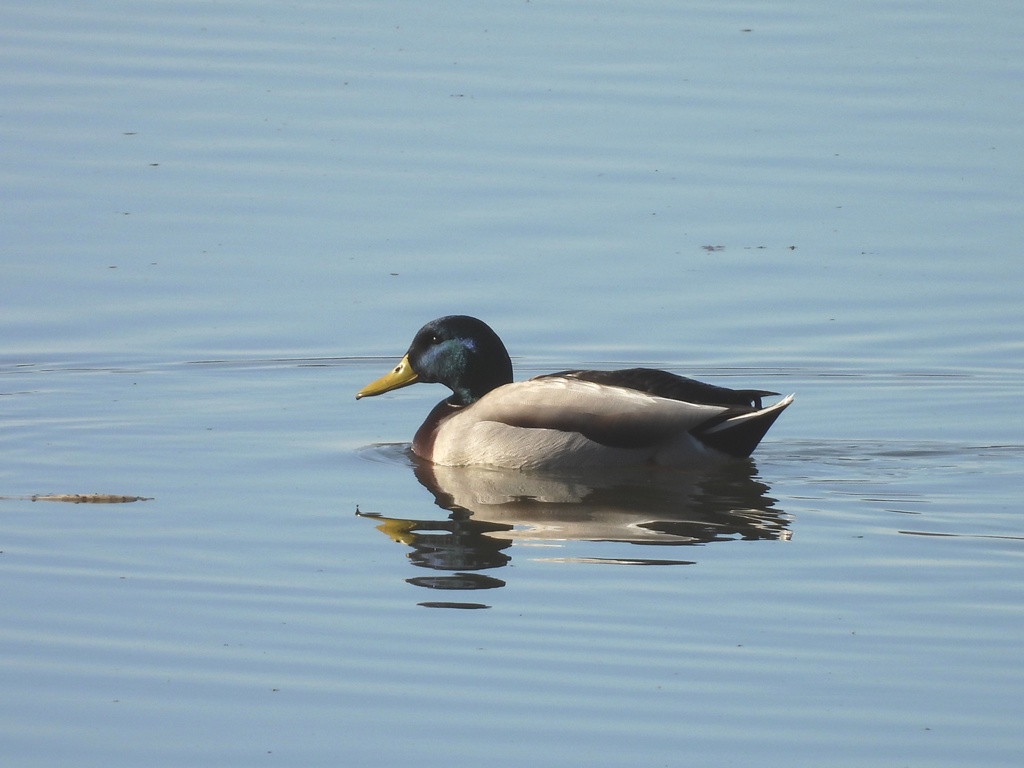
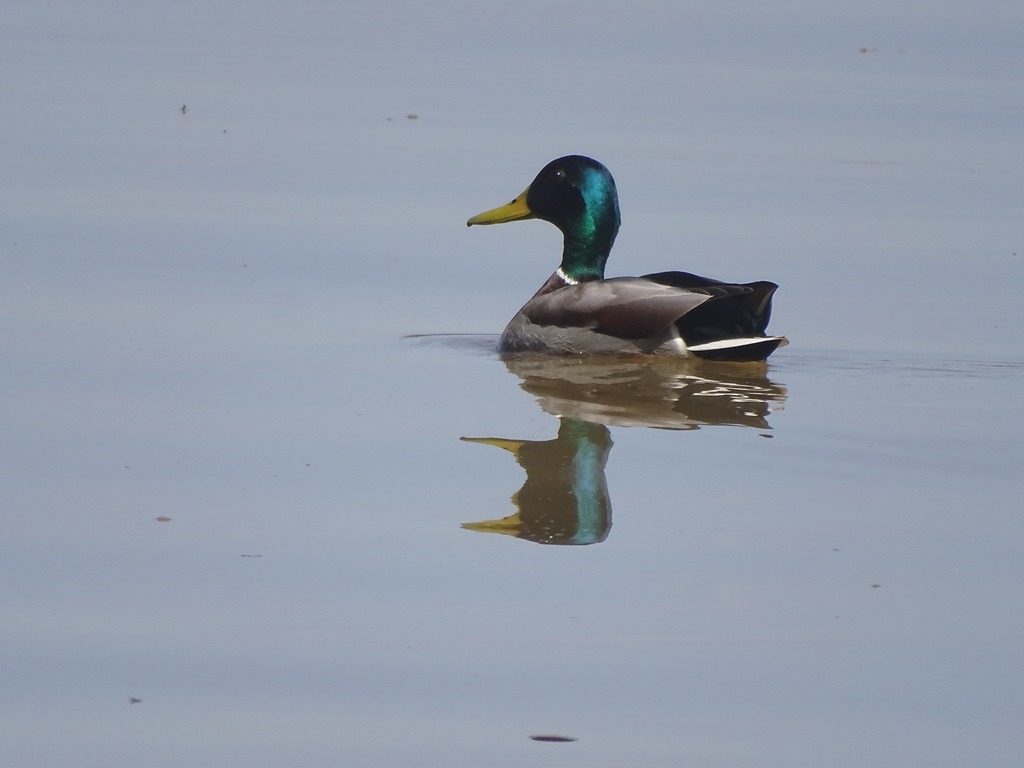
A diverse assortment of ducks stole the show on a recent visit to the lake. Their loud quacking resonated from across the lake where they were resting on accessible vegetation, logs and mudflats.
As social creatures, many ducks tend to prefer living in communal groups. They do this mainly for safety and to cultivate their social and foraging skills.
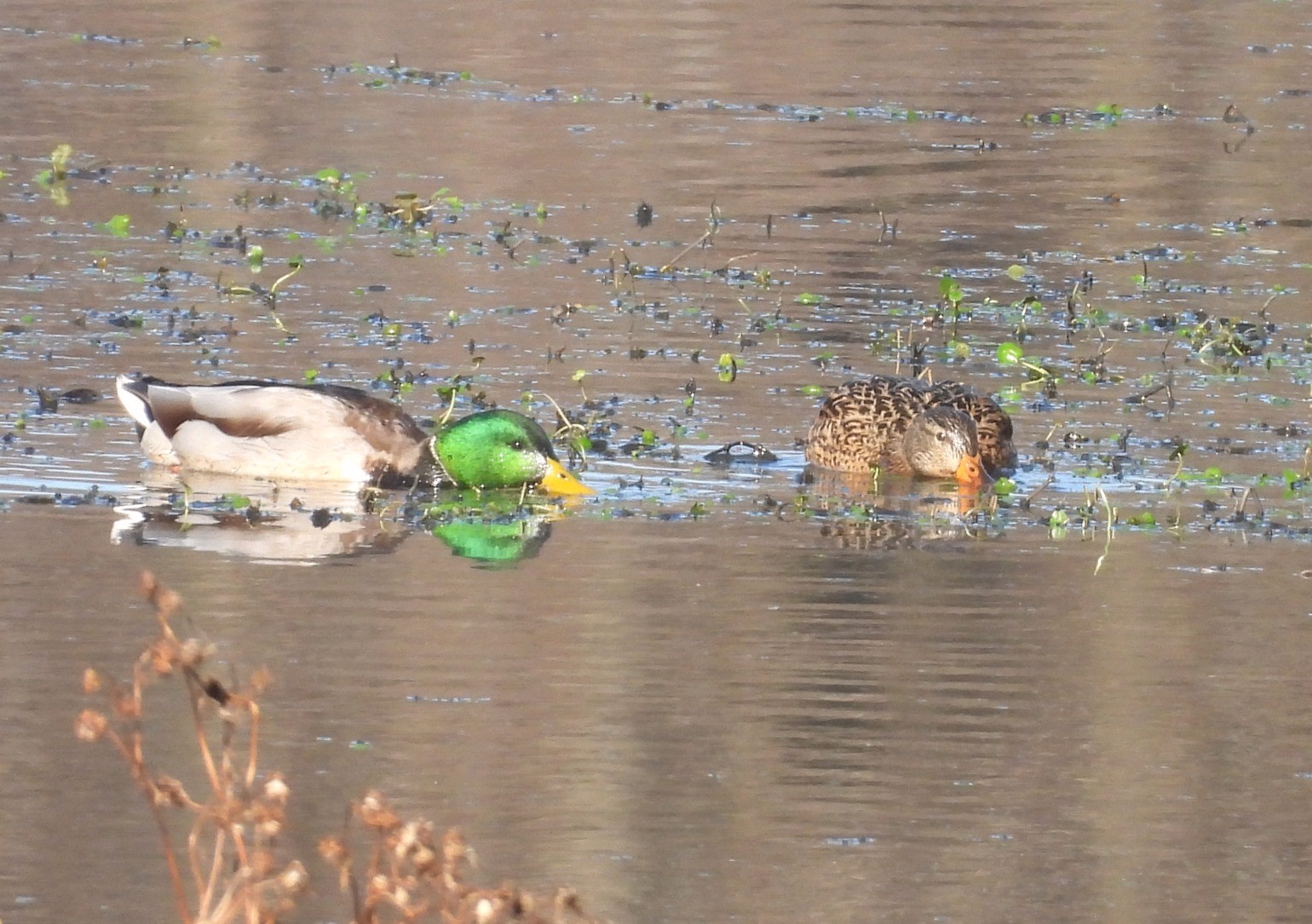
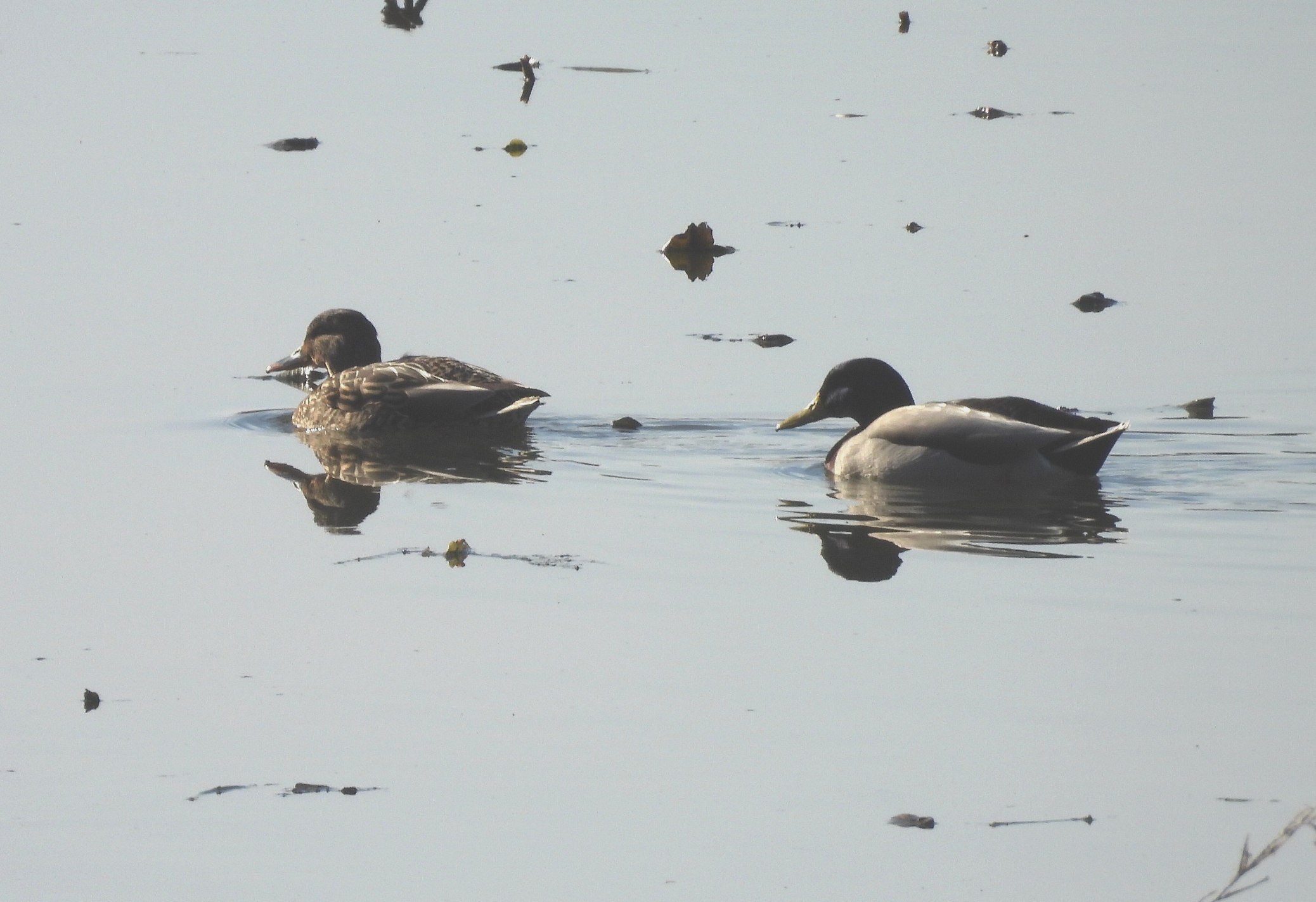
Ducks bob their heads as a form of nonverbal communication. This pair appear to be forming a bond, with the male nodding his head to convey interest and affection, while the female nods hers to show her acceptance. This behavior is a component of a courtship ritual, as ducks typically begin mating in late winter or early spring.
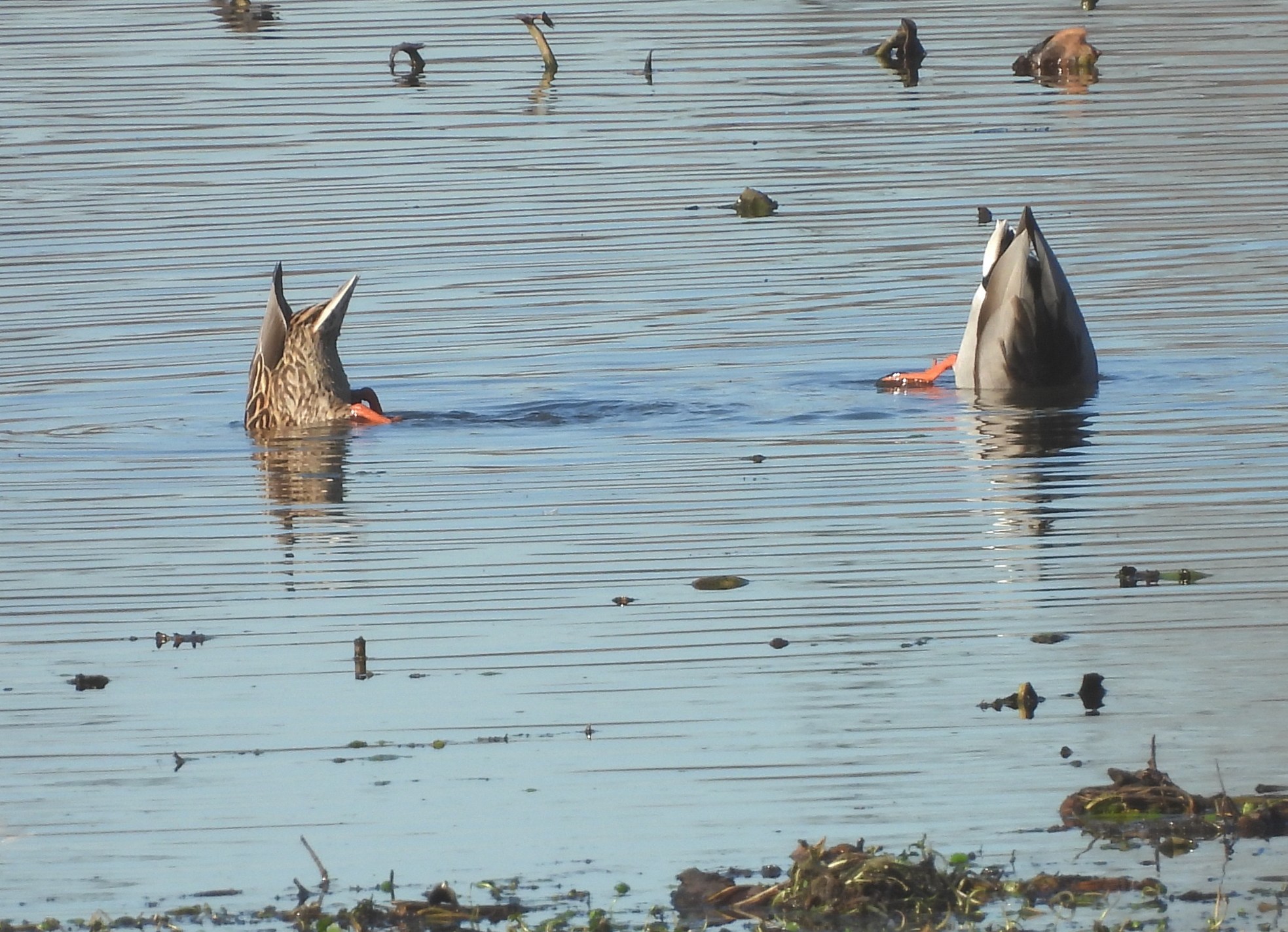
Ducks also move their heads up and down and employ rapid side-to-side head motions as they sift their bills through the lake water searching for aquatic plants and seeds. Additionally, they stir up mud to uncover insects, small fish, and crustaceans.
While feeding, ducks dunk their bills in the water to rinse their food, to facilitate swallowing and digestion, and to maintain the cleanliness of their bills.
What fun to spend a portion of the afternoon watching these beautiful and interesting birds, and how amazing to consider the role that something as simple as “head-bobbing” plays in the life of a duck.
“There is a way that nature speaks … Most of the time we are simply not patient enough, quiet enough, to pay attention to the story.” ~Linda Hogan
During the summer and autumn seasons, the swamp daisies attract a variety of bees and butterflies. However, by late November, their beauty fades, and the bees and butterflies are nowhere to be found. Recently, as I stood in my favorite spot on the board walk, gazing at the withered plants and bemoaning their decline, I noticed a swift flicker of wings — and then another. Flitting through the foliage were two birds that I seldom encounter.
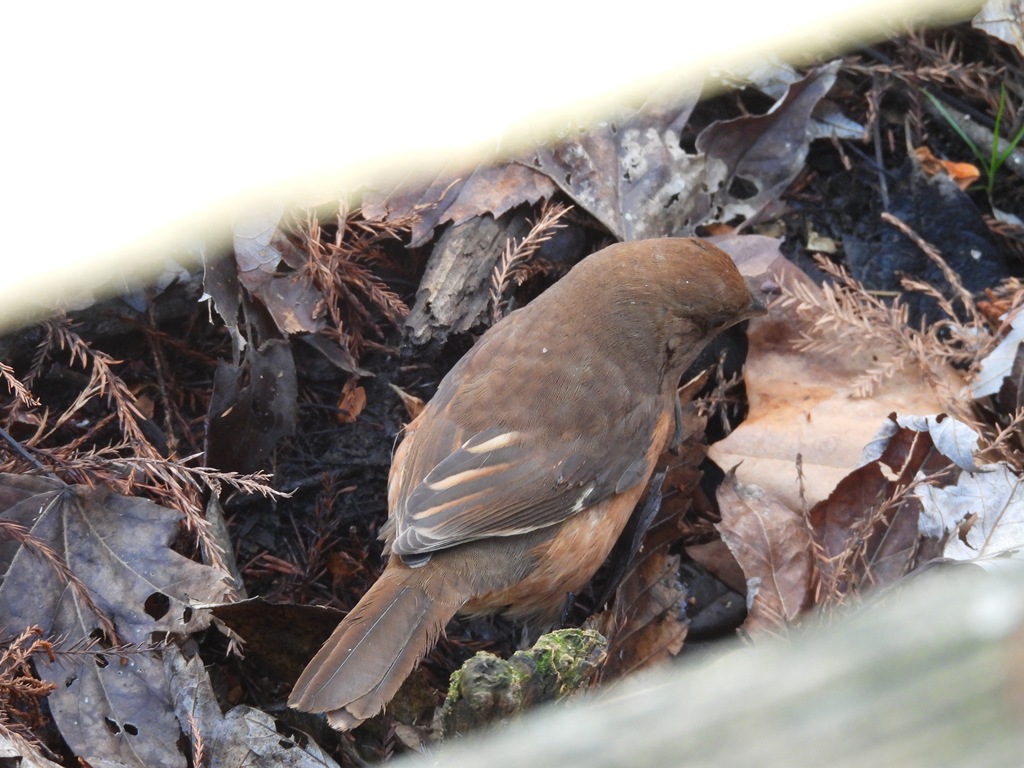
Initially, I noticed the Swamp Sparrow as it darted from one hiding spot to another, attempting to remain hidden among the marshy plants. This sparrow, characterized by its rusty hue, was searching for food along the water’s edge where dried plant seeds were plentiful. It is a winter inhabitant of our area, arriving in September and departing in May.
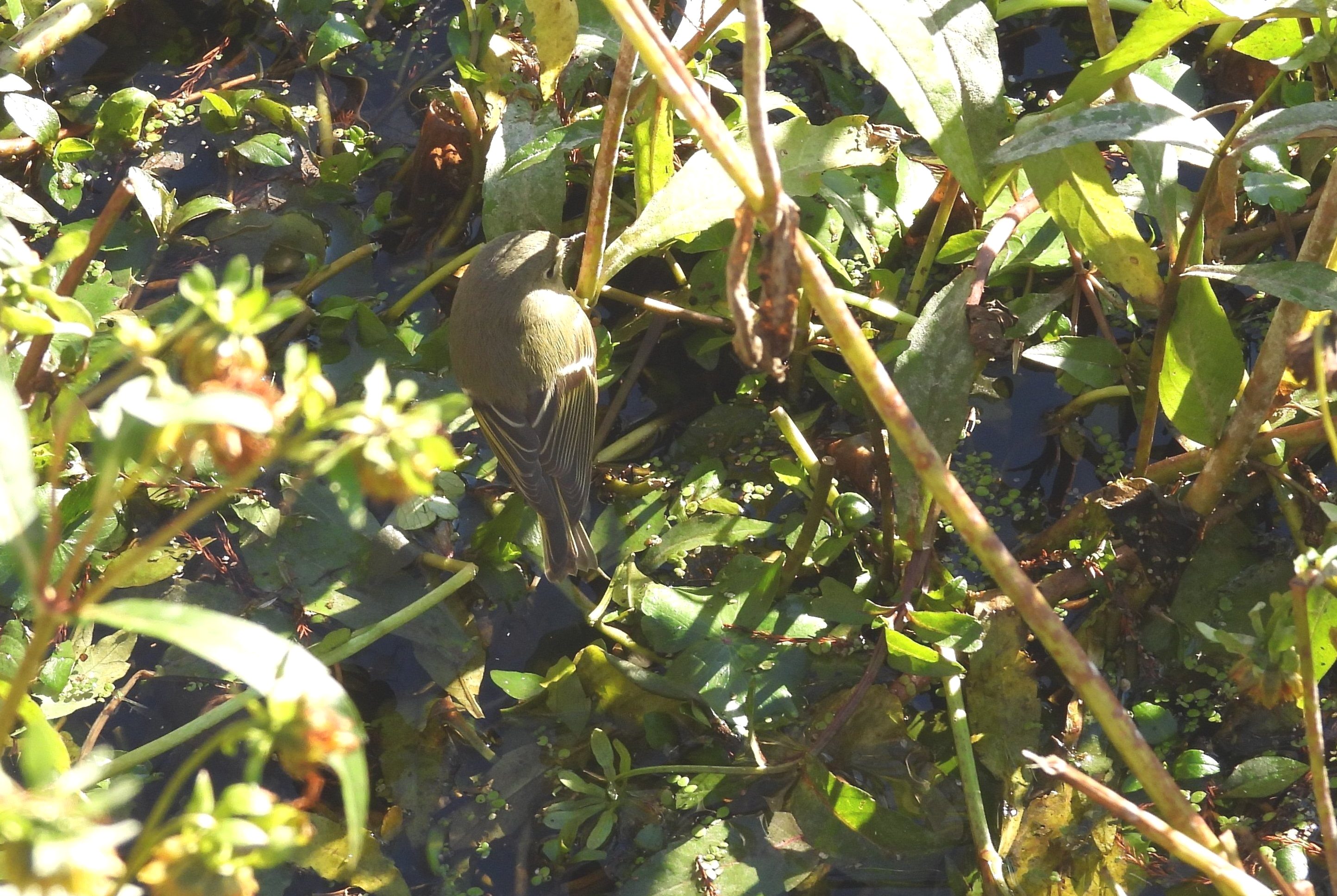
Then I spotted a female Ruby Crowned Kinglet — a tiny, agile bird. She was equally elusive as she flitted and hopped among the plants in an effort to remain hidden. Her wings, adorned with stunning olive green-gray plumage, flickered as she searched for tiny insects, berries and seeds. Like the Swamp Sparrow, it is also a winter resident.
As I watched these two evasive birds on one side of the boardwalk, I found it hard to ignore a loud scratching sound coming from the other side of the boardwalk. Peering through the wooden slats, I was delighted to discover a female Eastern Towhee using her feet to rummage through dried leaves and underbrush looking for food. Though not always obvious, the Towhee makes its home in our state year-round.
Nature is full of surprises. I had been in search of flowers and butterflies; however, I was instead blessed with the sight of three small birds. With every season that passes, new wonders emerge to provide delight and joy. Rather than lamenting the absence of the gifts from one season, we can turn our attention to the blessings of the upcoming season and be thankful.
Gratitude helps us to see what is there rather than what isn’t. ~Unknown
In late July, as we drove slowly down the road at the wildlife refuge, I was excited to spot an adult Yellow-crowned Night-Heron walking around on the floor of the swampy woods. It was quite shy, staying close to the cover of trees and vines as protection from prying eyes.
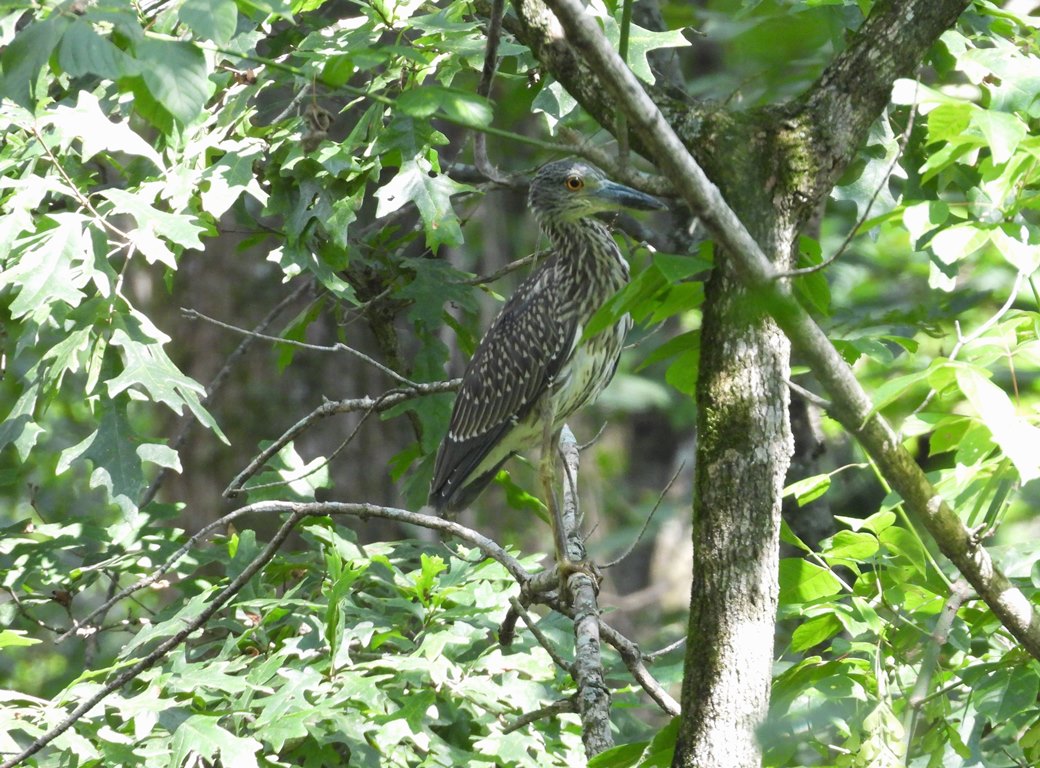
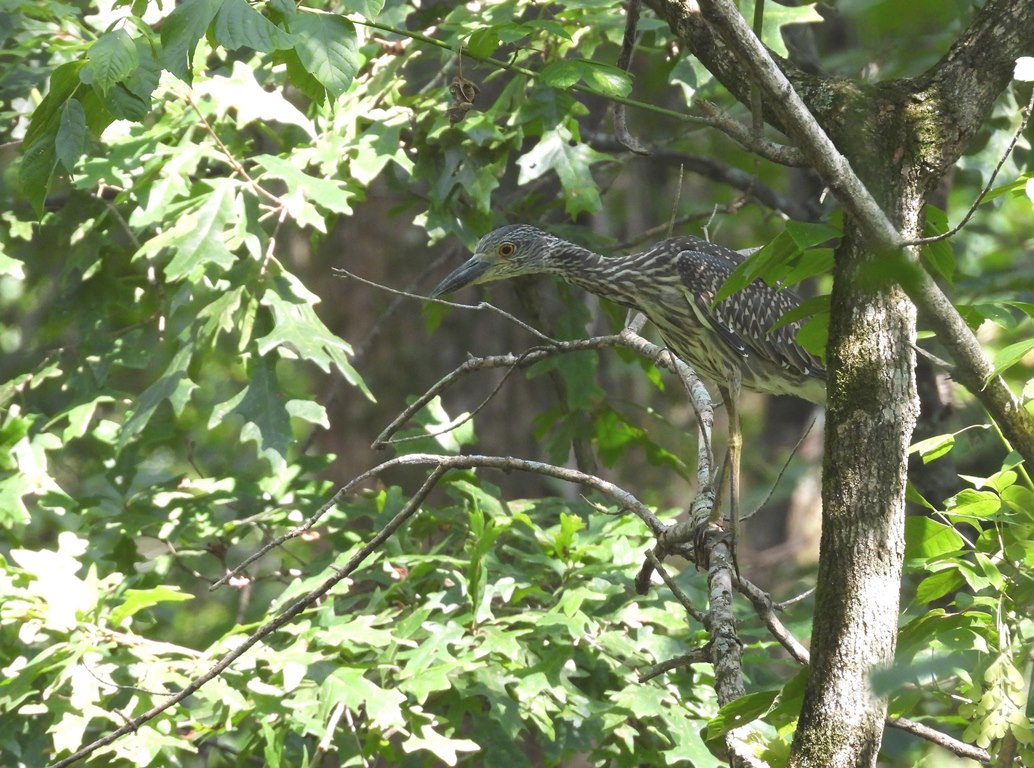
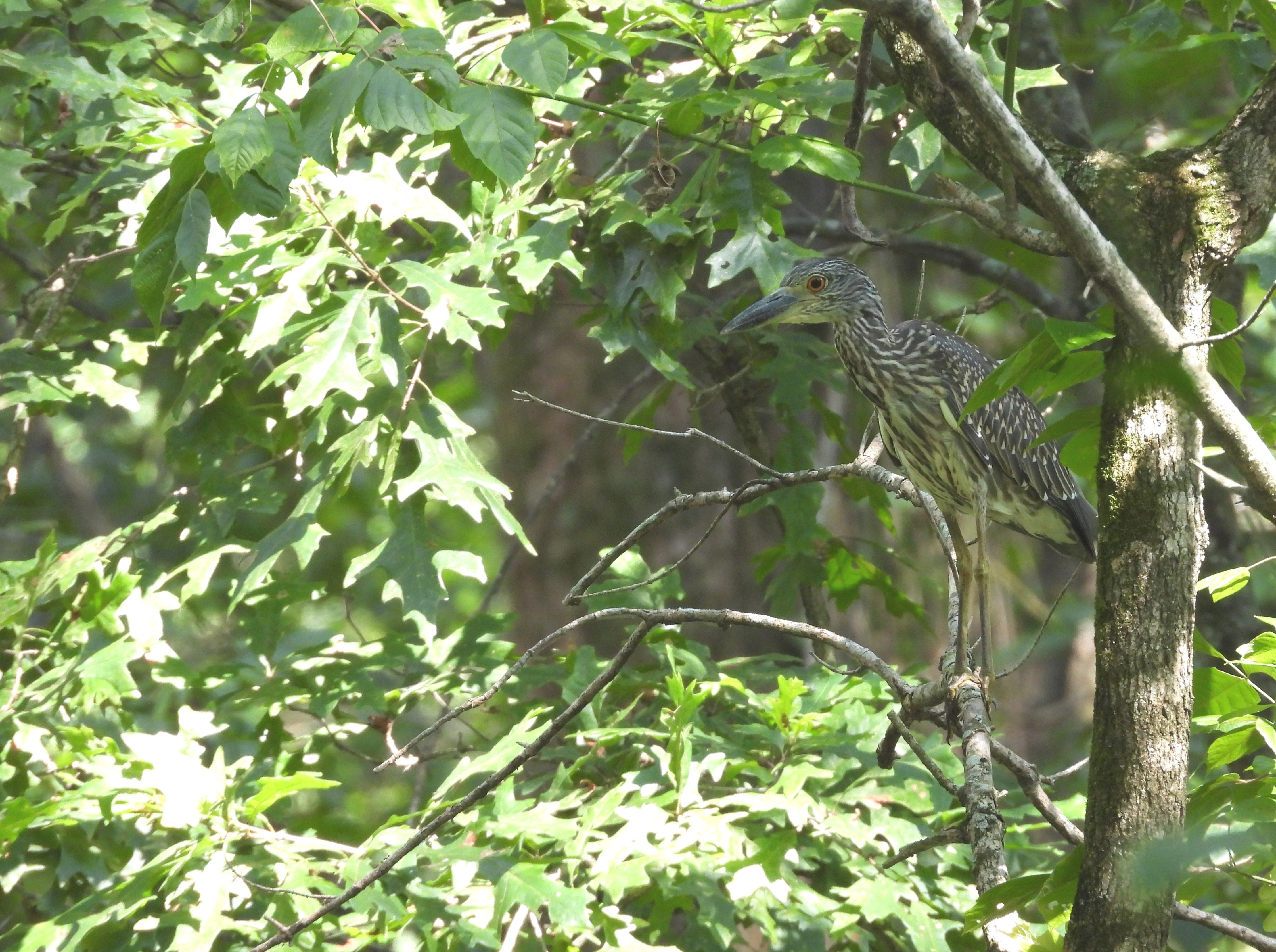
In early August, when we drove this road once again, we glimpsed the shadow of a large bird as it took flight from the forest floor and settled in a distant tree. This time it was a juvenile Yellow-crowned Night-Heron. With its spotted brown feathers and streaky underparts, it did an excellent job of blending in with the background of the branches and foliage. Had I not seen where it landed, I’m sure I wouldn’t have been able to find it among the trees.
“Scientists have found the gene for shyness. They would have found it years ago, but it was hiding behind a couple of other genes.” ~JonathanKatz
It’s impossible not to be fascinated by this alien-looking insect. I spotted it crawling along the handrail of the lake’s boardwalk. Busy on its prowl for prey, it paused long enough to give the human observer a curious glance.
From whence arrived the praying mantis? From outer space, or lost Atlantis? glimpse the grin, green metal mug at masks the pseudo-saintly bug, Orthropterous, also carnivorous, And faintly whisper, Lord deliver us. ~Ogden Nash
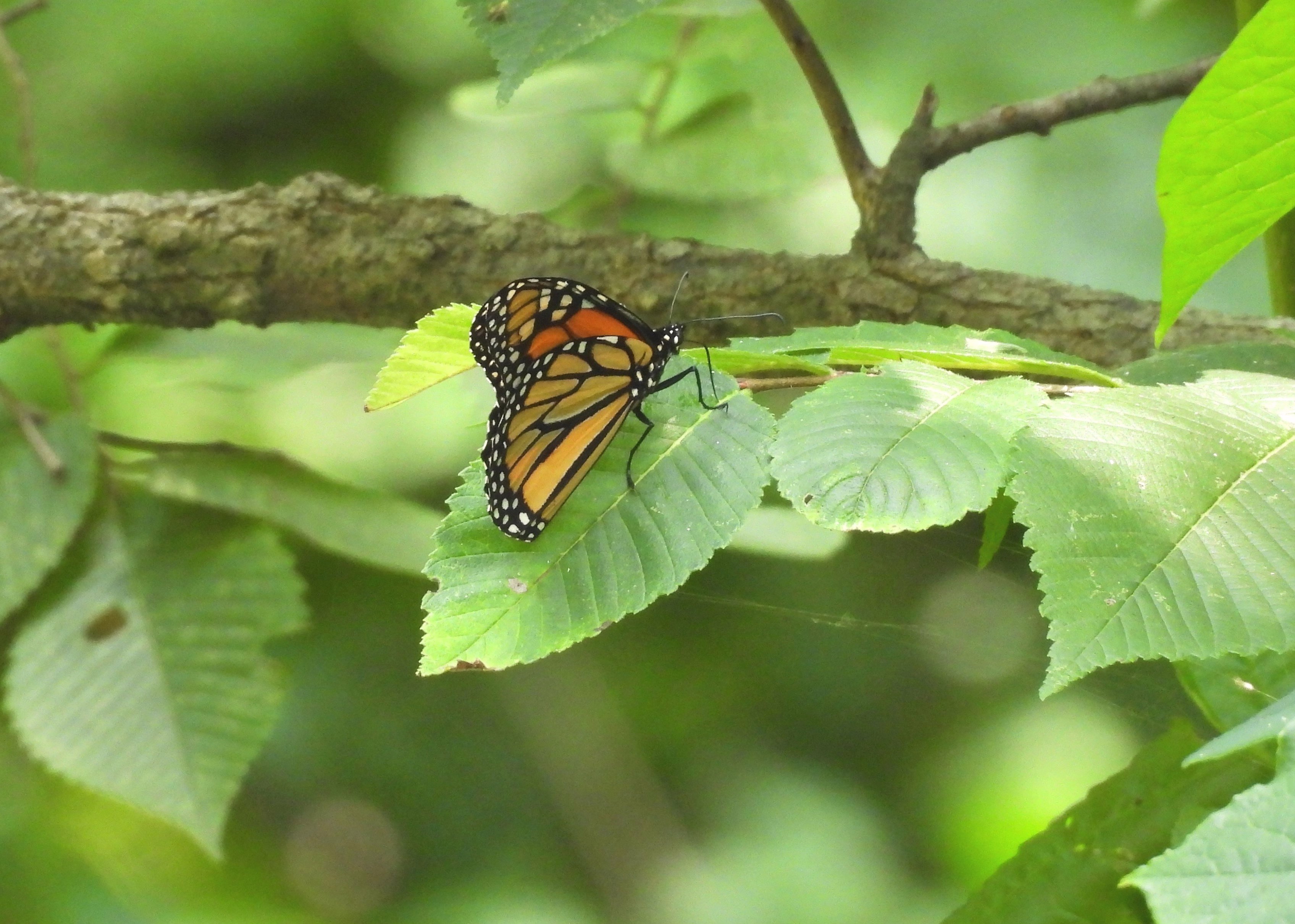
l was excited when this Monarch floated gently by and landed on the leaf of a nearby tree. This was the first one that I had seen this year, though I have since spotted others.
“Strength is found in every wingbeat of a Monarch’s journey.” ~Willow Hart
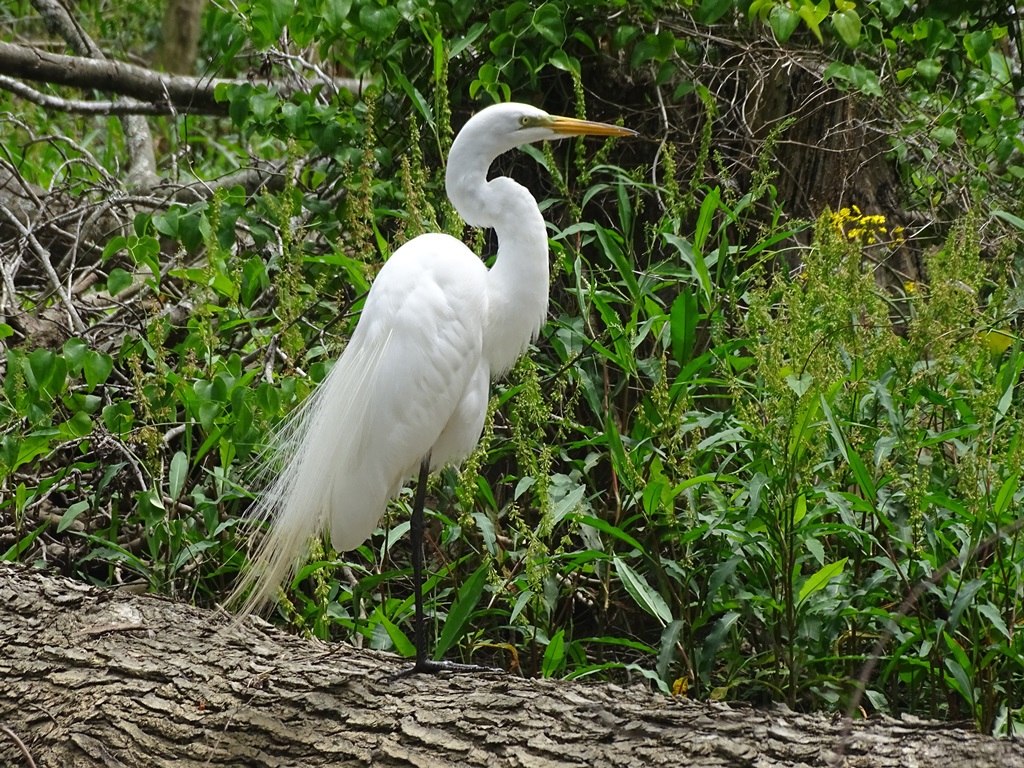
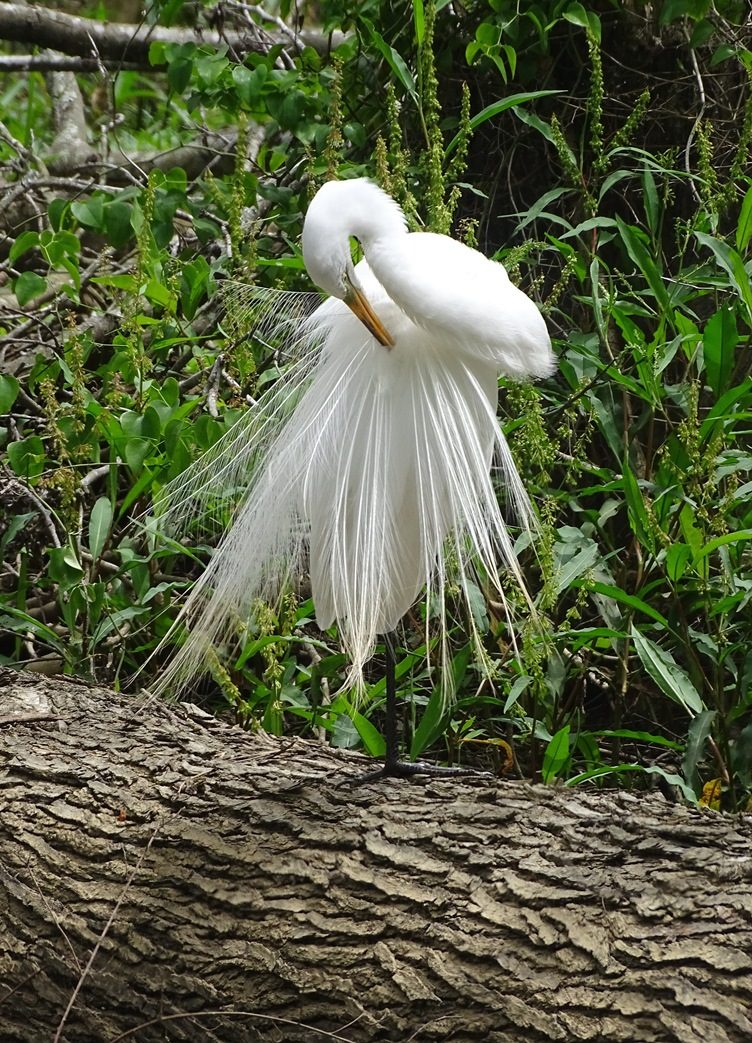
During the spring breeding season, the molted feathers of the Great Egret are replaced with bright white plumage and long ornamental feathers which are vital for attracting mates. Daily preening is crucial for maintaining feather condition, as well as providing insulation and waterproofing.
“Good grooming is integral, and impeccable style is a must …” ~Daymond John
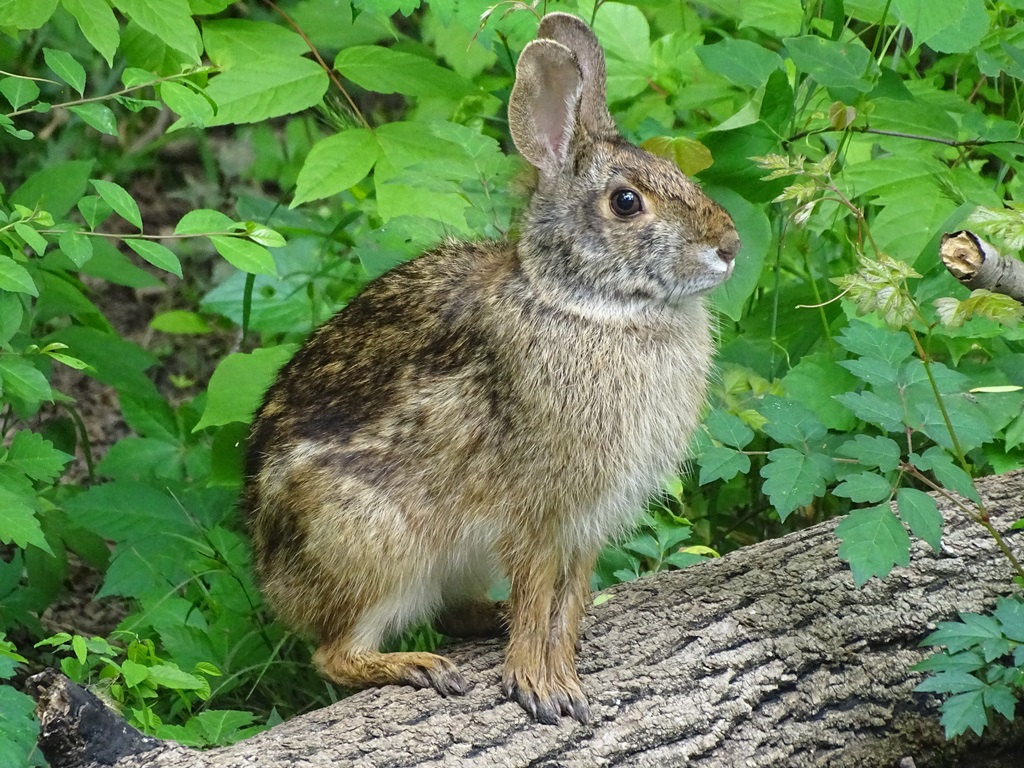
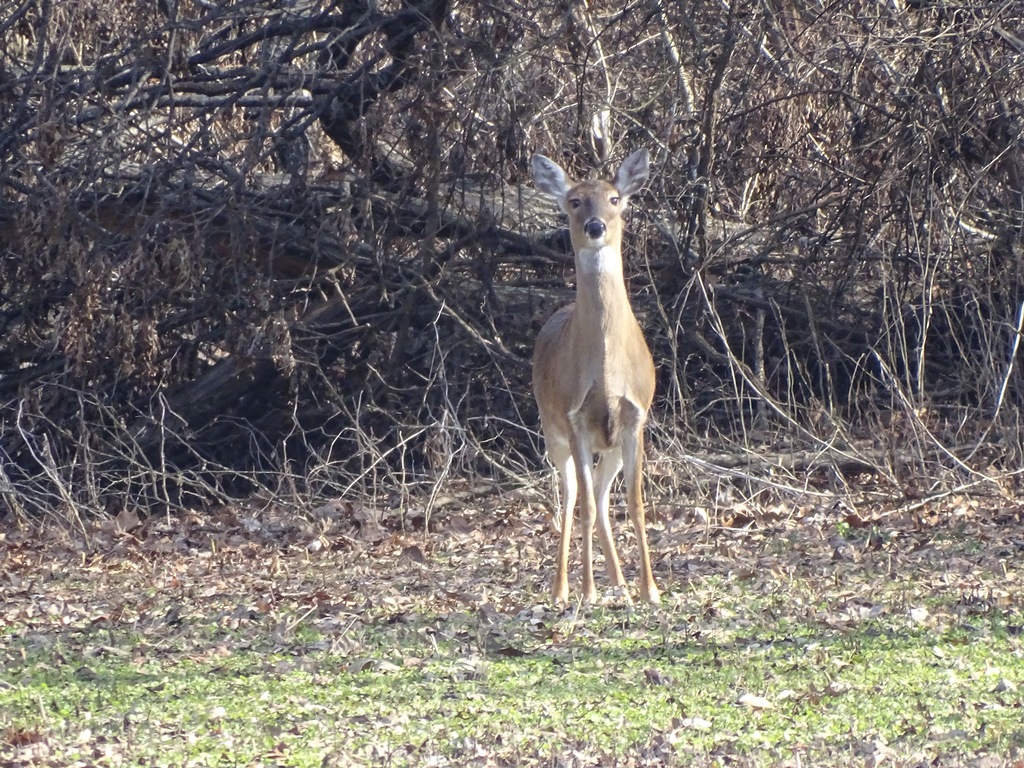
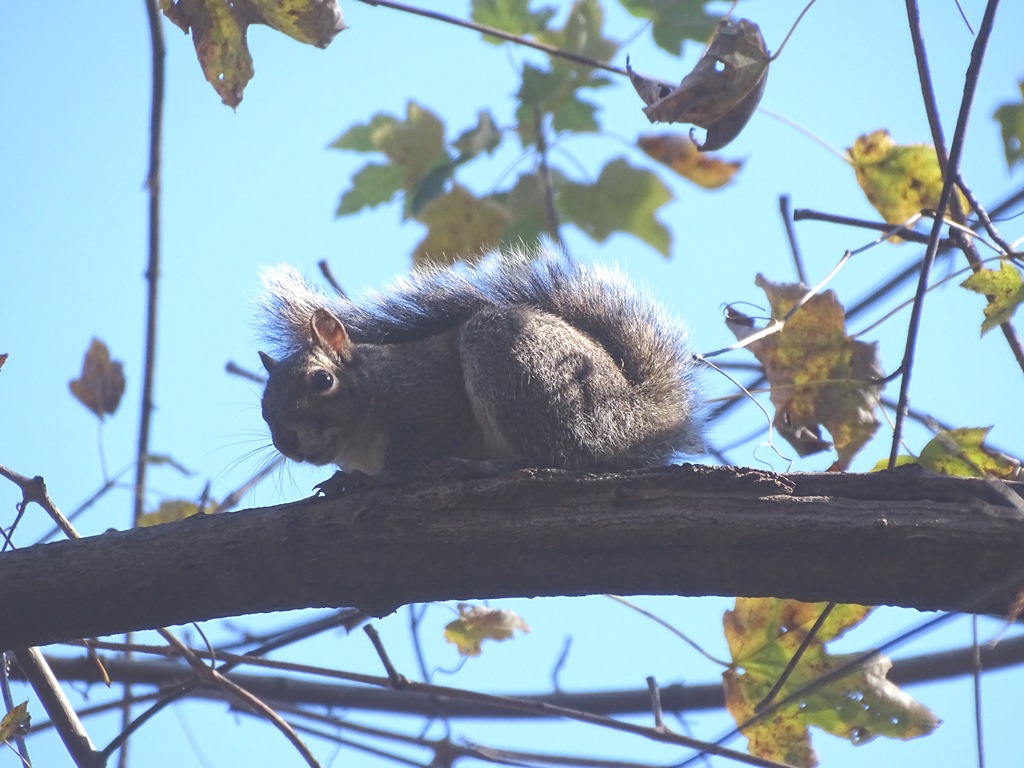
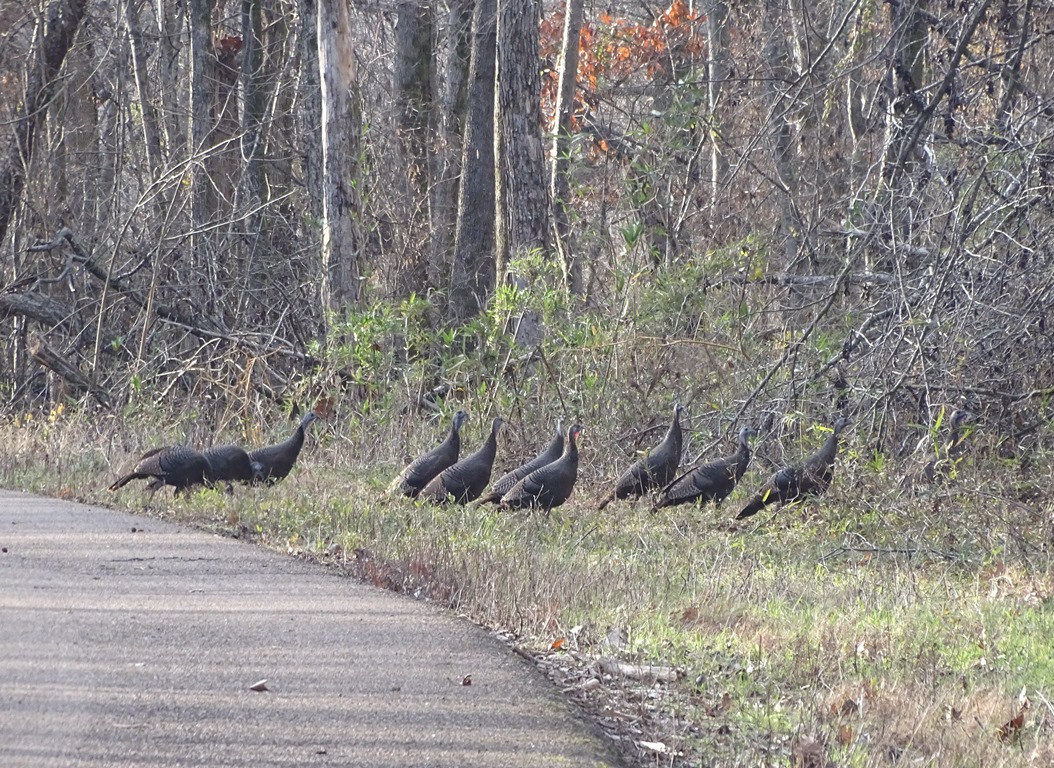
While driving the roads around the wildlife refuge, we are always on the lookout for woodland mammals which venture out into the open to forage and move about.
“It is remarkable how many creatures live wild and free though secret in the woods.” ~Henry David Thoreau
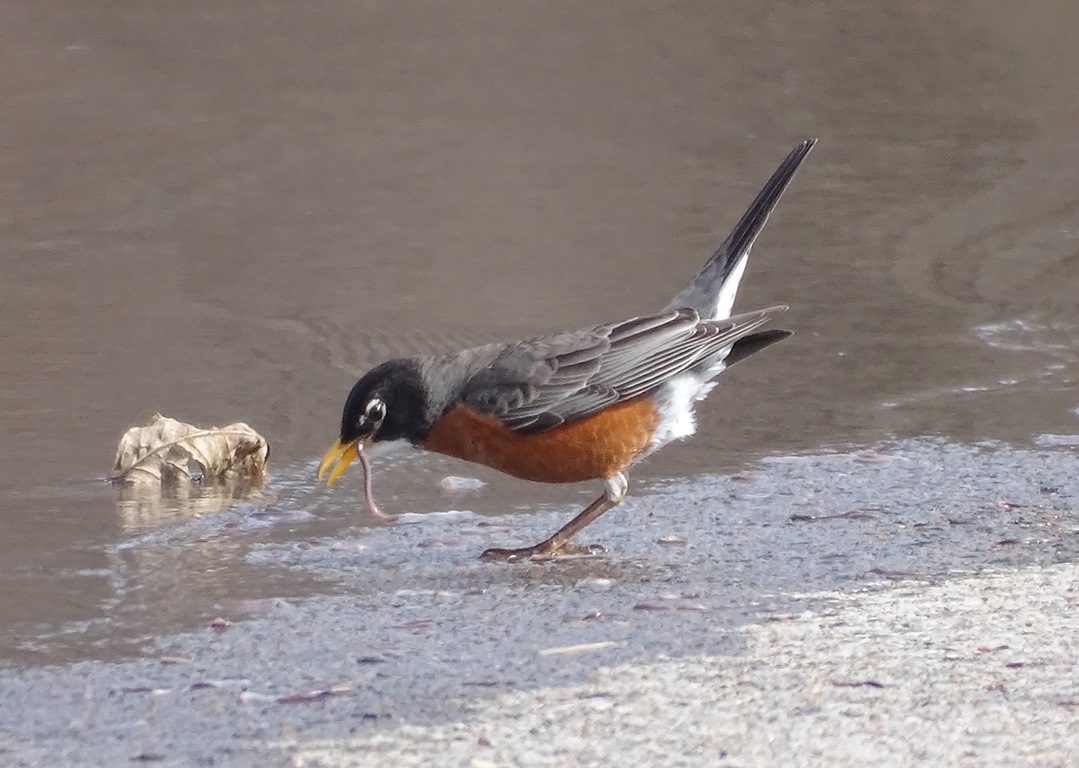
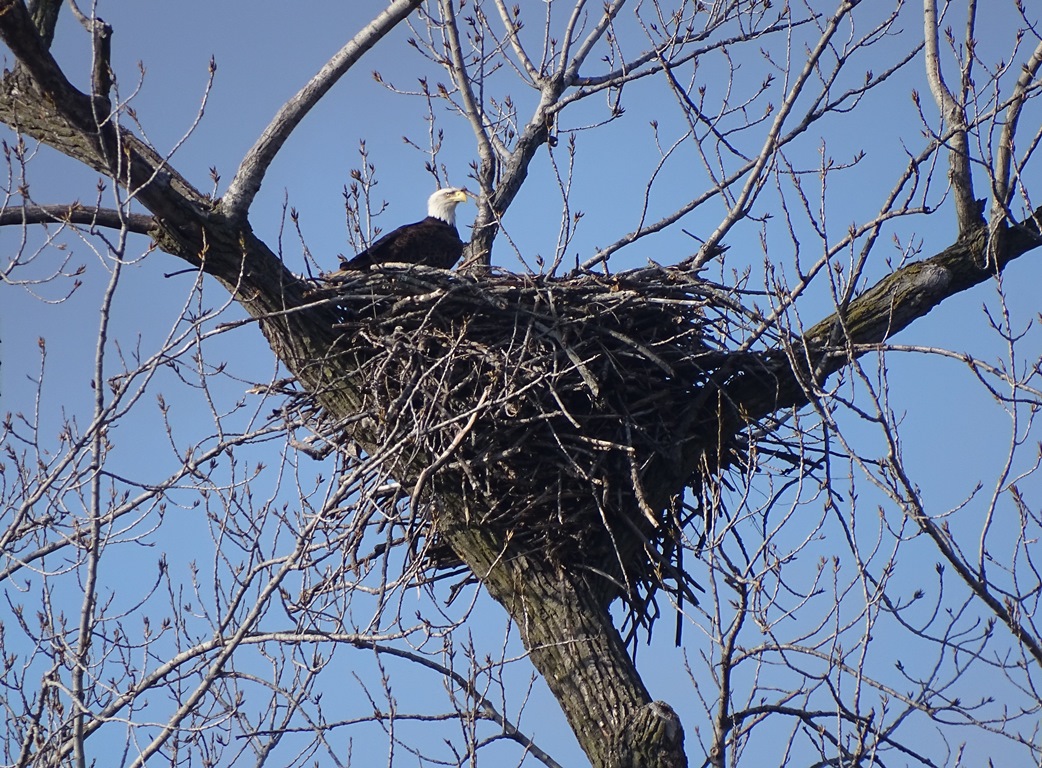
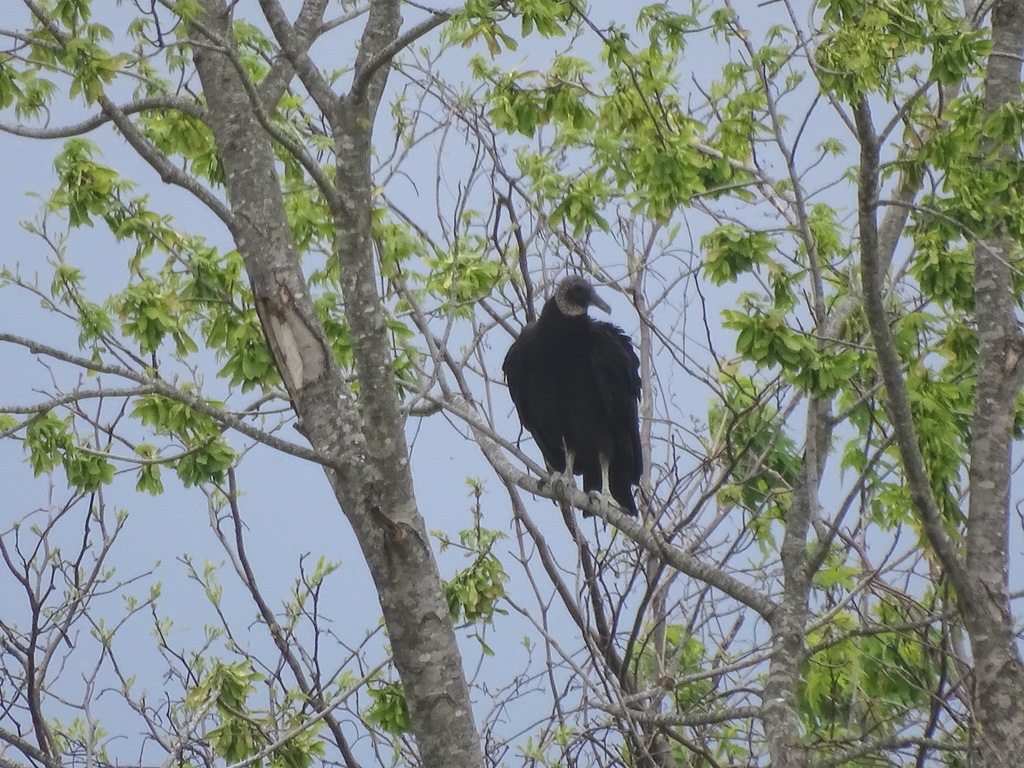
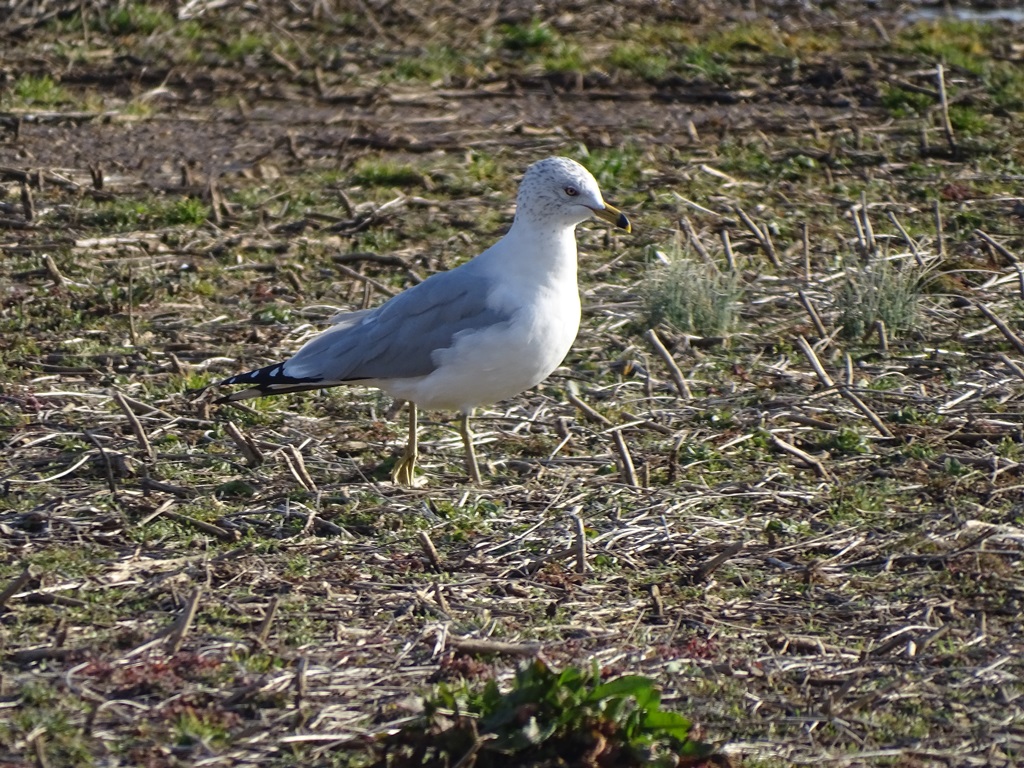
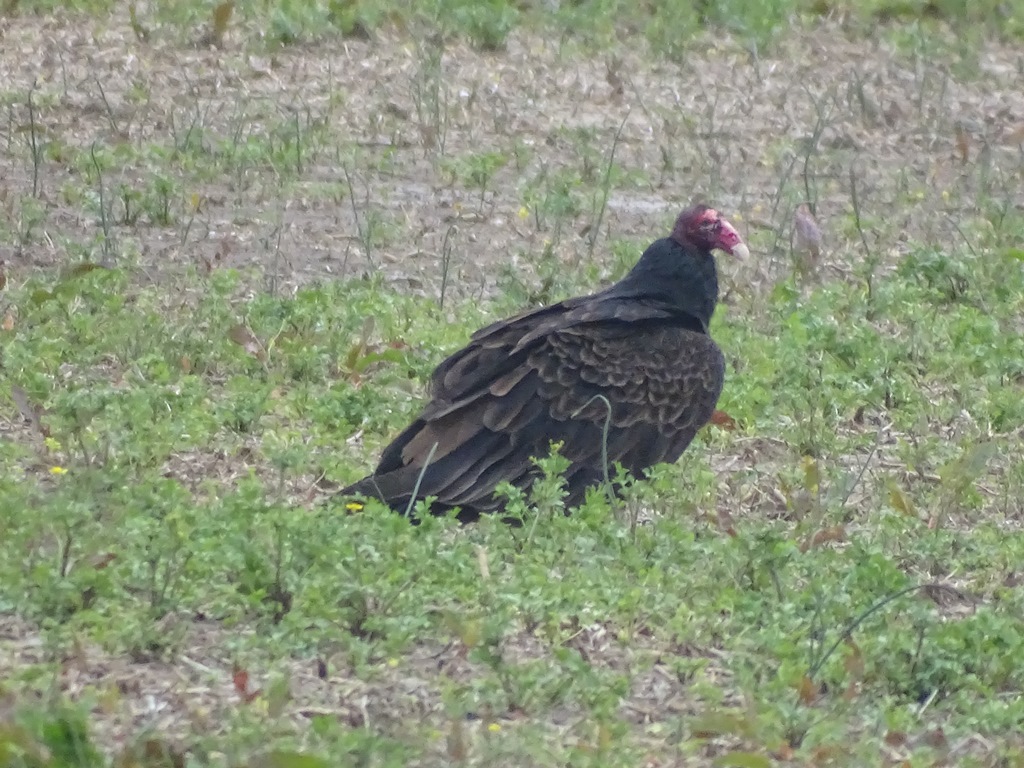
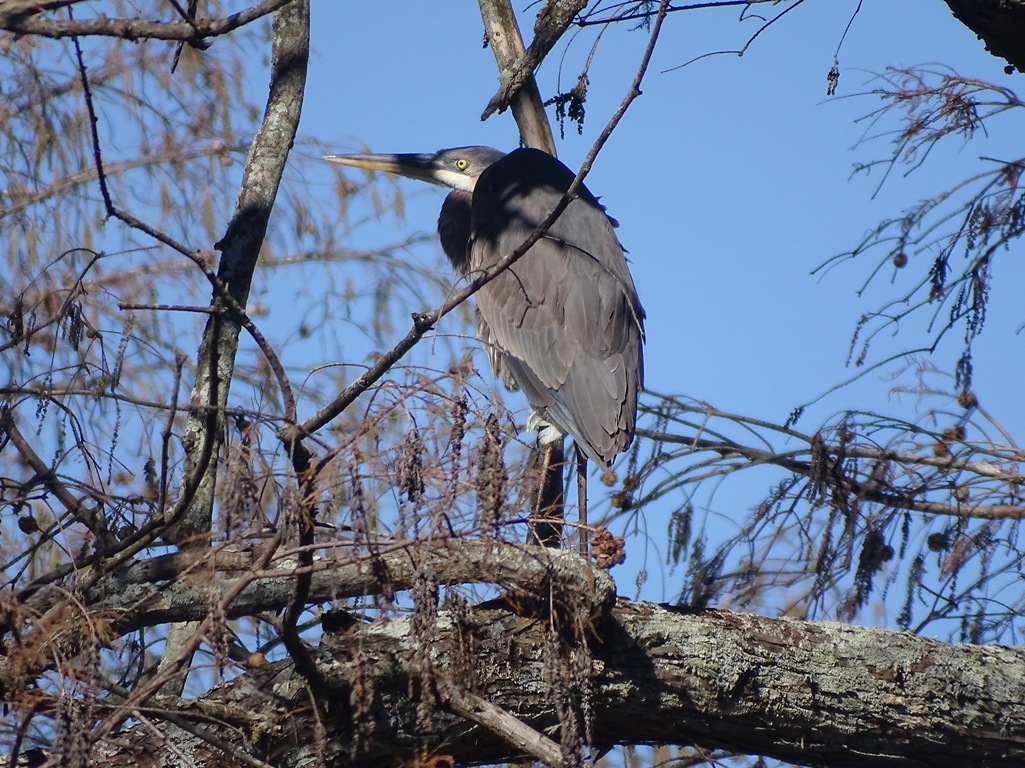
It’s always interesting to see what birds we can spot as we drive around the lake and the Mississippi levee. Here are some of our most recent finds.
You’ll get mixed up, of course, as you already know. You’ll get mixed up with many strange birds as you go. So be sure when you step. Step with care and great tact and remember that Life’s A Great Balancing Act. ~Dr. Seuss
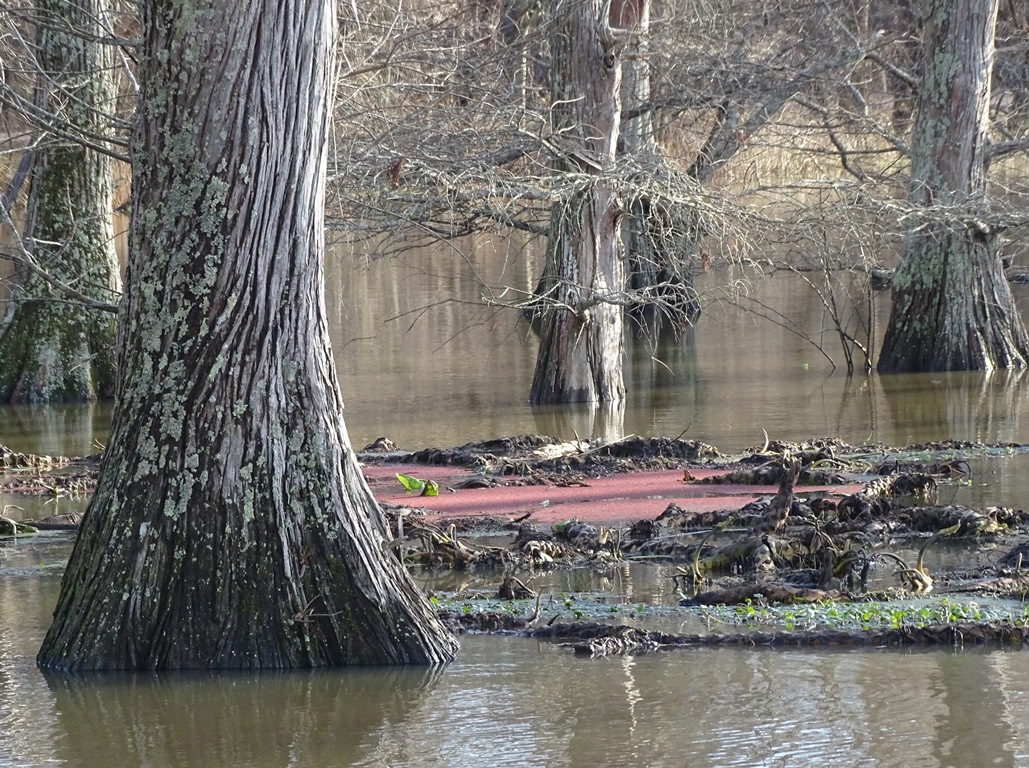
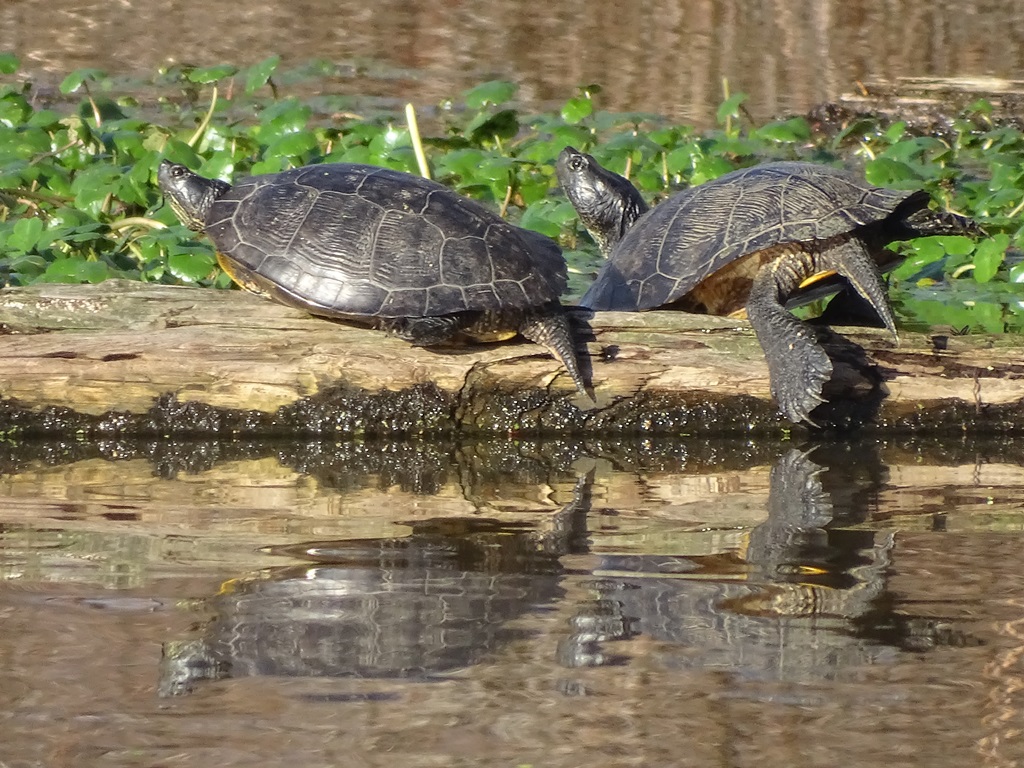
Several photos that were taken around the lake during December. I was surprised to see two turtles sunning on a log so late in the year. I’m sure they will find a warmer place underwater as the big cold front creeps in this weekend.
Below is a peaceful scene of cormorants and gulls gathered at a distance from the boardwalk.
“I like to think that to one in sympathy with nature, each season, in turn, seems the loveliest.” ~Mark Twain
Note:Credit goes to my husband for the colorful slug photo.

























 walking on a country road