We saw an interesting animal at the refuge that we had never seen before. From a distance, it looked like a muskrat or beaver, but a local landowner told us that it was a Nutria. He said that he sees them in the wintertime out walking on the ice.
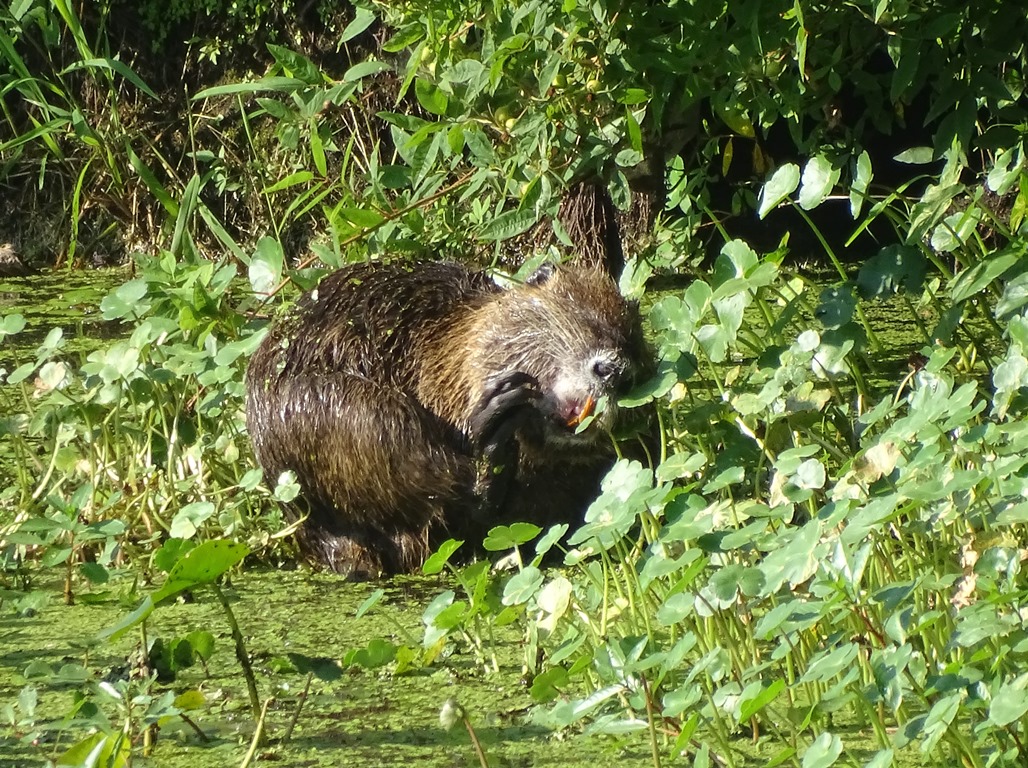
Larger than a muskrat but smaller than a beaver, Nutria have brown shaggy fur and whiskers, and can be found both on land and in the water. They also have orange front teeth, long, round, hairless tails, five-toed front feet and webbed hind feet.
When we first saw this one, it was swimming in the water, stopping to nibble on vegetation.
Notice that it appears to have lost part of its long, rat-like tail.


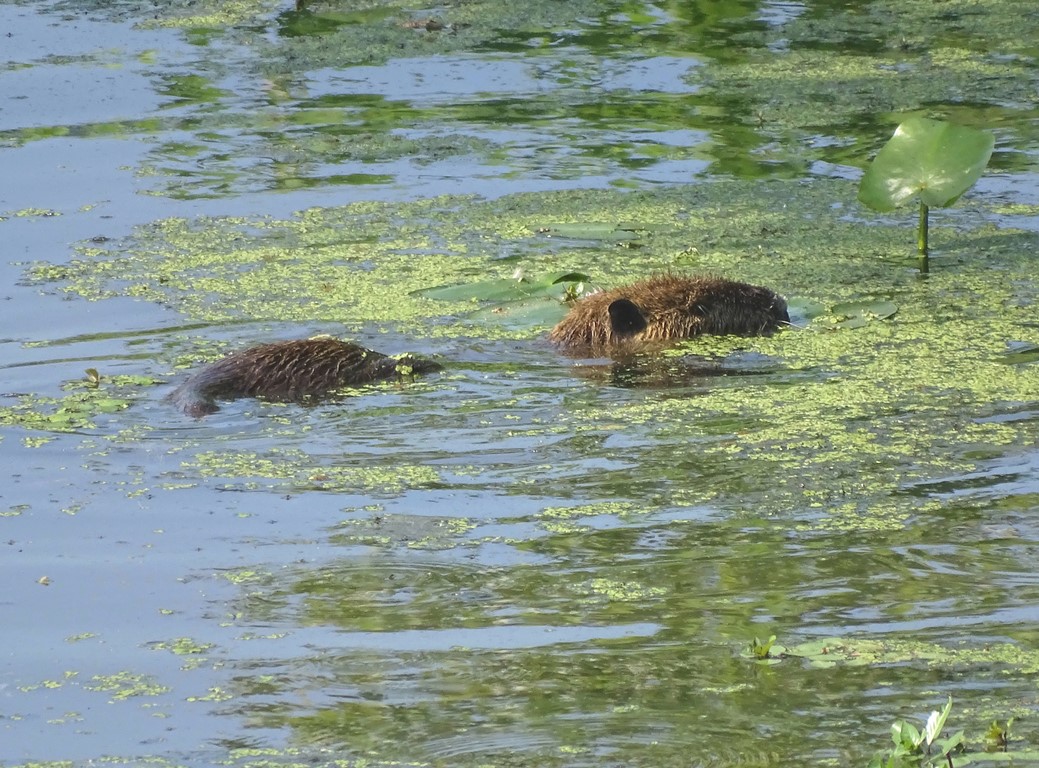
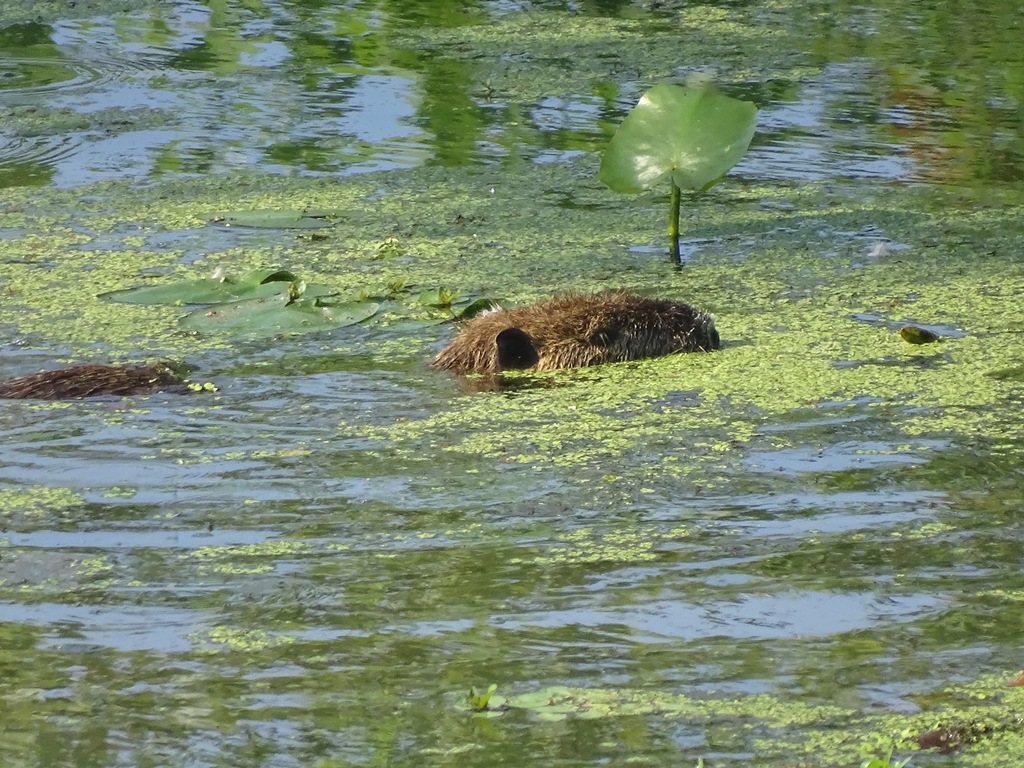
Eventually, it climbed up on the shore and proceeded to scratch or groom its fur. Oil, produced by glands near its mouth, is used in grooming and waterproofing the fur.
You can see an orange tooth in the fourth photo.
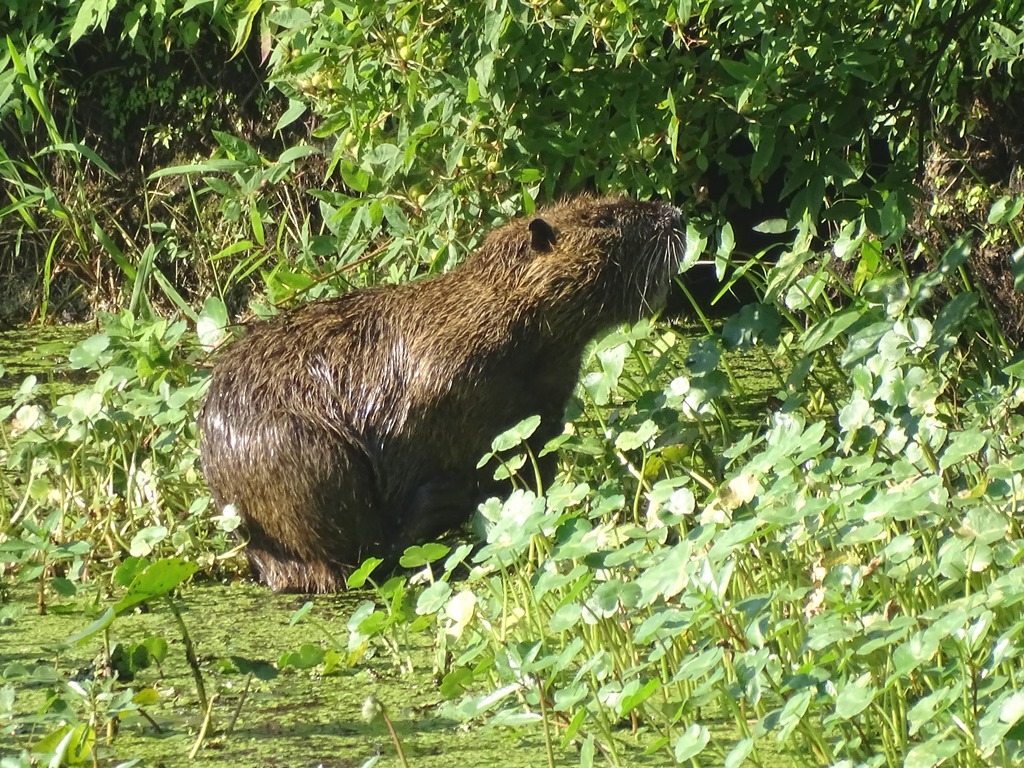




Although Nutria resemble the muskrat and beaver, they are an invasive wildlife species that was brought in from South America by fur traders hoping to profit off of their undercoats. When the fur industry was unsuccessful, many of these animals were released into the wild or escaped. Now the population has expanded, and they are considered a nuisance. They eat all parts of aquatic plants, including the roots, making the plants less likely to grow back. This makes the soil unstable and destroys food and habitat needed by native animals.
“Visitors should behave in such a way that the host and hostess feel at home.” ~J. S. Farynski
 walking on a country road
never heard of these before Rebecca? Looked it up. They also can contaminate water supplies for humans.
Yes, they had several bad qualities that I didn’t write about. They sound like really bad news for lakes and wetlands.
Like a cross between a muskrat and a beaver.
With a little rat thrown in. 🙂 Thanks, Timothy.
Sounds like a bad actor, quite troubling that so many invasive species are irrevocably altering the environment. And we have only humans to blame. A sorry tale, indeed.
I agree. Well said.
That looks a lot like our muskrats … except for that orange tooth. It’s kind of an odd-looking critter isn’t it? The orange big tooth makes it able to do some serious damage.
It does resemble a muskrat a lot, but it’s body and head are bigger. This one looks particularly funny since part of its tail is missing. It is surprising how much damage they can do to the ecosystem.
It makes you wonder what happened to its tail doesn’t it. The DNR considers the Mute Swans a threat to the ecosystem for the aquatic plant life they ingest, thus killing off crustaceans that can’t survive anywhere else.
That’s too bad. They are such beautiful birds.
I agree – I was sorry to read that.
Never heard of these before. Thanks for posting!
A new one to me also. 🙂