Crossing Paths With Guinea Fowls

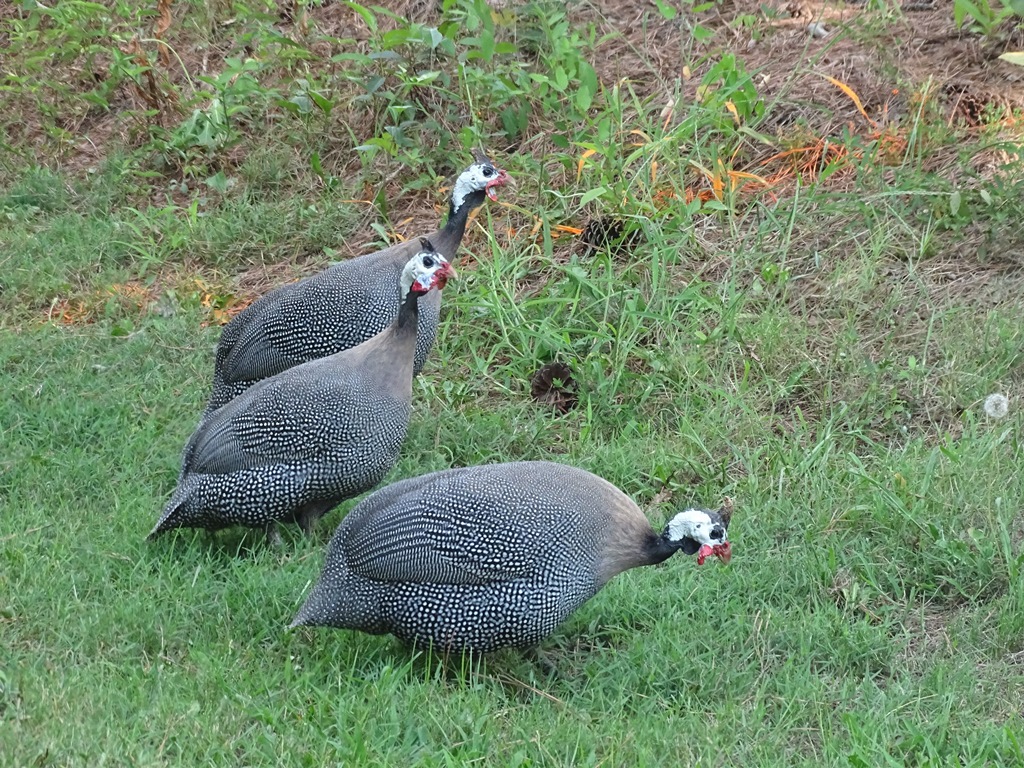
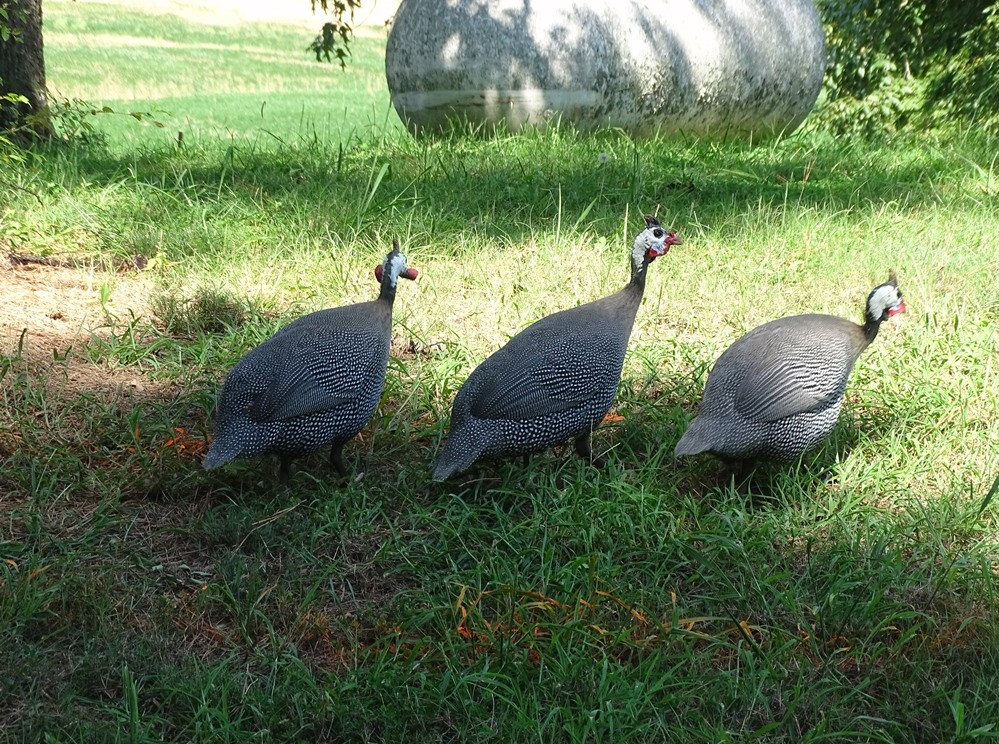
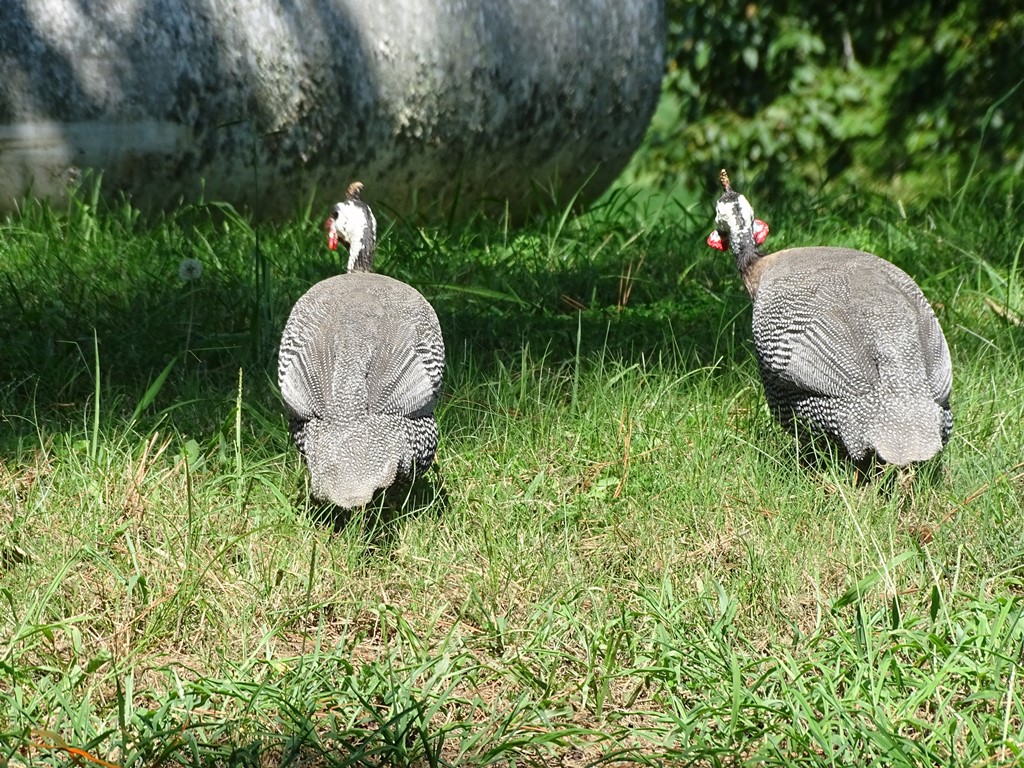
While out driving in the country, we were surprised to see three guinea fowls scuttle across a roadside ditch and up into a yard. 

Also surprised by our unexpected presence, they let out a unique and rather loud bunch of screeches as they quickly headed in the opposite direction. 

Being a native of Africa, and previously only having seen them at a zoo, they were one of the last birds that we had expected to come upon. 

This raised my curiosity about why guinea fowls would be roaming around in a yard way out in such a rural area.  It turns out that raising guineas is becoming more common and has several benefits.  They roam free in yards and gardens and are persistent in their pursuit of pesky insects (including fleas, ticks, flies, and mosquitoes), spiders and small animals such as rodents.  They are also excellent at sounding the alarm if predators such as snakes, foxes or raptors or intruders such as unexpected humans are about.  And, of course, they are a good source of eggs and meat. While raising guineas has many positive benefits, it’s also a good idea to keep in mind that these birds tend to be very noisy, are not very domesticated and can harass smaller birds and chickens which also live on the property.

“I’ll see you when the road decides it’s time for our paths to cross again.” ~Ben Maxfield

Dragonfly Perches

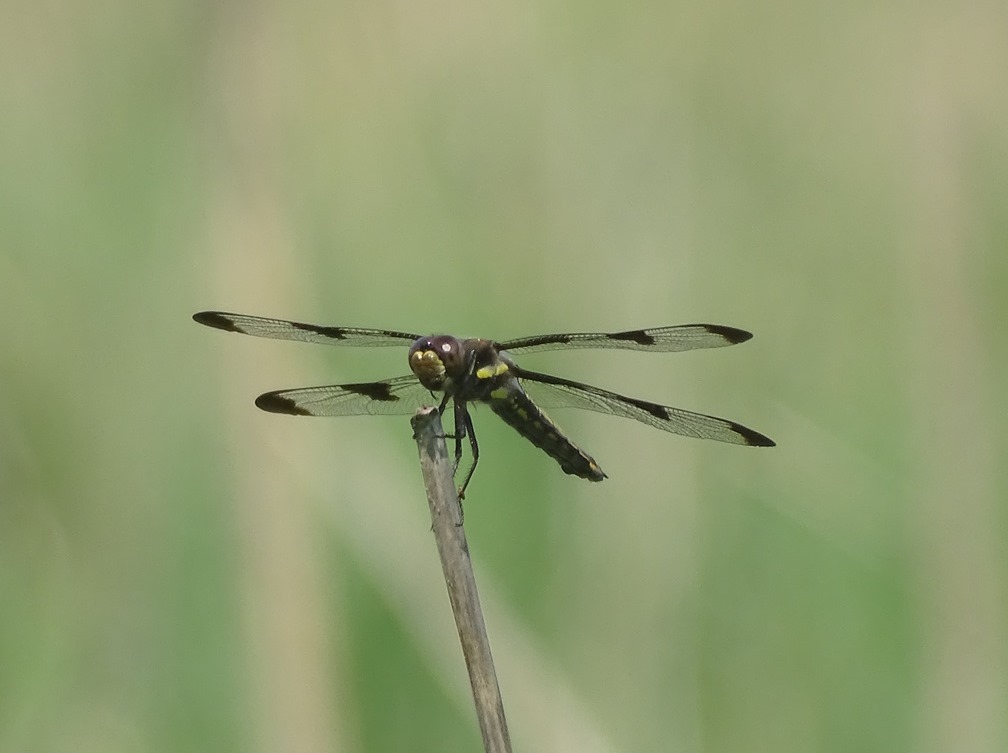
Dragonflies use a variety of perches on which to land, and then utilize their large eyes to keep a lookout for both prey and predators.  By choosing a good perch, they have the advantage of resting while being on the hunt. They are also able to use several techniques to regulate their body temperature from this resting position.

“There is virtue in work and there is virtue in rest.  Use both and overlook neither.”  ~Alan Cohen

Grabbing Some Grub

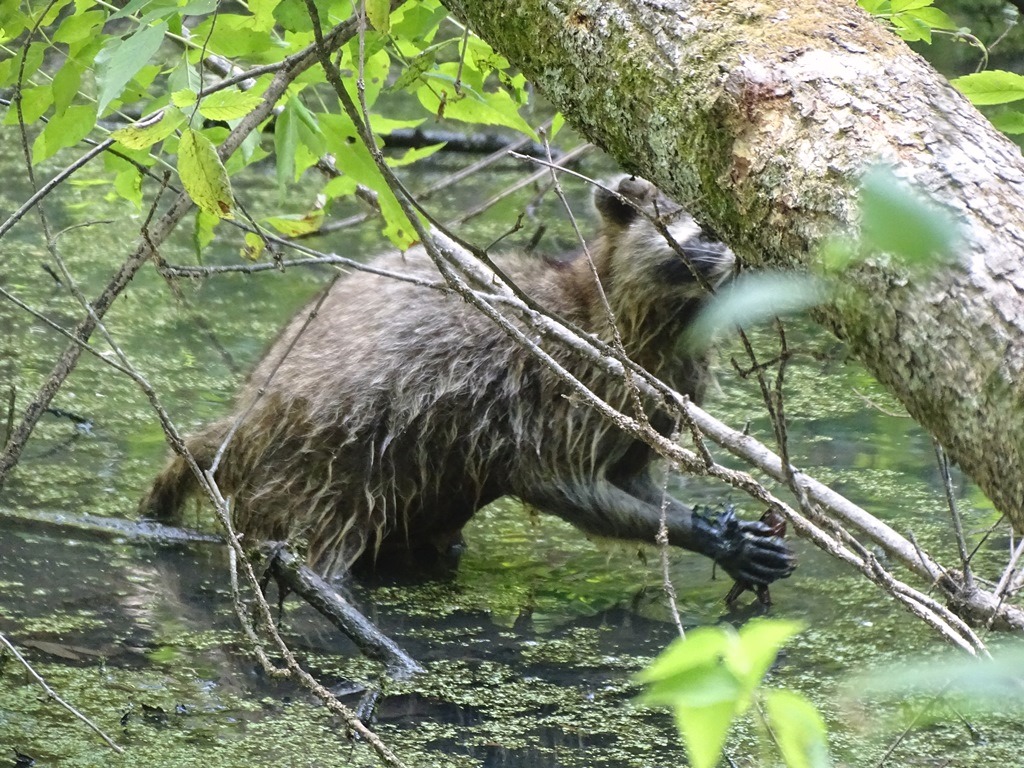
While driving along a road that runs through the refuge, we spotted several different raccoons, including young ones, walking around in shallow swampy water.  With the extremely hot temperatures and sparse rain, the pools were a popular place. At first appearance, the raccoons seemed to be wandering aimlessly around in the water.  However, after watching for a while, it became obvious that they were very methodically scanning the bottom of the pools with their sensitive paws in search of food.  It was interesting to watch the raccoons use their human-like hands to catch and handle the crayfish and frogs that they pulled from the water.

An objective is an ambition, and life without ambition is … well, aimless wandering.”  ~Alfred Wainwright

Swallowtail on Buttonbush

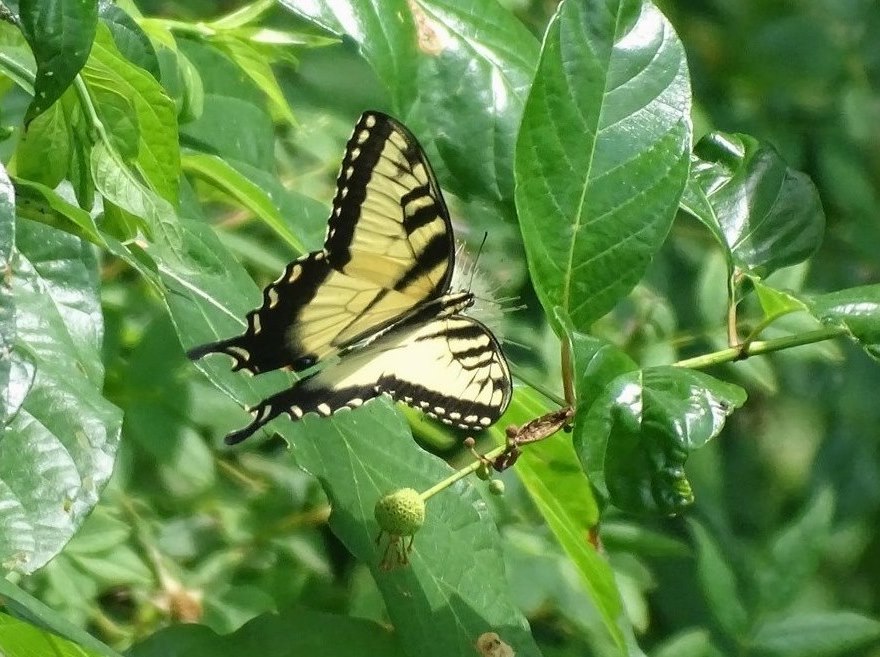
Buttonbush is a wetland shrub whose creamy, ball-shaped blossoms attract many pollinators, including this Eastern Tiger Swallowtail.

“Tremendous beauty can be found in the tiniest of things… for who has ever thought to rival that of a butterfly’s wing.”  ~Kristen D’Angelo

Changing Direction

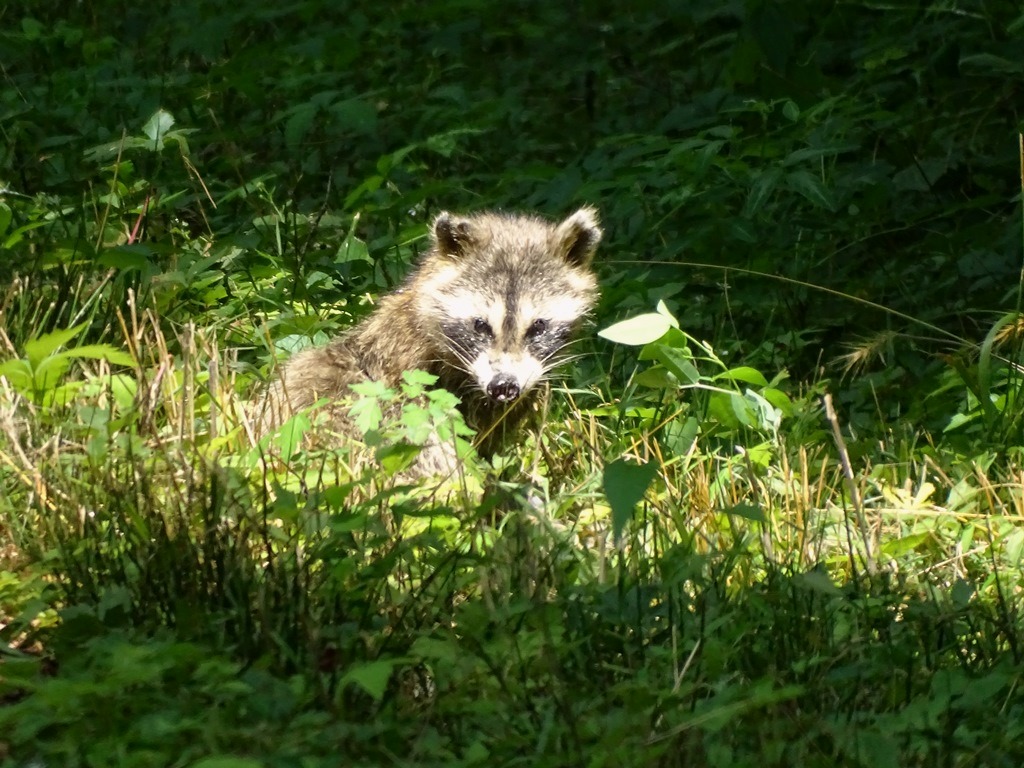
This young raccoon came ambling out of a soybean field just as I was walking past on our country road.  Sensing my presence, it lay down and tried to hide in the grass. Realizing that it had been spotted, it quickly turned and headed back for the cover of the soybeans.

“It is not the strongest of the species that survive, nor the most intelligent, but the one most responsive to change.”  ~Charles Darwin

Watching the Woodpeckers

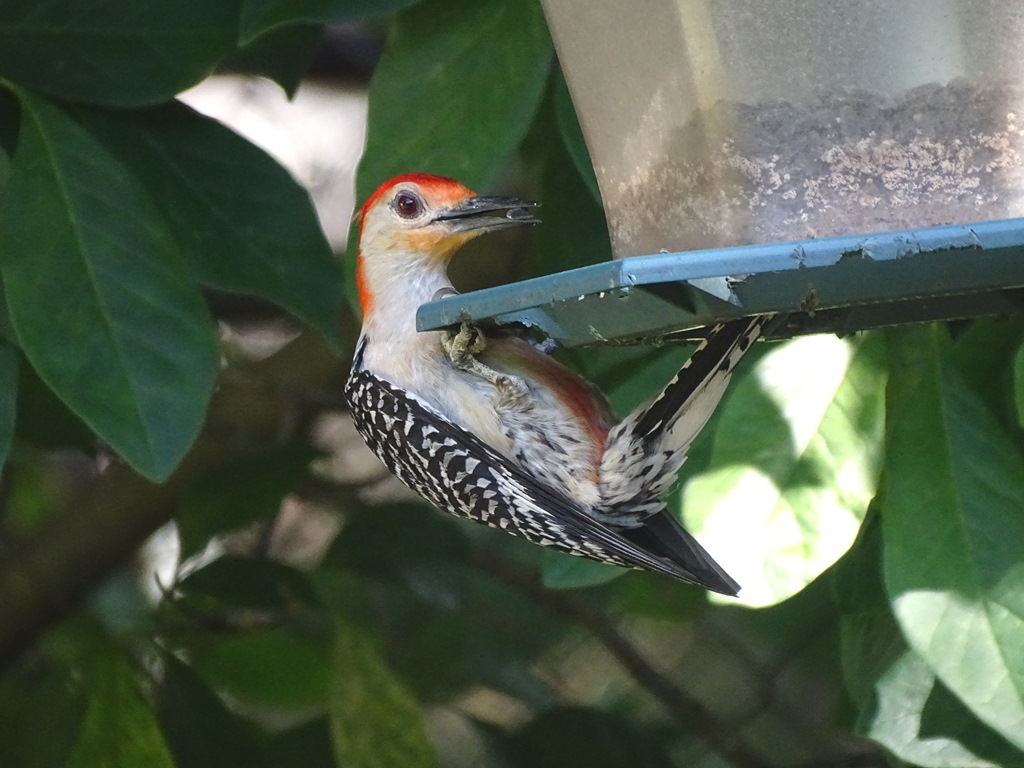
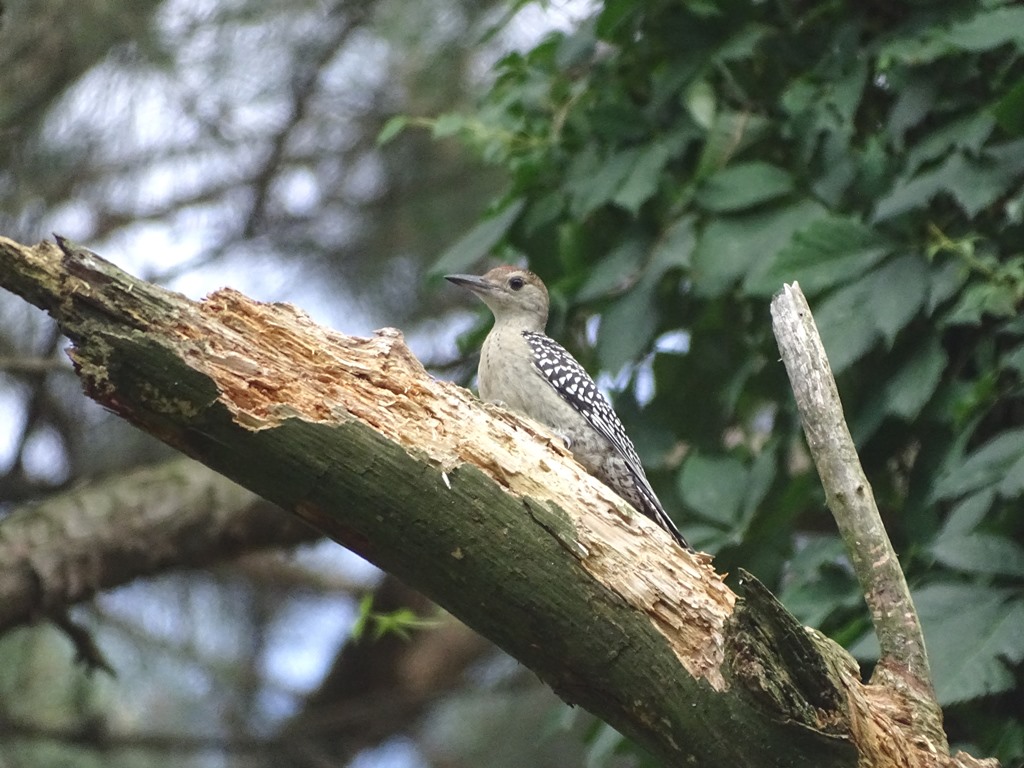
I’ve been seeing a male Red-bellied Woodpecker flying from tree to tree in the backyard. Occasionally he ventures to the feeder to grab a sunflower seed. The other day, he took a seed and flew to a high branch of one of the pine trees, where an immature woodpecker was waiting. It was fun watching the two interact and then fly off in the same direction.

“My father didn’t tell me how to live; he lived, and let me watch him do it.” – Clarence Budington Kelland

A Bald Cardinal

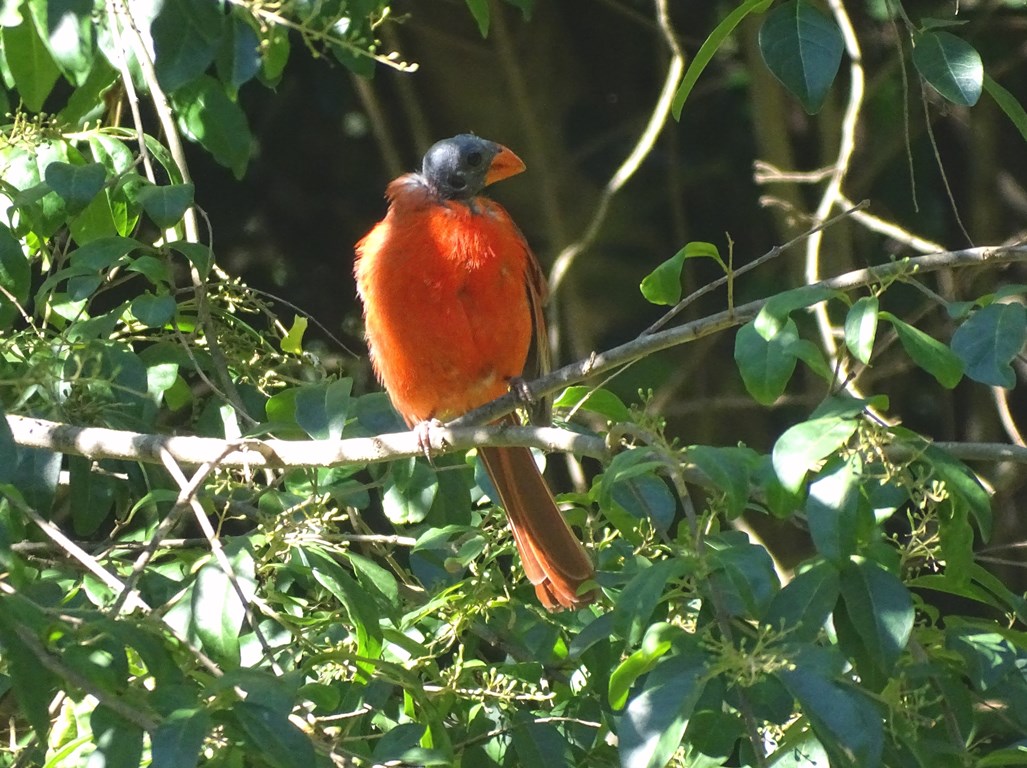
One day this week, I looked out of my kitchen window and thought I saw a black-headed cardinal in the backyard but then decided that I was probably imagining it. But yesterday, with camera in hand, I was able to get a photo of the bird. I have found two main theories about the baldness. It seems that after nesting season, cardinals molt and a number lose all their head feathers, revealing their skin beneath. The other theory is that the condition could be caused by mites. In both cases, the feathers will grow back in time. I found it interesting that the circle seen below and slightly behind the eye is actually an ear hole.

“I love bald men. Just because you’ve lost your fuzz don’t mean you ain’t a peach.” ~Dolly Parton

Jackpot

Sometimes when we drive along Mississippi River farmland we see very little. On our last drive, however, we hit the jackpot. A field dotted with beautiful Great Egrets and a single string of White Pelicans fishing in standing water graced the landscape.

“A philosophy of life: I’m an adventurer, looking for treasure.” ~Paulo Coelho