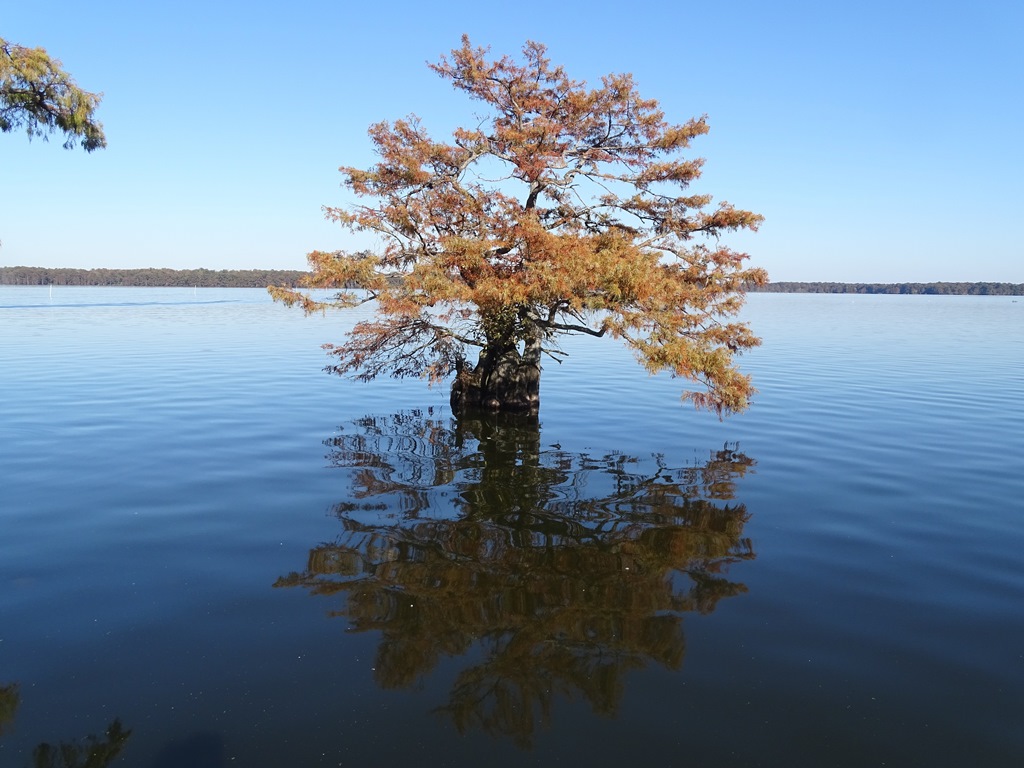
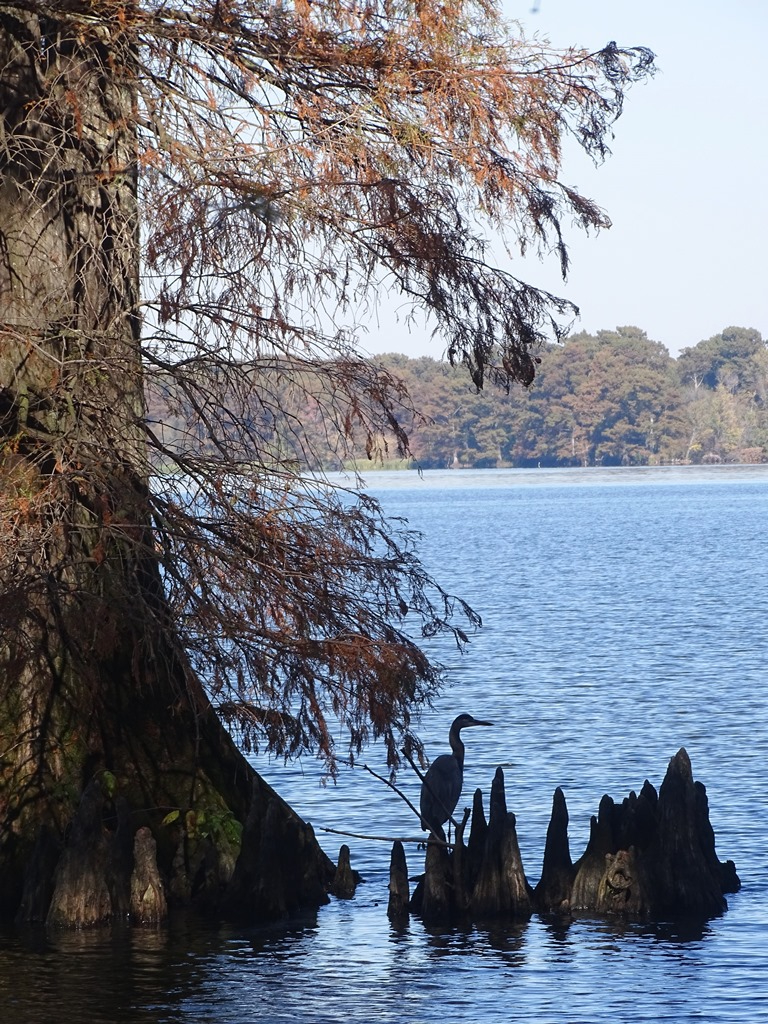
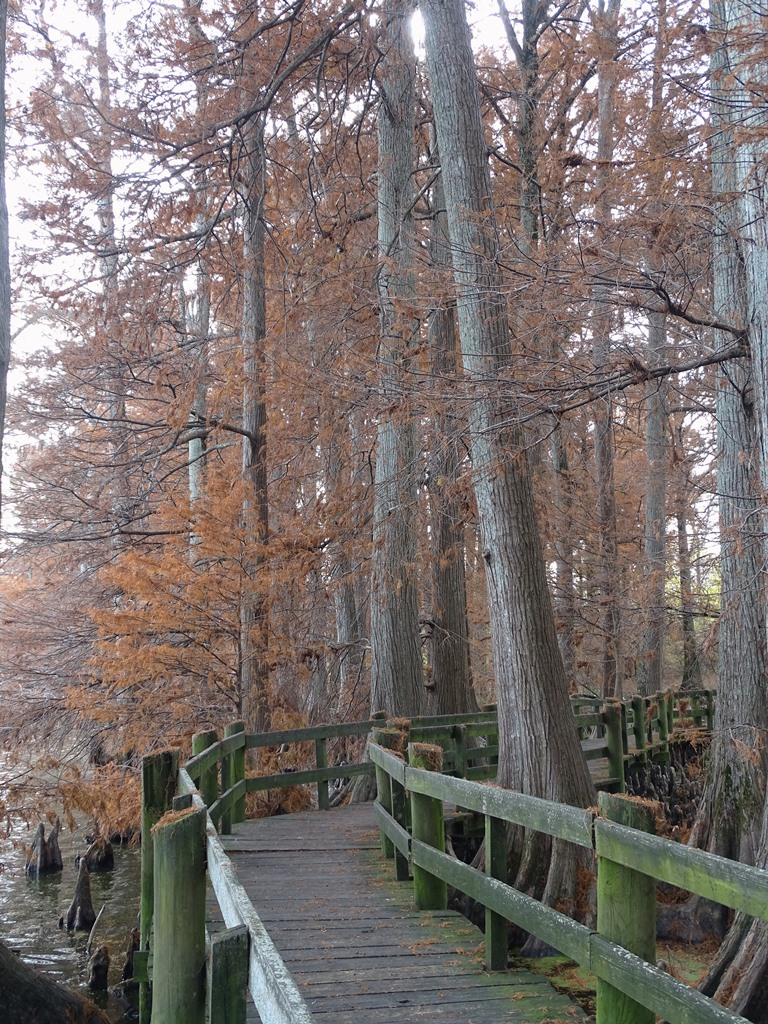
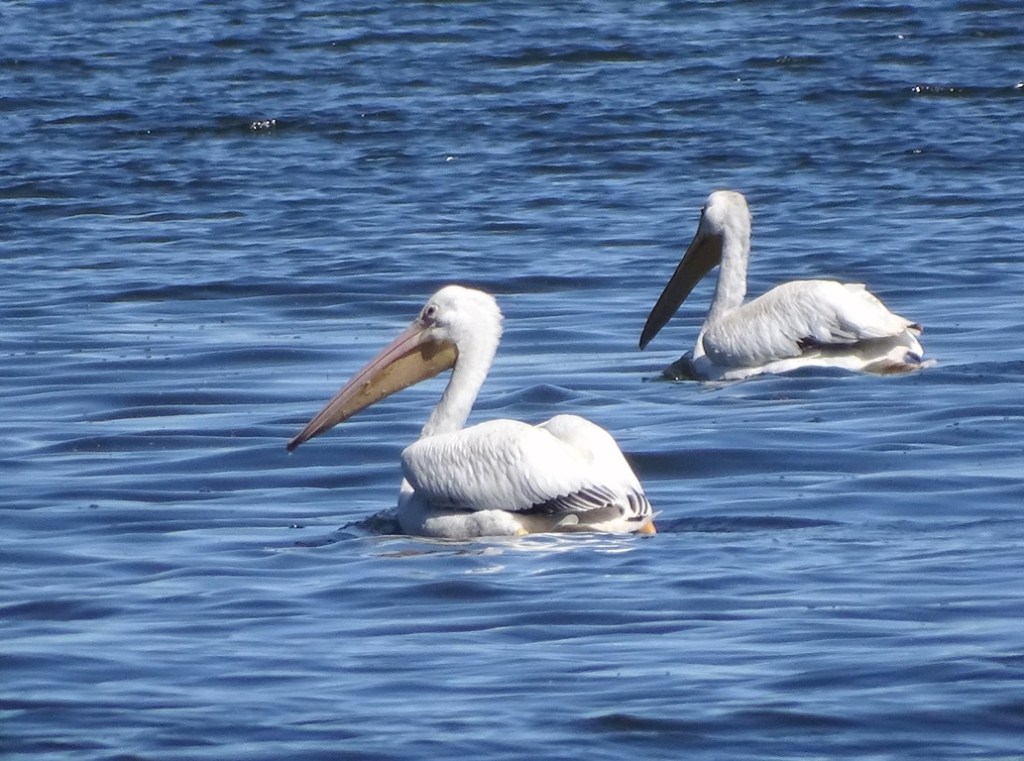
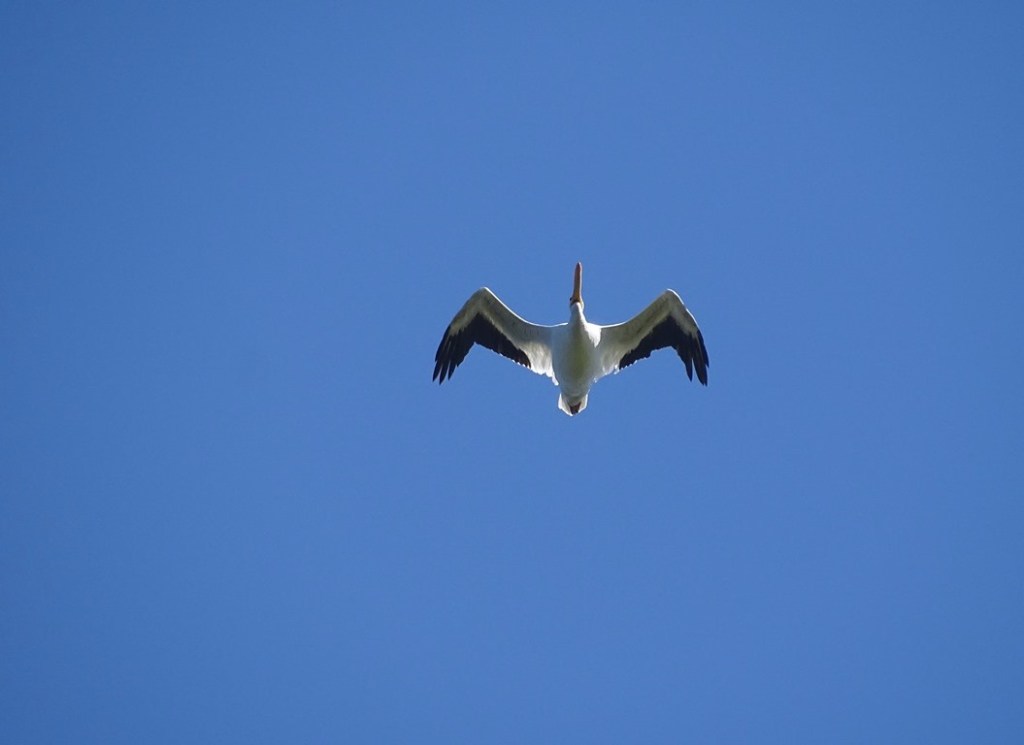
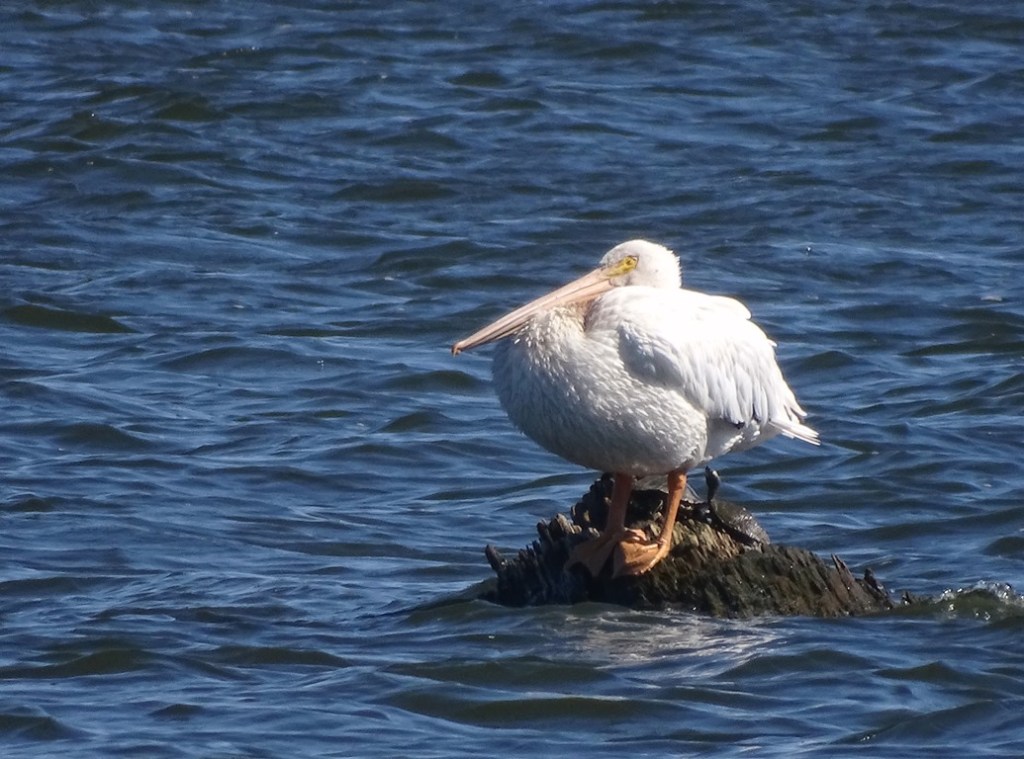
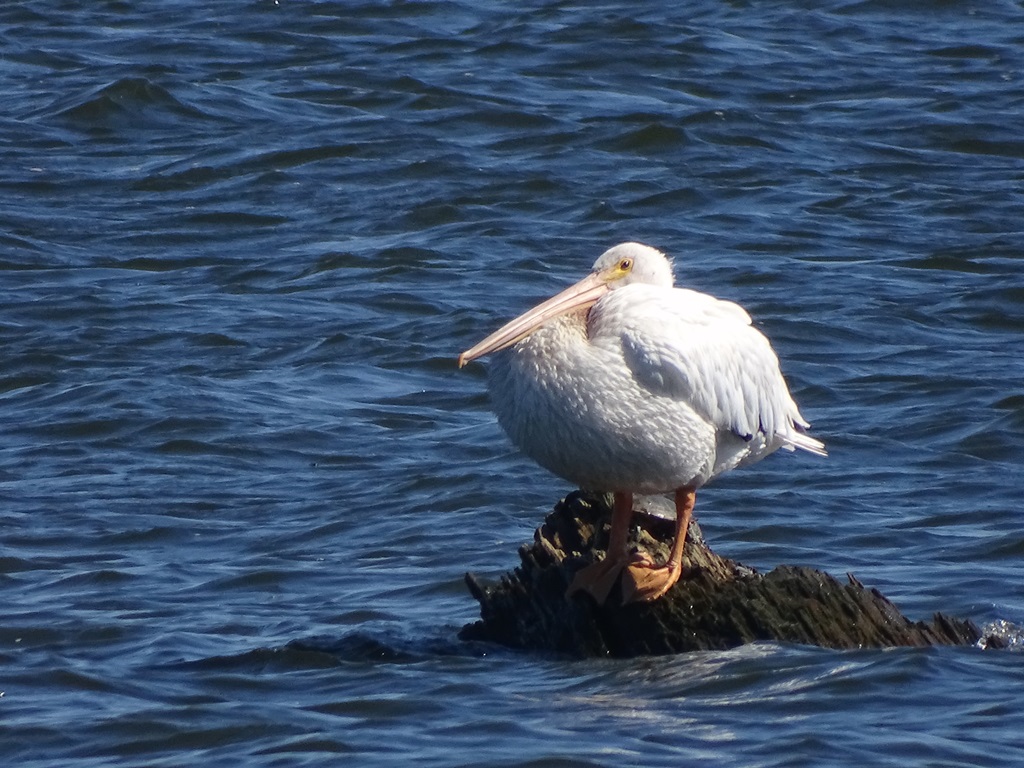
A flock of white pelicans has arrived at Reelfoot Lake on their annual fall migration. We try not to miss a chance to see these beautiful, impressive birds.
“What we have once enjoyed we can never lose. All that we love deeply becomes a part of us.” ~Helen Keller
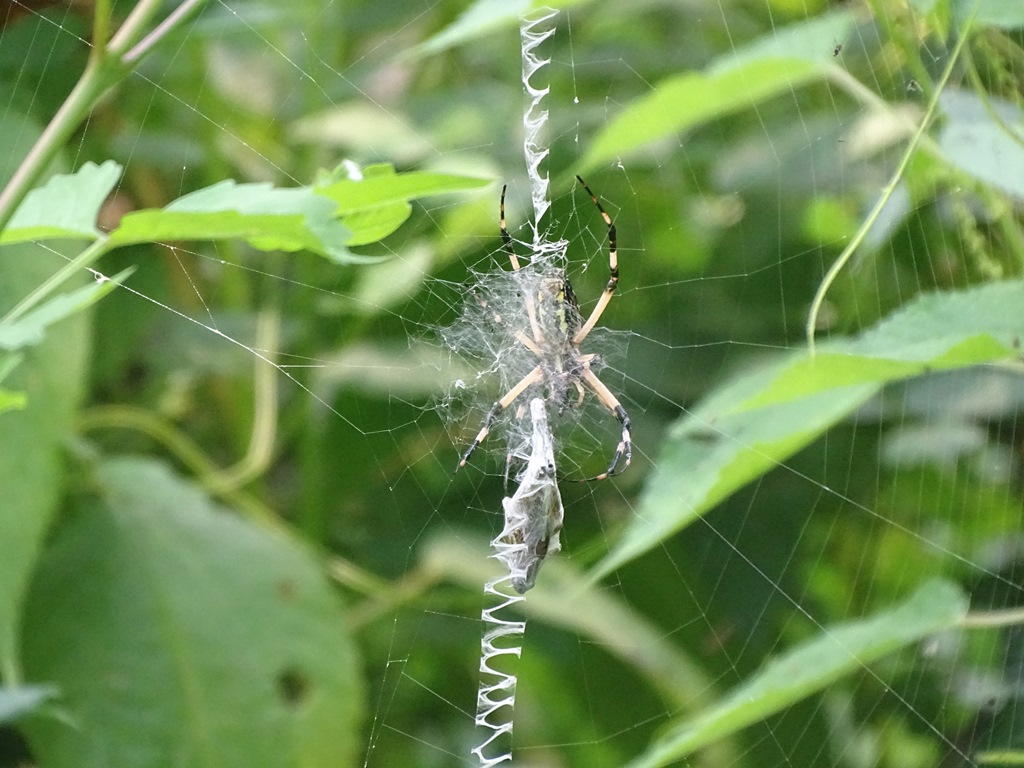
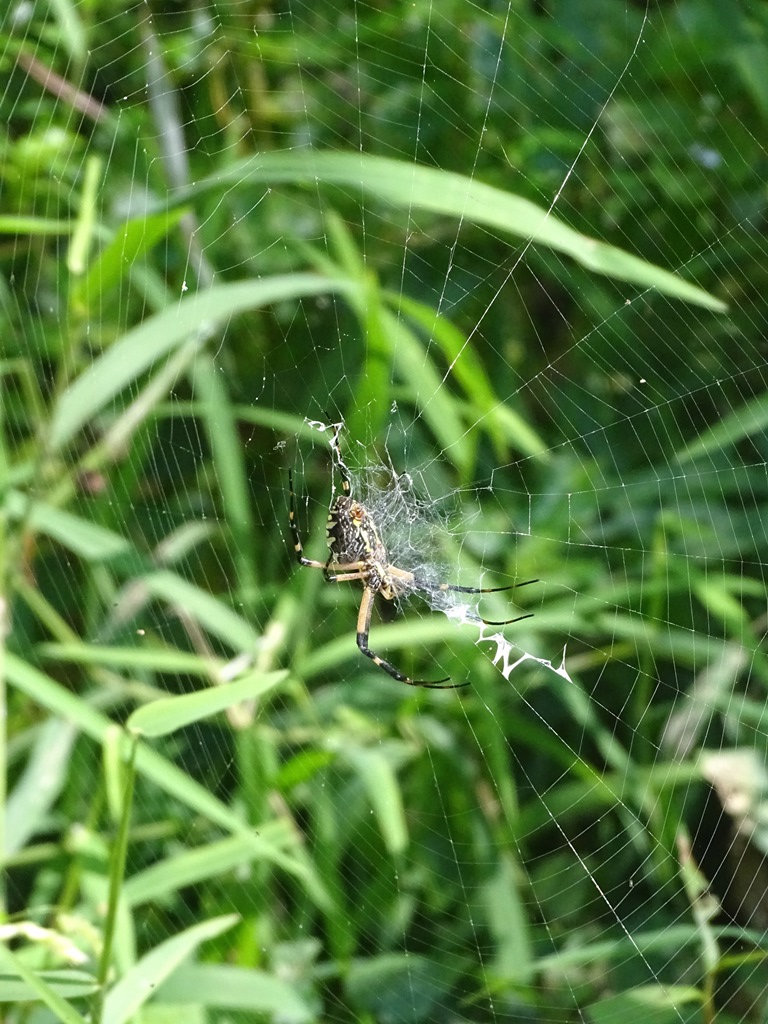
The black and yellow garden spider is an orb spider that is often seen in the late summer. These brightly colored spiders build wheel-shaped webs with a zig-zag of thicker silk in the center. There, they patiently await their prey, which is then injected with venom and wrapped in a cocoon of silk for a future meal.
These two orb weavers had webs secured up high between two trees where they patiently laid in wait.
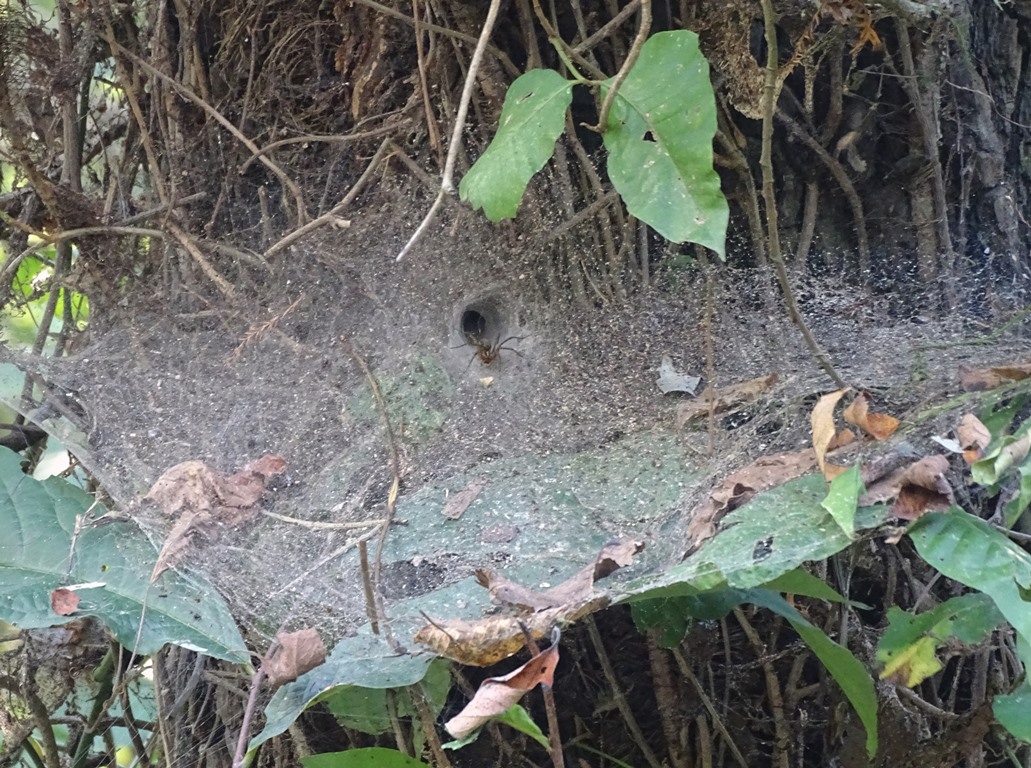
This funnel-web spider built a sheet-like web and positioned itself right outside of its burrow to await its next meal.
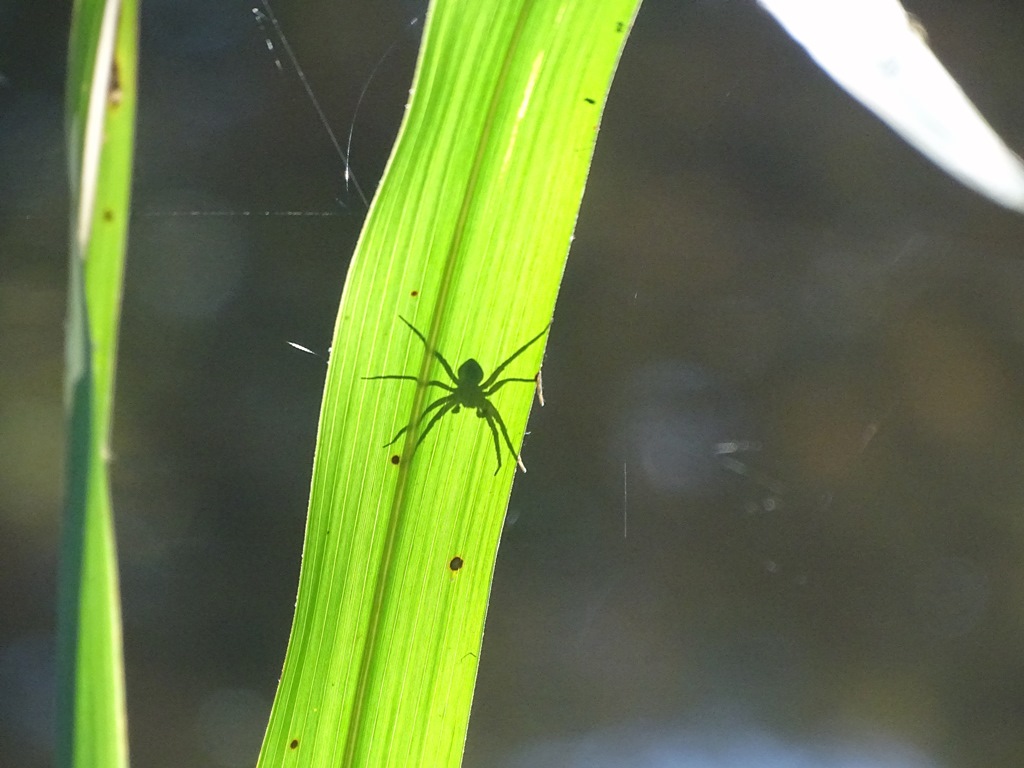
Though technically not a spider, but an arachnid, this harvestmen or “daddy longlegs” and his shadow were crawling along on a fallen tree in the woods, probably scavenging for food. Harvestmen are most often seen in the late summer and early fall around harvest time, thus their name. This one seems to be missing some legs which, unfortunately, will not grow back.
“Will you walk into my parlour? Said the spider to a fly: ‘Tis the prettiest little parlour That ever you did spy.” ~Mary Howitt
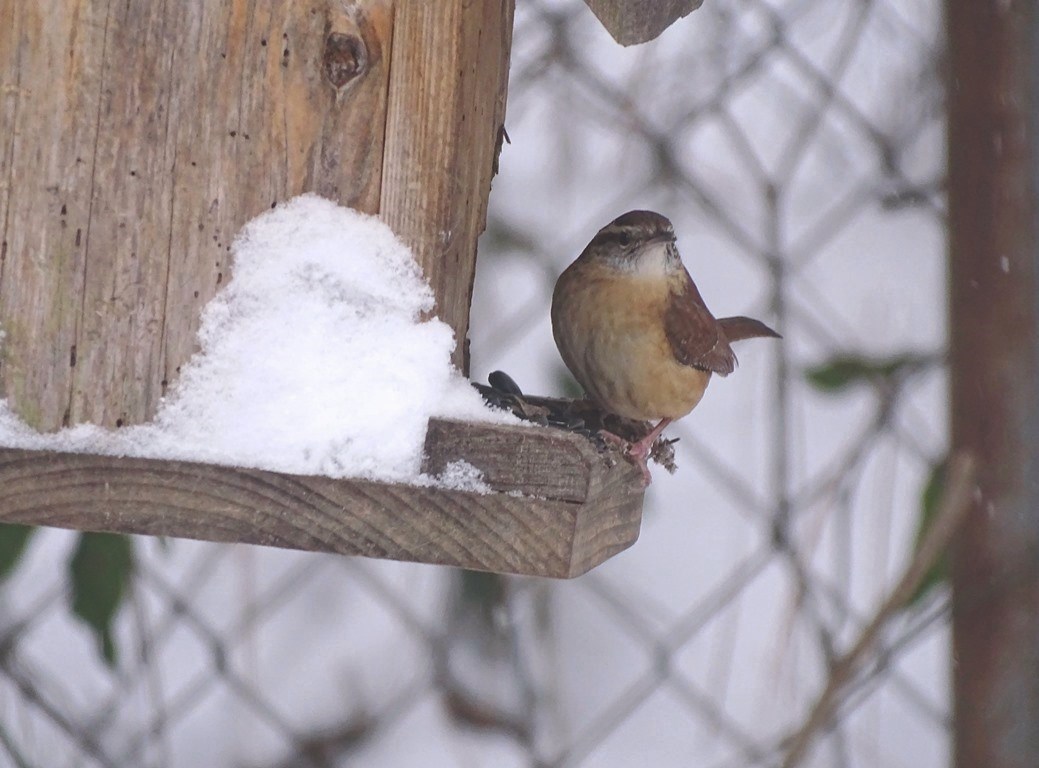
Whether from molting or escaping a predator, this wren has no tail feathers. That doesn’t seem to hinder him from doing normal activities such as flying and eating. Over time, his tail feathers will begin to grow in.
“Well, either a tail is there or it isn’t there. You can’t make a mistake about it. And yours isn’t there!” ~A. A. Milne
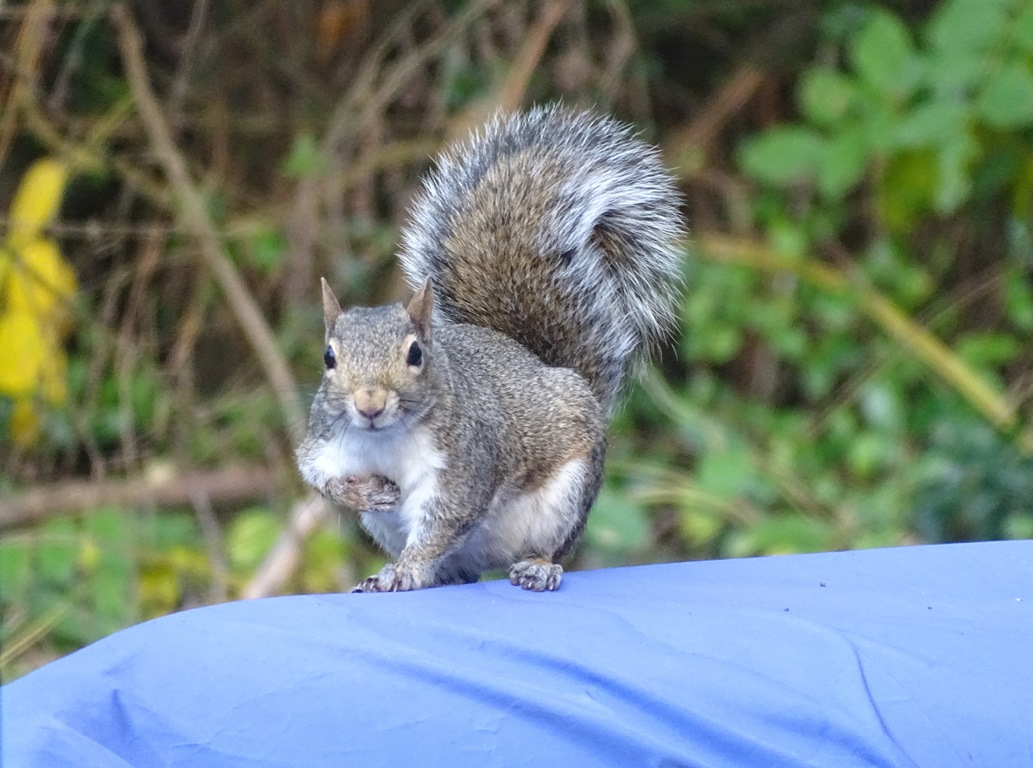
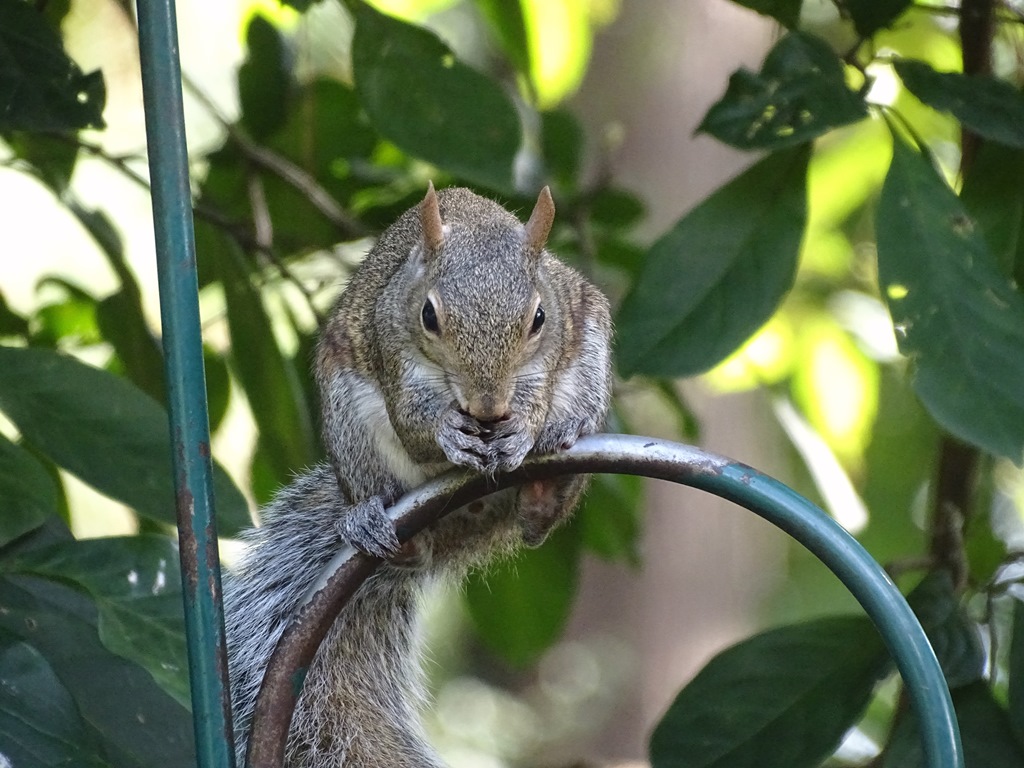
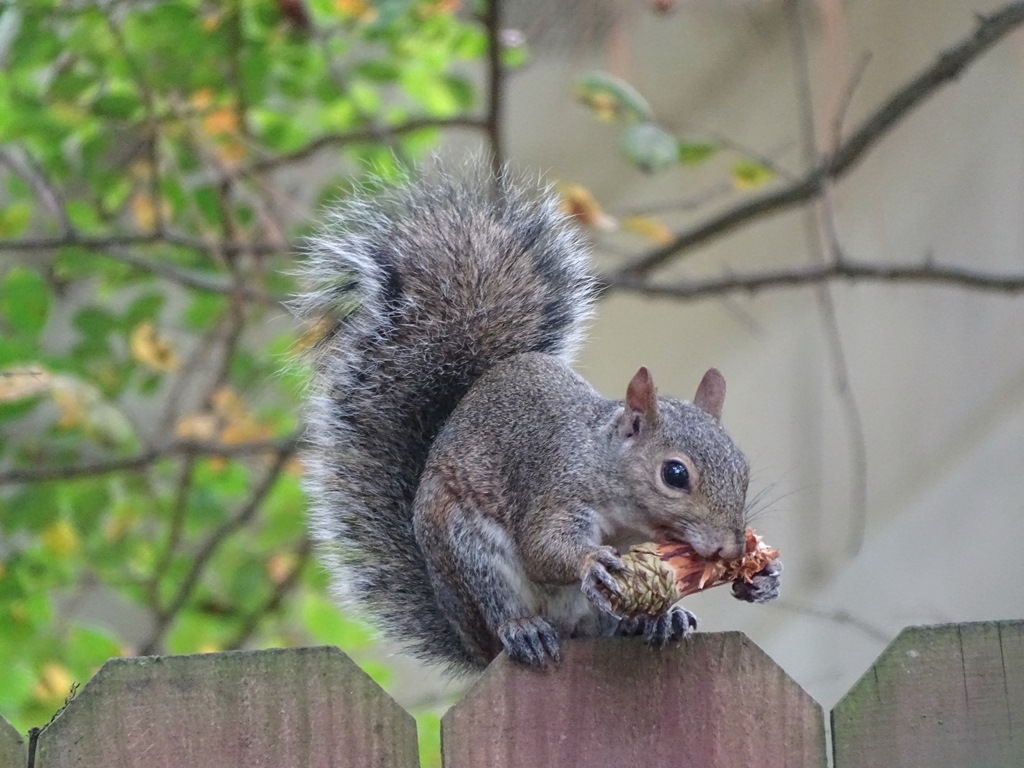
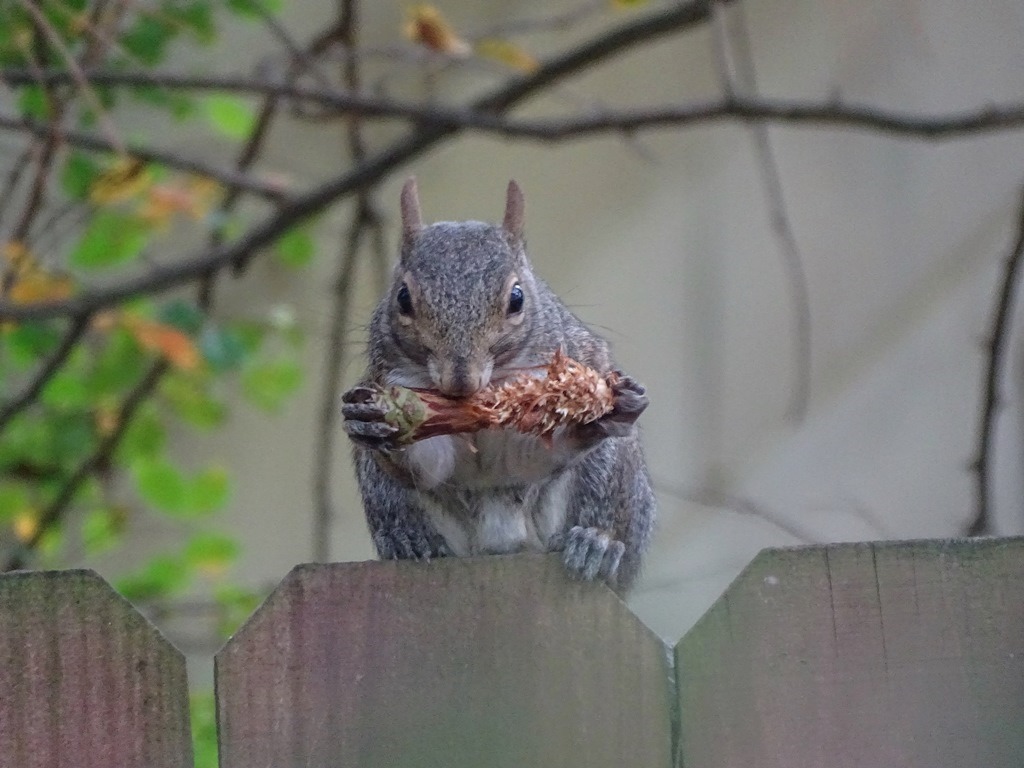
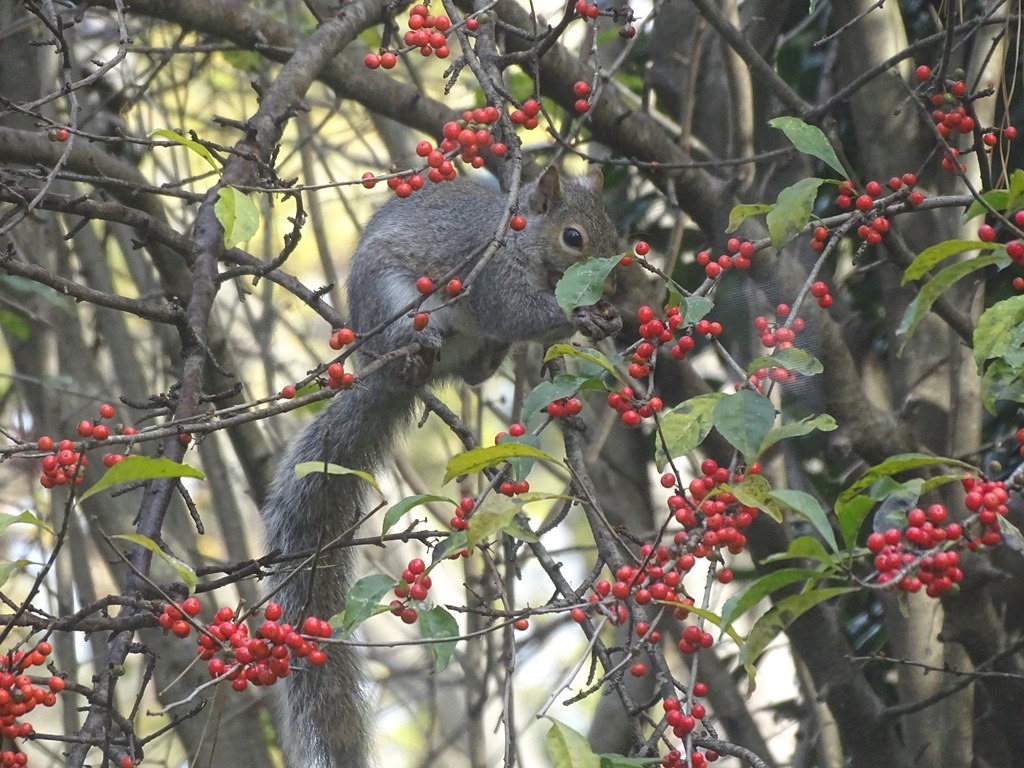
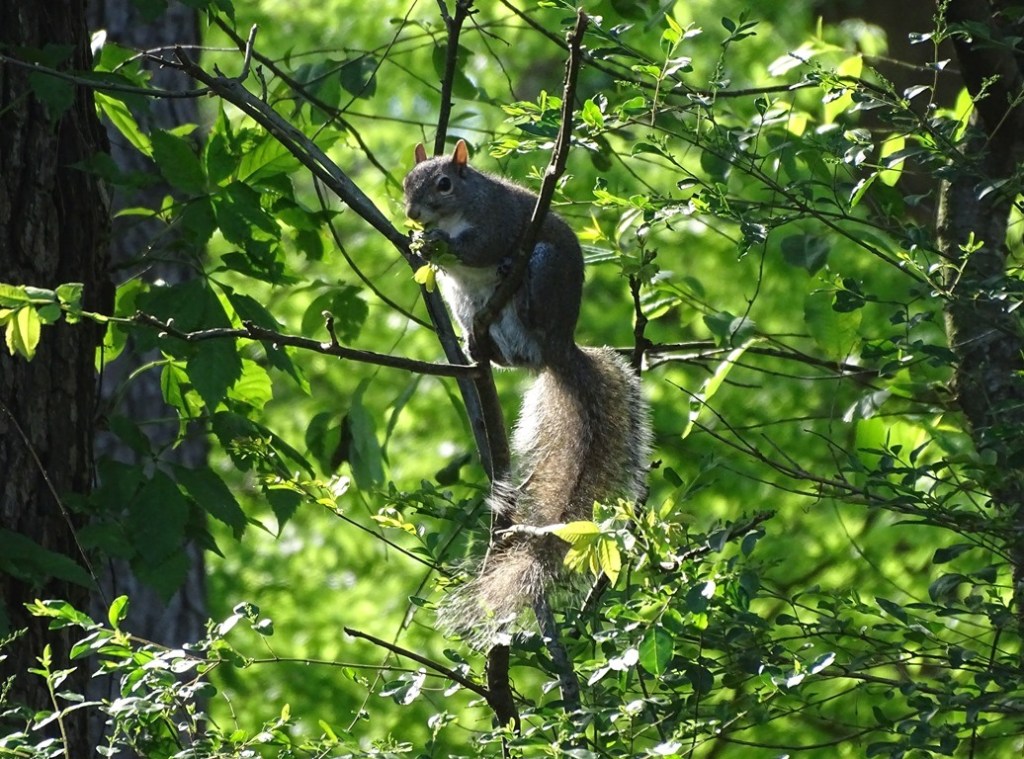
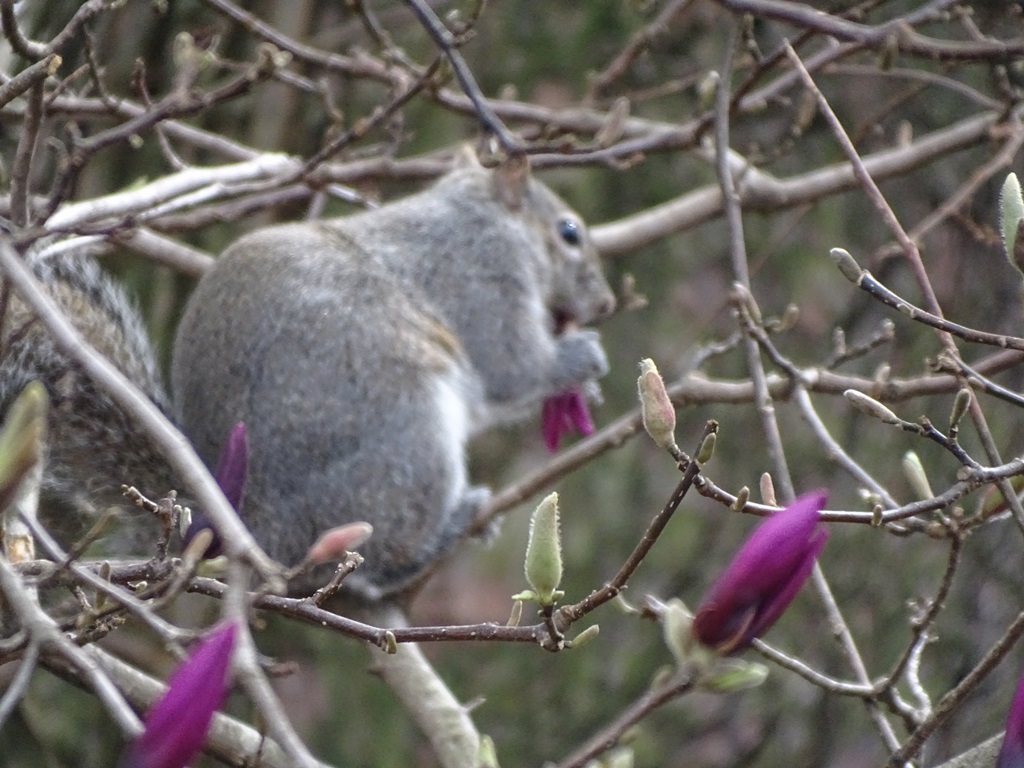
It’s interesting to observe the eating habits of squirrels. Since they are not picky eaters, you never know what’s going to be on the menu.
In our yard, bird food from the feeder is the number one choice.
But one day this past week, a squirrel climbed to a high branch in one of our pine trees and proudly showed off a passion fruit that he had found.
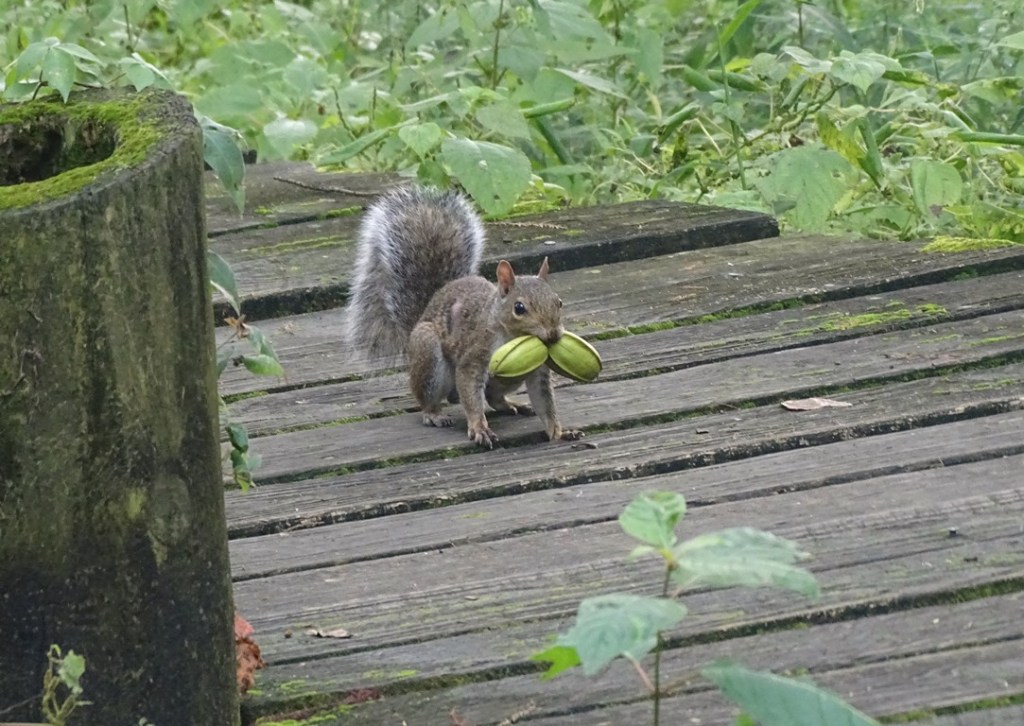
I often see squirrels bringing pecans from other people’s yards and burying them in mine. Breaking apart the shell of nuts helps to keep their teeth sharp and is also good exercise.
Since pine cones are plentiful around our yard, I frequently see squirrels gnawing on them to get to the pine nuts.
Various plants around the yard seem to be a good source of food at different times of the year. In the late autumn and winter, squirrels enjoy munching on our holly berries.
During the spring and summer, they are often seen nibbling on leaves, blossoming flowers and fresh green shoots.
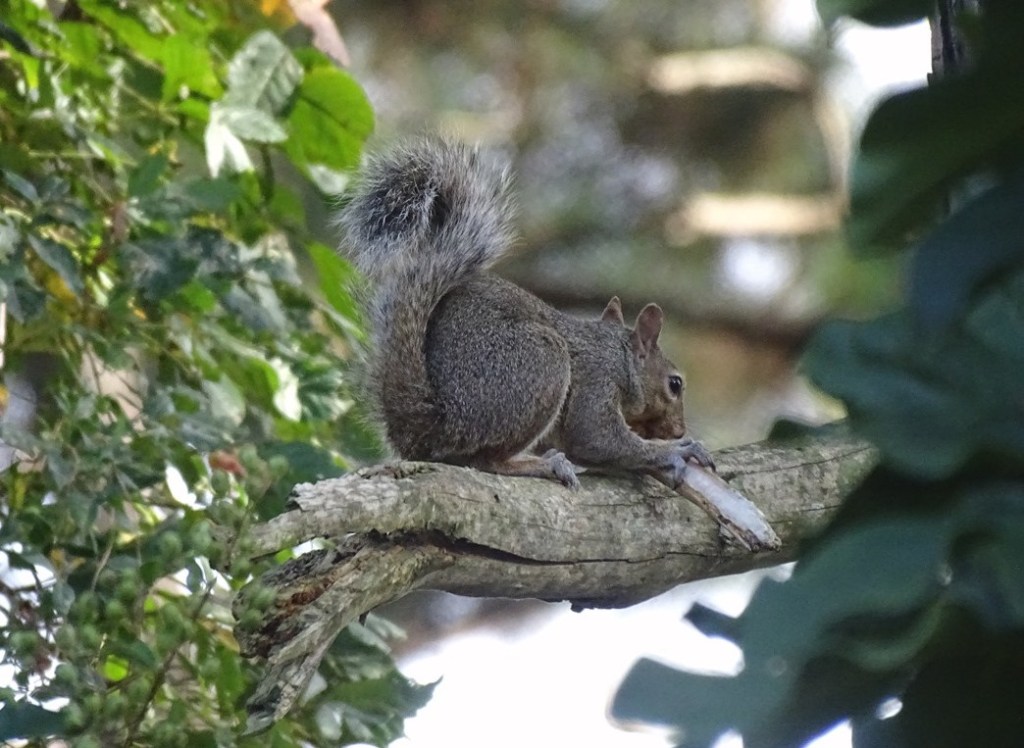
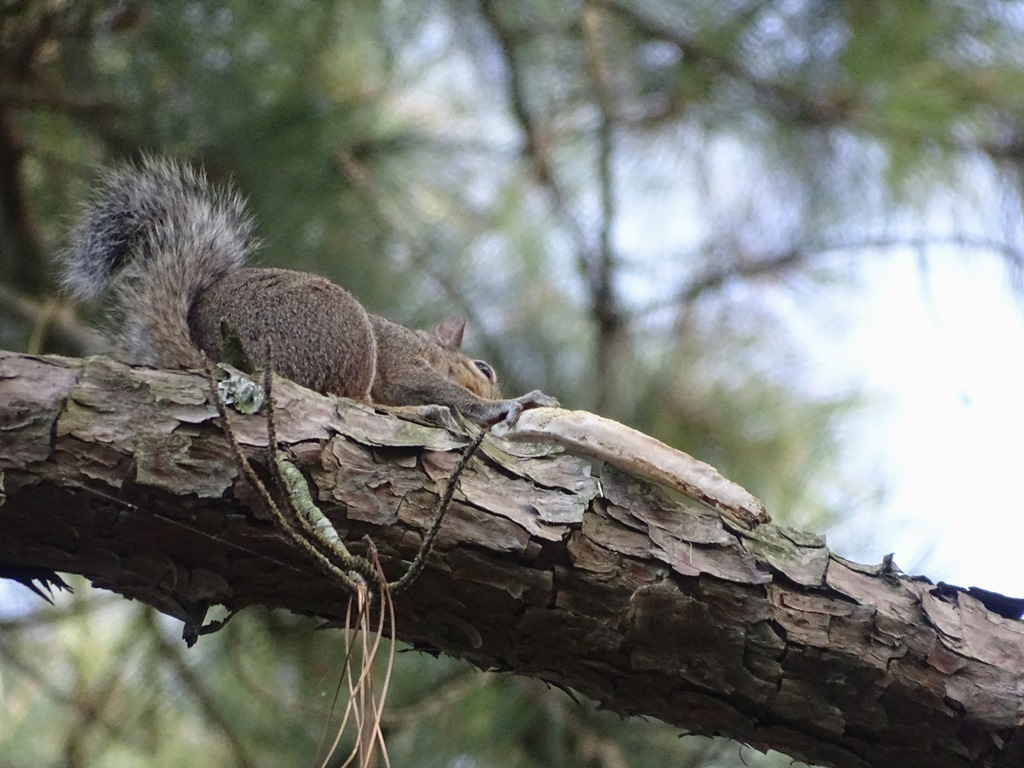
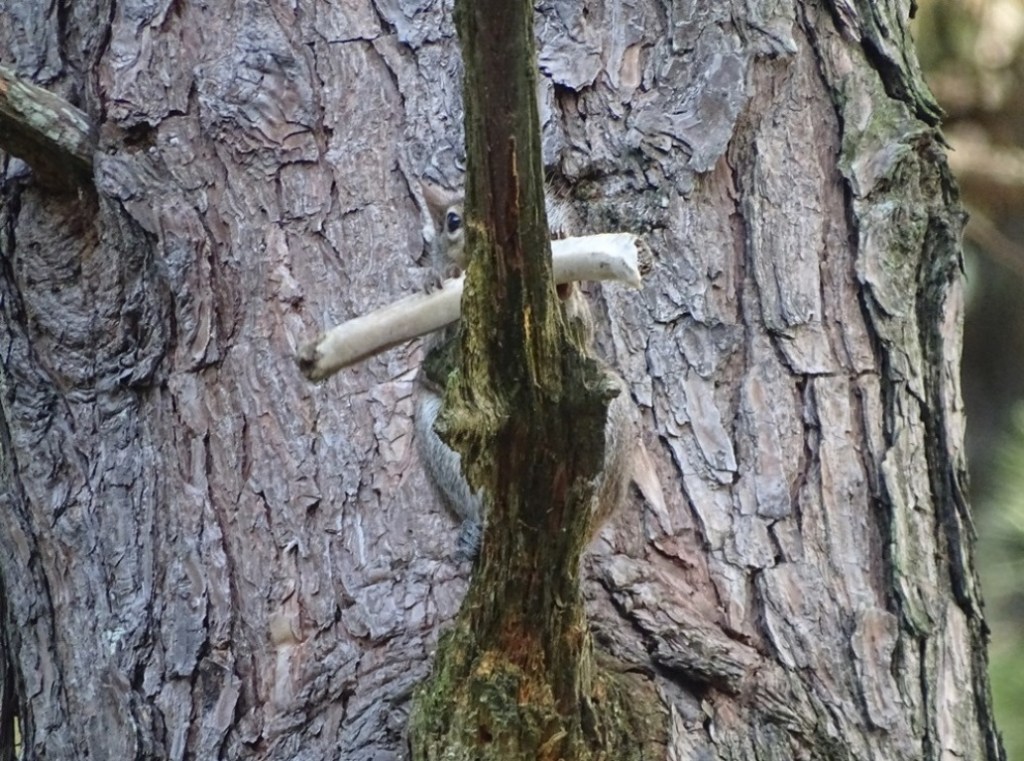
A first for me, was seeing and hearing a squirrel gnawing on a bone from high up in a tree. Apparently gnawing on bones keeps their incisors sharp and is a good source of calcium.
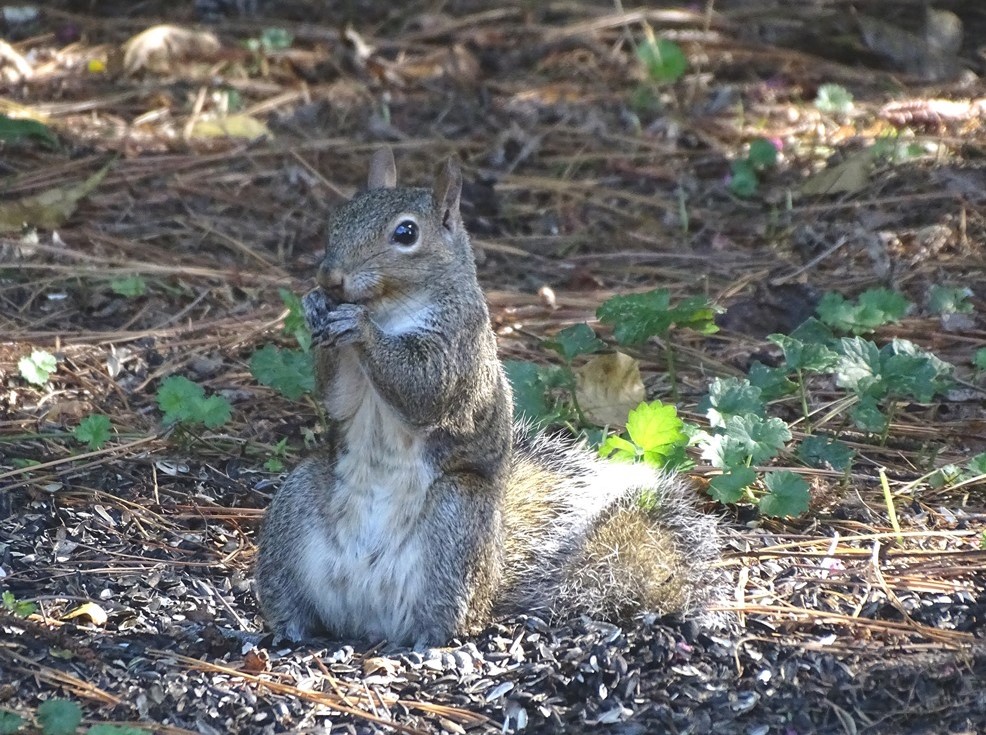
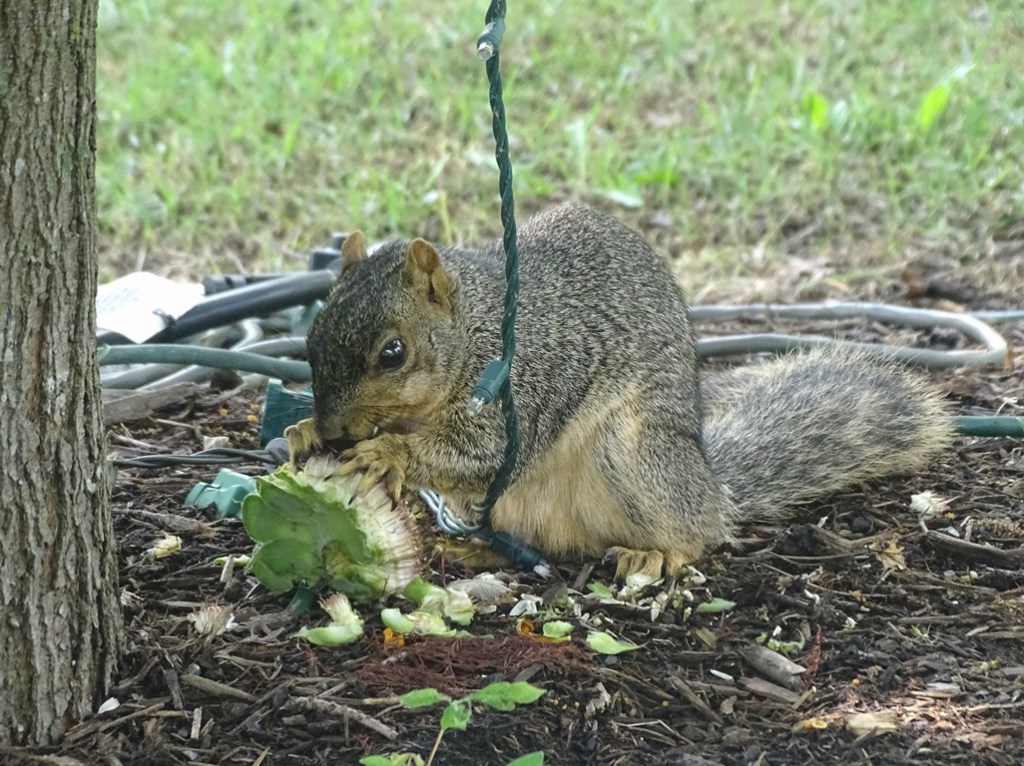
We saw the squirrel below in a public garden that we visited. He was pretty protective of a sunflower head that he had obtained. It was interesting to watch him tear it apart to get to the sunflower seeds.
Squirrels are busy animals and need lots of fuel to keep them going. They tend to adjust their diet to pretty much whatever is plentiful and available.
“One cannot think well, love well, sleep well, if one has not dined well.” ~Virginia Woolf
There almost looks like a smile on this turtle’s face as he sits contently, basking in the sunshine at the base of a large cypress tree out in the lake.
“A smile is the light in the window of your face that tells people you’re at home.” ~Unknown
One afternoon I went out to change the hummingbird feeders which hang up outside our back screen porch. As I started to reach across the rose bush branches to replace the bottles, I saw it. Stretched out and wrapped in neatly among the stems, lay a non-venomous gray ratsnake.
I immediately jumped back, and may or may not have let out a startled scream. As I studied the situation, a little hummingbird came and landed on a branch a few inches from the snake’s mouth. Then it hit me. This snake, which is handy to have around because it kills rodents, was probably also after the hummingbirds.
I was hoping that the snake would be scared by my presence and slither away. But it remained motionless and resolute. My husband came out and encourage him to move on.
I hoped that that would be the end of his hiding on the branches near the feeders. But the next evening, there the snake sat again. As I mulled it over during the night, I realized what I had to do. So early the next morning before the hummingbirds showed up, I went out and cut back the branches of the rose bushes which provided the snake a place to lie in wait.
This turned out to be an unpopular decision with the hummingbirds, who lost their favorite branches to perch on and guard the nearby feeders. And I do miss having a front row seat from my rocker inside the screen porch. Now after getting a drink from the feeders, they tend to fly away to bushes further out in the yard. But still, the more I think about it, the more I know it was the right choice for the hummingbirds’ survival.
I’m pretty sure that I now know why the cardinal eggs disappeared from their nest at the end of the porch a couple of weeks ago.
“Decisions are the hardest move to make, especially when it’s a choice between what you want and what is right.” ~Unknown
I heard an unfamiliar song coming from the treetops. As I looked up, there sat an adult male Summer Tanager preforming one of his chatter calls. Not normally one that I see in my yard, he was an unexpected and welcome surprise.
“Keep a green tree in your heart and … perhaps a singing bird will come.” ~Chinese Proverb
The ditches running beside the country roads are sprinkled with a variety of seasonal flowers. Though often overlooked, they add beauty, color and texture to the landscape for all to enjoy.
Fiery red Cardinal flowers …
… growing together with showy pink clusters of milkweed.
Ironweed’s deep purple blooms …
… surrounded by a variety of other late summer beauties.
“If you look the right way, you can see that the whole world is a garden.” ~Frances Hodgson Burnett